Catedral de Santiago de Compostela, photo by Andre Mallinger
The Camino de Santiago was never on my radar. I knew about it, of course, knew that it was a pilgrimage of Christian origins, ending in Santiago de Compostela in northern Spain. Santiago, in Spanish, translates to Saint James in English (Tiago in Portuguese or Galego; Diego in Spanish). The story goes that James traveled to Iberia to spread the word about Jesus and his teachings after Jesus’ death. He didn’t have much success and eventually he headed back to Jerusalem. Having survived the arduous journey in both directions, as well as what was likely a fair amount of scorn from suspicious naysayers in Celtic Galicia, once safely home in Jerusalem, James was promptly beheaded by the Romans for heresy and then was subsequently sainted.
And so the story ends, until around 800 CE (common era), when a shepherd tending his flocks one night followed the arc of a star to what is now Santiago de Compostela. There this humble herder, whose name was Pelayo (Paio in Galego or Payo in Spanish), found the remains, or relics, of Saint James. The story explains that two of James’ disciples carried his body in a boat made of stone and guided by angels from Jerusalem back to Santiago to be entombed there. Somewhere over the course of many generations, the remains were divided and now James’ head is supposedly entombed in Santiago while the rest of his body is in Jerusalem.
The details of this legend, and the cultural history and significance behind the famous pilgrimage, have solidified for me while walking the Camino de Santiago both last fall and again a couple of weeks ago as I guided it with renowned author Laura Davis and my dear friend, co-guide and extraordinary watercolor artist Brenda Porter. On these two trips, called the Creative Camino, we walked the last 100+ km of the Camino Frances, the most popular of the many Caminos, which is the requisite minimum necessary to receive one’s Compostela, an official certificate of having completed the Camino. In order to prove to the Compostela office that you actually walked the Camino, you have to collect a minimum of two sellos (stamps) per day in your Credencial (the Pilgrim’s passport), which is an accordion-folding booklet in which you stamp colorful, quaint and unique marks from churches, restaurants, bars, hotels and albergues (a type of lodging) along the route. It’s fun to collect the sellos, and each marks a unique place, time and interaction on the Camino.
One such moment stands out in my mind from this year’s Camino: we stopped at a modest, historic church late in the afternoon, where an elderly, blind member of an organization following in the footsteps of the historic Knights Templar stood behind a little table, marking pilgrims’ Credenciales with one unique stamp from the church and another with the date. He blessed each Pilgrim with a kiss on both cheeks, and then sort of shouted in heavily accented English “Stamp!,” followed by “Date!” Our job was to direct his hand to the exact position from which he would forcefully stamp whatever happened to be directly below his hand, ideally your pilgrim passport. We then copied the year in Roman numerals into our Credencial below each stamp. It was surprisingly moving to me that this man, a Templar, meaning one who tends a temple, wearing slacks and a sweater rather than an armored metal suit, was following the path of an 800+ year old military-religious order that started in Jerusalem and came to northern Spain specifically to serve and protect pilgrims. There he stood, gracefully and gently barking at each of us in turn, so happy to do his bit, still helping to facilitate people’s Way along a path so much older than the church or the government or the military, still steeped in legend and lore and even mysticism built upon 1000s of years of occupation in this exact place by culture after culture, all seeking clarity and cleansing in a myriad of ways.
Sunrise on the Camino
Stopping to sketch
A tunnel of green
First steps
There are so many precious moments like this on the Camino, countless encounters every day that together contribute to the nuance of that day, the feelings, emotions, inner processing and laughter that arise and pass, ebb and flow, first this person, then that. My attention is drawn to landscapes, accents, clouds, the sun and wind, architecture, colors, textures, sounds, bits of conversation passing my ears. With Brenda’s expert guidance we learn to see more deeply, to open our eyes, to judge contrast in tone, depth, angles.
I am, admittedly, not the best watercolor student. I’m impatient and just want to mix colors and use bad technique, but I love sketching, and usually I migrate first to my pencils to try to capture, in way too large of a scale, that which I’m seeing around me. The beauty of the Camino is that that is exactly what we are supposed to be doing. I don’t have to walk the dog, or make dinner, or help my mother decipher her daily schedule, or juggle the use of the car, or deal with household maintenance. My task is to get up early and walk, stop to get a stamp in my pilgrim passport, help our participants to use their poles more effectively or tweak the fitting of their packs, or manage their pace up a steep hill. Assist with ordering food for everyone, check our large group into the hotel or pension, drink some wine, write up some notes, go to bed. Talk about history at places like O Cebreiro and Castromaior, where Celts lived in hilltop settlements long before the Romans, and did their own spiritual practices long before the Christians. Talk about pilgrimage lore and traditions, like carrying a scallop shell to signify your status as a pilgrim; bathing in the stream at Lavacolla, as historic pilgrims did before entering the city of Santiago; leaving a stone that you have carried in your pack from home, to release the burdens that you may also be carrying; getting up early and walking before daylight one morning to experience the schedule of many contemporary pilgrims who do not have reservations in comfy hotels, but are, rather, racing the crowds to secure a dormitory bunk in an albuergue.
These are a few examples of my honor in walking the Camino in support of the participants on our trips, but there are more. Without doubt, we all go into this walk with very personal intentions or motivations, for the journey is not easy. Some may be grieving the loss of a loved one; some may be celebrating a rite of passage; some may be seeking clarity on the next stage of their lives; some may do it as a fitness goal, to get in shape enough to walk 100km; and some do it for spiritual insight, which may come from any number of orientations. Whatever lies behind each person’s motivation, it is my great honor to hold space for that, to assist along the way however I may, to be a friend and support person on trail.
Although I never imagined it would be so, it has also become my journey, my Way. I process internally in the brilliant writing exercises led so compassionately by Laura Davis and in the joyful, fun and laughter-filled immersion in art through which Brenda guides us. And, always, walking is my practice, my time on the cushion, my meditation. This is a pilgrimage, albeit different than most others, and I am deeply grateful to be a part of it.
In 2025 Brenda and I will offer The Artsy Way, a unique pilgrimage on the Camino Frances of the Camino de Santiago. We will spend our first two nights at a peaceful, comfortable country villa to recover from jet lag and start getting to know one another and then another couple of nights visiting two historic towns that lie on the Camino: Samos, home to a 6th century monastery, and O Cebreiro, a traditional Celtic town on the top of a high mountain pass where you really feel the antiquity of the Camino. After these introductory days, we begin hiking inn-to-inn on the last 100 km of the Camino, ending in Santiago de Compostela. Our journey is unique because our focus is more than simply walking. We explore and experience the Camino through our senses, through sketching and watercolor painting, journaling, personal reflection, dynamic stretching, and moments of meditation.
We share the history of the Camino, which begins far before the famous legend of Saint James, back to pre-Celtic peoples who lived throughout northern Iberia, the remains of whose houses and towns are visible in Castros dotted throughout this region. The history of the Celts overlaps that of more ancient pagan peoples who also lived throughout northern Iberia, leaving dolmens, or standing stones, as well as evidence of their spiritual practices that still may be seen in contemporary Galego village traditions. The Romans, of course, left their mark in this area, evidenced in roadways, aqueducts, bridges and buildings that stand to this day. We will identify subtle signs of Roman construction on the walls of churches and municipal buildings along our journey, which will help us to see the details of the landscape around us as well as tangible signs of a very complicated history.
The history, architecture, color, landscape, and contemporary culture, language and food of Galicia make this journey appealing to people of all beliefs. Because of our focus on art and travel journaling, we will take our time and really sink into pilgrimage mode, which will undoubtedly have different meanings for each person. The dates of our next Camino, The Artsy Way, are August 31-September 15, 2025. We hope you’ll join us! If you have any questions or are interested and would like to receive information, please contact me.
The walking distances listed below are between our lodgings. We are limited in lodging choices that have enough rooms for our group. However, our private driver meets us throughout the day, so you can choose how long you want to walk; you may want a lift to the next stop, or to our lodging for the night, or walk the entire distance – it is your Way.
DAY 1: Sunday, August 31 – We meet at Santiago Airport at 1:05 pm (Iberia flight IBO572 from Madrid) and have a short transfer to our retreat villa near the rural community of Pineiro. After our trip welcome and orientation, we begin getting to know each other and familiarizing ourselves with our travel-sized watercolor paint sets. We have some fun mixing colors to match what we see around our villa, with a limited palette specially designed for our journey. Overnight: Vila Sen Vento Meals included: Dinner.
Day 2: Monday, September 1 – Throughout our journey we will begin each day with dynamic stretching, a mix of yoga, tai chi, chi gong and other flowing movements. Today we have breakfast in our villa and practice fundamental watercolor skills and learn techniques for sketching trees, flowers and landscapes. The gardens are blooming and the hydrangeas are gorgeous! We also learn to sketch on the go as we stretch our legs while exploring our peaceful rural surroundings. Walking: Approximately 3 miles, with stops to sketch. Overnight: Vila Sen Vento. Meals included: Breakfast, Lunch, Dinner.
Day 3: Tuesday, September 2 – After breakfast today we will take an hour-long bus ride to the village of Samos, home to the historic Monasterio de San Julian, one of Spain’s oldest active monasteries. Founded in the 6th century and later joining the Benedictine order, the monastery’s grounds feature a 9th-century Mozarabic chapel and a 1,000-year-old cypress tree, revered in Camino lore. Although Samos lies on the Camino de Santiago, long stretches between accommodations in this area make walking the Camino impractical for us, but we spend a night here to visit the monastery and soak in the rural atmosphere. Our art focus today is about perspective and simplifying stonework. Walking: 1-4 mile option. Overnight: Samos. Meals included: Breakfast, Dinner.
Day 4: Wednesday, September 3 – After a short bus transfer, we start walking on the Camino de Santiago from the village of Las Herrerías to O Cebreiro Pass and its historic Celtic village. O Cebreiro’s cobblestone streets, small shops, historic buildings and Celtic-style round stone houses with thatched roofs, called “pallozas,” are certain to delight you! After learning about the church and its role in the revival of the Camino de Santiago, you will each choose a scallop shell to hang from your daypack. This iconic symbol of the Camino indicates that we are pilgrims. You will also receive your pilgrim passport (the credencial) and first proper Camino stamps. Tonight we stay at a quaint family-run hotel with time to relax and sketch the vistas and picturesque scenes of O Cebreiro. Walking: About 5 miles. Overnight: O Cebreiro. Meals included: Breakfast, Dinner.
Day 5: Thursday, September 4 – After our final bus transfer, we begin our 103 kilometer pilgrimage. We start here in order to qualify for the official certificate, the “Compostela,” issued to pilgrims who walk at least 100 km to Santiago. The other requirement for the Compostela is to carry a pilgrim passport, the Credencial, and collect two or more stamps every day from churches, stands and cafes along the way. On our walk today, we pass through tiny hamlets built almost entirely of granite, including their narrow roads and slate-roofed houses and barns, which are often connected to form a single building. We also walk on rural lanes winding among moss-covered walls and groves of oak and chestnut, which feels very much like an amble through long green tunnels. In other words, we have many feasts for our artists’ eyes! We are headed for Portomarín, a small working town that was originally built along the banks of the Miño River. In the 1950’s the town was flooded due to the construction of a reservoir, and had to be rebuilt on higher ground. The unique, block-shaped Iglesia de San Nicolas was originally constructed next to the river as a fortress/church during the 12th century. The townspeople of Portomarín moved it stone by stone to the higher town square in order to preserve this magnificent monument. Walking: About 9.5 miles. Overnight: Portomarín. Meals included: Breakfast, Dinner.
Day 6: Friday, September 5 – Today is a layover day to explore the colors, sights, and sounds of Portomarín while we practice a variety of travel journaling techniques. We continue working on perspective, adding people in front of the iconic Saint Nicolas Church. We have a fun project of painting the things that we carry in our pack. We’ll also cover page lay-outs to combine sketches with written notes and inspirations along the Way. Our lodging, the Pousada de Portomarín, is the oldest hotel in town, beautifully renovated with a pool and spaces to relax. Walking: Around Portomarín. Overnight: Portomarín. Meals included: Breakfast only; Dinner is on your own tonight.
Day 7: Saturday, September 6 – As we continue our journey through forest groves, we also walk past small farms with pigs, cows and chickens, working dogs, fields of corn and huge kale plants. We’ll encounter farmers whose pride in their agrarian way of life is tangible. Today we stop at a highlight of our pilgrimage, Castro de Castromaior, the remains of a 2,400-year-old hilltop fortress inhabited by pre-Celtic peoples and, later, Romans. Here, we learn about the pre-history of northern Iberia and practice our art in this most magical and powerful place. The focus will be looking at shapes and values to more accurately portray so many exposed stone walls visible from above. As we continue walking, we stop at the Capela a Magdalena, and may see the caretaker, a modern-day templar in the tradition of the Knights Templar of the 13th century, the famous protectors of pilgrims on the Way. Our last highlight is the Cruceiro de Lameiros, one of the oldest stone crosses on the Camino, another beautiful sketching option. Walking: About 13 miles. Overnight: Hostería Calixtino. Meals included: Breakfast, Dinner.
Day 8: Sunday, September 7 – Our rural lodge is named after the first pilgrims’ guidebook, the Codex Calixtino, and is the perfect place for a layover day to focus on our travel journals as we continue to hone our watercolor and sketching skills. We’ll notice that the stone houses around us now have red tile roofs rather than slate. We enjoy time for dynamic stretching and a walk through the rural area. Walking: Around our lodging. Overnight: Hostería Calixtino. Meals included: Breakfast, Dinner.
Day 9: Monday, September 8 – Today we pass through the town, Palas de Rei, or “Royal Palace,” named after the residence of a Visigothic monarch from the beginning of the 8th century. Our destination is Melide, the largest town on our Camino. Along the way we continue to see horreos, the traditional raised granaries designed to store grain away from rodents and moisture. We stop at the Iglesia de Santa Maria, famed for a legend about its Mother Mary statue. On our final approach to Melide, we will cross a beautiful four-arched medieval bridge. Dinner tonight includes a traditional Galician octopus dish called pulpo a fería (optional)paired with local white Ribeira wine served in traditional ceramic cups. Walking: About 11.5 miles Overnight: Melide. Meals included: Breakfast, Dinner.
Day 10: Tuesday, September 9 – As we leave Melide, we pass through the town square and Melide’s imposing Romanesque church, St. Peter. We’ll stop to sketch and enjoy freshly picked raspberries, juice, coffee or pastries at an organic farm stand on the trail, with the cutest pink car. Not far from that, we cross a sweet little stepping-stone bridge. In Castaneda we pass the remains of medieval kilns that burned the pieces of limestone brought from Triacastela by pilgrims in order to contribute to the construction of the Catedral de Santiago and perhaps pay penance in so doing. After Castaneda a steep descent brings us to Ribadiso, our home for two nights. Our lodging has an unheated salt-water swimming pool, the perfect place to soothe our feet after several days of hiking. Walking: about 10 miles Overnight: Ribadiso de Baixo. Meals included: Breakfast, Dinner.
Day 11: Wednesday, September 10 – Today is the last of our layover days on the Camino and we will dedicate it to painting flowing water and passing pilgrims. Our lodge is situated next to a Roman bridge over the River Iso and a historic stone hostel that has housed pilgrims for centuries, both of which are fantastic sketching subjects. Our group has a renovated house-turned-boutique hotel to ourselves, with beautiful grounds for yoga, painting and relaxation. Nearby there is also a local swimming hole and recreation area on the River Iso. Walking: local walks Overnight: Ribadiso de Baixo. Meals included: Breakfast, Dinner.
Day 12: Thursday, September 11 – We start out with a gentle uphill walk into Arzúa, the largest town in the area with pharmacies, a grocery store, banks and more, should you be in need of anything. We pass farms with cows renowned throughout Galicia for their rich milk used to make the region’s famous cheese, often enjoyed with dense quince jam, also locally made. Today the trail is mostly forested, passing though several rural communities nestled in the rolling hills. We’ll ascend a small pass and take a rest stop at the top before our last descent and return to Vila Sen Vento. Walking: About 14 miles. Overnight: Vila Sen Vento, O Pino. Meals included: Breakfast, Dinner.
Day 13: Friday, September 12 – Many pilgrims walk directly from A Rua to Santiago, but we have creative work to do, taking time to enjoy the scenery and sketching the Way. We walk up and down short hills, through rural areas and groves of Eucalyptus trees and even walk around a runway of the Santiago airport, a reminder that we are in the final days of our pilgrimage. Lunch today is next to a small church, San Paio, named for the shepherd of the St. James legend, providing an opportunity to review skills we have developed about rendering stone, perspective, people and skies. We walk through Lavacolla, where in medieval times, pilgrims washed in the stream, preparing to arrive at the Cathedral in Santiago. Walking: About 7.5 miles Overnight: Vilamaior. Meals included: Breakfast, Dinner.
Day 14: Saturday, September 13 – Today we reach Monte de Gozo, named the “Hill of Joy” because it is the first sighting of the Cathedral. While pilgrims leave offerings of stones and other materials all along the Way, this is where we will leave a small stone from home that we have brought on our journey, symbolically releasing a personal burden we have been carrying. We then walk into the city and the medieval quarter, following the traditional route to the Cathedral square and the end of the Camino. After celebrating our arrival with photos and hugs, we will receive our Compostelas, have lunch near the Cathedral and then check into our lodging at the historic Monastério de San Martín de Pineiro. If you are feeling up to a little exploring, the old part of Santiago has many sidewalk cafes and gift shops with traditional azabache(jet), silver and enamel jewelry, often with Celtic or traditional Camino symbols. It’s traditional, though certainly not obligatory, to attend evening mass in the Cathedral. If lucky, we might see the huge botafumeiro incense burner swing in front of the main altar, almost touching the roof on both sides. Choose from one of the many restaurants in town for dinner on your own. Walking: about 7 miles. Overnight: Santiago de Compostela. Meals included: Breakfast.
Day 15: Sunday, September 14 – This morning, we’ll join a local guide for a walking tour of the old city to learn more about the history of Santiago and put our sketching skills to practice along the way. Finally, we’ll celebrate our pilgrimage with a delicious final meal together in the beautiful stone courtyard overhanging with grape vines. Walking: Around town. Overnight: Santiago de Compostela. Meals included: Breakfast, Late Lunch.
Day 16: Monday, September 15 – You are free to leave anytime today. We wish you “Bon Voyage” and “Buen Camino,” wherever your journey may take you. Meals included: Breakfast.
Or Extend for Another Day and Night for $200 – Monday, September 15-Tuesday September 16 Today we hop on our private bus for the northern coast and two other points considered by some pilgrims to be the true end of the Camino. But first, we will stop at Ponte Maceiro, a spectacular Roman bridge spanning the Río Tambre, with riverside water mills and gorgeous waterfalls. Next we go to Cape Finisterre, named because medieval pilgrims thought this westernmost point of Galicia was the very end of the earth. Finisterre has its own official “Km 0” marker just before the lighthouse. Our last stop is in Muxia at the Santuario da Virxe da Barca, or Church of Our Lady of the Boat, which also has a Km 0 marker, illustrating that Camino has different ends for different pilgrims. The church is named for its historic legend of a mythical visit by Mother Mary, and it provides a peaceful and dramatic ending to our day, perched high above the rough breaking waves of the northern Atlantic. We will be back in Santiago in time for dinner on your own. Walking: about 4 miles Overnight: Santiago de Compostela . Meals included: Breakfast.
Note: Our itinerary is designed to maximize creative time while hiking the last 100 km of the Camino, inn to inn style. Like all adventure travel trips, the itinerary may need to be altered due to weather, unforeseen circumstances, new opportunities, and group interests. If interested, please contact me.
Photos by: Brenda Porter, Andre Mallinger, Cary Seston, Julie McGue, Kathy Krohn, Kendra Webster, MB MacLean, Nancy Kramer, Laura Davis, Amy Plummer, Georgie Johnson.
After three months out of the country, it’s taken awhile to settle back into some semblance of normal, and I’m not sure we’re really there yet. The question of what constitutes “normal” lingered throughout the summer as John and I went our separate ways to a large extent. That wasn’t a bad thing; after spending 24 hours a day together for 13 weeks, we needed some space! John spent much of the summer engaged with his seasonal jobs: transporting hikers and dogs back and forth along the rocky Eldora road to the Hessie Trail, and umpiring community co-ed softball, hustling behind home plate, defraying the protests of drunk players and taking way too many balls in the shins. I delved into my new job as an adventure travel guide with Adventures in Good Company and spent the early part of the summer working on acclimatization and fitness so that I’d be able to keep up with my clients. We reconnected with friends, enjoyed as many days as possible hiking in the high country and riding our bikes up the steep grades of Gilpin County, which didn’t feel quite so steep after the mountains of Portugal.
With John, Jaci, Mary, Stuart & Don in the Ridge Road “burn zone”Yucking it up with Dani below Arapaho LakeNita, Royce and John near Schofield PassOur backyard: CaribouNew neighbors Smooshy and Smashy
In July I guided my first AGC trip, a week of glorious hiking in Rocky Mountain National Park. Immersed in the rugged, windswept, wildflower-festooned, still snowy landscape, my heart and spirit came alive in this landscape that I know so well. It was both disturbing and reassuring to witness the results of the vast East Troublesome Fire of 2020: blackened carcasses of lodgepole and ponderosa pine, spruce and fir, ringed by a sea of lush green ground cover slowly reclaiming its place, nourished by early season runoff. Herds of elk, scurrying marmot and pica, opportunistic gray jays, bald eagles, Rocky Mountain goats, countless deer and one loan foraging moose added to our daily logs. We even came upon and learned some rather intimate details concerning a just-completed evacuation of two badly injured climbers who had fallen while ascending one of the “glaciers” (permanent snowfields, I was quick to clarify) above the Bear Lake trailhead. That was an important lesson for our participants, and I was pleased to see them, for the most part, closely following our protocols. I was excited to share my knowledge of this unique environment while also honing my guiding skills alongside my understated and exceptional co-guide, Alicia Weaver, and I returned home at the end of the week exhausted, fulfilled and gratified.
My next trip was in the Snowy Range of Wyoming, working alongside my dear friend Brenda Porter, with whom I guided in Cuba in 2019. Brenda has worked for AGC since its inception 25 years ago and is one of the most open-hearted, warm and positive people I have ever known. She is also a consummate naturalist and talented sketch artist, and spending time with Brenda in the outdoors is like being in a private experiential field school.
The Snowy Range is a Rocky Mountain chain in southern Wyoming. Although similar to the mountains of the Colorado Front Range, the Snowies feel more rugged to me. The area was heavily glaciated, and the landscape is dotted with countless small, high altitude lakes alongside vast boulder and scree fields. There is also a preponderance of mineral deposition, resulting in colorful rock striations covering the full spectrum of the rainbow. Our group based itself in a simple, historic inn in Centennial, WY, an Old West town on the eastern edge of the Snowy Range, from which we made our daily forays into the mountains.
This particular adventure was essentially a teaching trip, helping participants learn the skills necessary to safely enjoy high mountain hiking. Under Brenda’s guidance, we covered a wealth of information in one short week, including map and compass use, weather preparedness and response, what and how to pack, Leave No Trace, the 10 Essentials, dehydration, altitude sickness, flora and fauna, self care and more. For me, it was an opportunity to put into clear language what I have internalized and consider rather innate through years of back country adventuring but have never actually taught before, and I so appreciated Brenda’s skillful teaching and mentoring.
Stepping over fields of granite, glacial moraine, glassy turquoise calls me to shed my clothes.Plunging into breath-stealing water, I retreat to prickly grasses warmed by late afternoon sun.
In late summer I spent 10 days in Missouri (which I do not recommend at any time of year!), helping my mother begin the monumental process of downsizing in anticipation of her imminent move to Colorado. We meticulously went through every room in her apartment, organizing books, papers, clothes, camping gear, music, art and collections into four piles: dump, recycle, donate, keep. One day we filled Mom’s almost vintage Subaru Forester completely full of family heirlooms and drove hours onto the Missouri plains to two different county historic museums to donate antique hand crafted furniture, toys and boxes of exquisite homemade clothing, quilts, embroidery and linens. Another day we took a collection of my grandfather’s WWII and Korean War memorabilia to the Missouri Military Museum, where I listened to a lengthy conversation between my mother and the curator about my grandfather’s service in what was, without doubt, a vastly different political era. Most days, though, we just processed unbelievable amounts of STUFF to go to thrift stores and into my mother’s and all of her neighbors’ garbage and recycling bins. By the end of the visit we were both emotionally drained and completely overwhelmed by the new shared direction our respective lives were taking.
By that point John and I had been home three months and we were ready to hit the road together again. I hadn’t seen my aunt in several years and so, as we both love the Pacific Northwest, we headed for Washington’s Olympic Peninsula. We took several days to get up there, stopping along the way to ride and take a little look around.
Top of Snowy Range Pass, WyomingGrand Teton National Park, Wyoming
2000: The Grand Teton. Schuyler and I hiked In the wee hoursUnder heavy cloud coverage,
Threat of rainever present.Thick raspberry bushes, Large animal startled. Late summer. Bear? Steep, scree-covered hillside, Final approach, Decision. Thunder, clouds descending. Climbing gear Back in packs. Retreat.
In Idaho, we rode the Trail of the Coeur d’Alenes, a rails-to-trails project that roughly follows the Coeur d’Alene River across the state’s panhandle. We encountered several individuals that day on recumbent trikes. One woman shared that she had had a stroke some years before and was no longer able to balance sufficiently to ride an upright bike. An older man told us he suffered from chronic back injuries and the trike afforded him the ability to exercise and enhanced his independence. He obviously also thrilled in his trike’s electric assist, as not long after we left him, he quickly caught up to us and sped down the trail with a casual over-the-shoulder wave. As always, when I encounter people utilizing adapted sports equipment, I was inspired by human perseverance and determination.
Stopping for the night in Spokane, WA, we checked into a funky, refurbished downtown hotel. It was cold and wet and neither of us especially felt like camping. The choice of nearby restaurants basically fell into the “fried, fast food, or beef” categories and we weren’t feeling too inspired by any of it. I was thinking PB&J might have to suffice, until we came upon a small, chef-owned Mexican-Caribbean restaurant in the homeless/bus station district. The owner was the total doppelganger of our old friend Matt Zaitzew and we immediately all took a liking to each other. We passed a couple of hours bundled up on his outdoor patio, enjoying boutique tequila drinks, ceviche and nopales tacos.
We spent a few days with my dear Aunt Sharon in Olympia, sharing meals, playing with Maizie the golden retriever, and taking day trips to Gig Harbor and the Pacific coast. John and I enjoyed riding some of Olympia’s extensive paved bike paths, stopping to pilfer wild blackberries and grock the cedars and dense foliage surrounding the trails. It was great to see Sharon and I was glad to share a little bit of “normalcy” with her, such as it is. We also spent a good hour visiting a Wilderness Systems distributor and learning about their state of the art foot-pedaled sea kayaks, which present a real possibility for my future ability to sea kayak. Talk about adapted equipment!
Finally arriving on the Olympic Peninsula, we slowed down, exploring tide pools, hiking in the rain forest, staring up at barely visible tops of impossibly tall trees, stacking rocks on empty beaches, absorbing the power of the Pacific Ocean, watching long sunsets, staring across the bay to Vancouver Island (wishing we could emigrate!) and discovering yet another little rails-to-trails project within Olympic National Park.
Pacific beach:
Crabs, jelly fish, sand dollars, bull kelp. Glassy stones, Thousands of miles from home.
Rainforest:
Cedar driftwood, Buddha in rocks. Deep breaths of wet decomposition, Mossy.Reality:
Ancient people, lost land, logging.
Our final day on the road, headed home, I received an email from AGC, seeking a guide for a last minute substitution on a Utah trip starting the next day. I called the program manager, quickly consulted with John and accepted the gig, doing a 16-hour turnaround before flying the next afternoon to St. George, UT. I was delighted to guide with Linda Kogan, who is a close friend of two mutual guide friends of mine (Brenda Porter and Karen Immerso), and about whom I had already heard so much. Linda welcomed me to the trip and, mere days after leaving the rainforest, I found myself in the splendor of autumn in the high Utah desert. Over the course of the next week, Linda and I worked seamlessly together, guiding 10 delightful women in Zion, Bryce, Capitol Reef and Arches National Parks, as well as Kodachrome State Park and Little Wild Horse slot canyon. Every day of that trip was characterized by spectacular hiking, an ongoing study of Utah geology with bits of cultural history thrown in, and unbelievable weather, exactly what you would expect on the Colorado Plateau in late autumn: mostly hot, dry and sunny, with a touch of rain, snow and wind thrown in for good measure. It could not have been more perfect!
The desert is ancient.
Dry skin long ago cracked, eroded.
Footsteps in sand, gone!
(Could it be Diplodocus?)
By water, wind and time.Volcanic rocks mixed together with sedimentary layers,like an accidental birthday cake.Lifted, torn, split, collapsed.
Ancient peoples - again! -
Painting, pecking
Visions
Of time, travel, return.
Sit.
Breathe.
And so it is now winter here at 8,600 feet in Rollinsville. It happened so quickly, indecipherably, or maybe I just wasn’t here. One day – it had to have been a Monday – the aspen leaves were gone, the sky grayed, a little snow fell, enough to make our footing on the recently plowed roads tenuous, and it was winter. I dread donning my snowshoes (f*!#ing snowshoes, as I lovingly call them), but the day will be here soon enough when it’s either that or go to Boulder to get some outdoor exercise. For this former backcountry skier, snowshoeing is somewhat of an embarrassment and I am hoping for some warmish days on the flats so I can get my jollies on my trike. We are two weeks away from moving my mother into our basement and daily phone calls, negotiations and logistics define our days. John is hard at work, coaching both the middle school girls’ and high school boys’ basketball teams at the same time. It’s crazy! I am not working much this winter, which is probably a good thing, as someone has to keep the fire burning and the soup simmering.
It is truly a lesson in the circle of life.
On this Thanksgiving day, I am grateful for the new Rollinsville Zen Center!
The final big climb of our trip, on the way to Monçao, overlooking the Lima valley far below.
The final two weeks of our tour became significantly easier physically as we left the steep foothills of the mountains and followed the Rio Minho west to the coast and then south to Porto. At the same time, it became increasingly challenging for me emotionally. This always happens as I approach the end of a big adventure, specifically a multi-month international adventure with a primary component of rigorous physical exercise. After our 77-day, 650 mile sea kayak expedition down the coast of Baja, it took me several months to feel balanced emotionally and settled back at home and I had the same experience after trekking in Nepal for two months. Suffice it to say that it’s difficult for me, as it is for countless others, to live in the U.S. these days, and I grieve the peace I feel when traveling in calm and safe countries such as Portugal. As for the physical exercise, I’ve long known that extended time outdoors engaging in physical endeavors contributes to an overall sense of wellbeing and happiness, and I’m looking forward to high country hiking season so I can get back out there and do what keeps me healthy.
We left Ponte da Barca on May 5 for Monçao and the Rio Minho. The Minho would be the 5th of the five major river drainages that we encountered between the Rio Tejo to the south and the northern border of Portugal. On the opposite side of the Minho sits Spain, each side flanked with forts, castles and fortified cities. That ride from Ponte da Barca to Monçao was the last truly demanding ride of our bike tour, taking us up several too-steep-to-ride stretches of country roads until we finally reached a larger, more comfortably graded road that led us 2,400’ up to a ridge overlooking the mist and treetops of the Lima valley far below. Stopping for our typical lunch of peanut butter and banana sandwiches in a bus stop at the apex of the ride, we were joined by a road cyclist coming up from the other side. He was a Portuguese man who lives in the French Alps and returns to his home in Monçao a few times a year. After chatting awhile, he advised us to be “very cautious” on our descent into Monçao. As we left the bus stop and started our coast down, we heard live accordion music coming from a nearby house. Unfortunately, the man playing on his front porch stopped as soon as we approached. We complimented him and encouraged him to keep playing, but he was far too shy and would not play another note until we pedaled away. With the faint sounds of accordion fading in the distance behind us, we headed down, prepared for a challenging descent but, after the multitude of steep descents that we had already safely managed, on a sunny, dry day it was literally a breeze and we soon rolled into Monçao.
So many weeks among the gorgeous, windswept castles of Portugal’s northern aldeias historicas (historic villages) spoiled us a little, and although quite scenic, one day of poking around Monçao was enough and we soon headed out on a lovely paved ecopista following the Rio Minho, next stop Valença. Even though I was already missing the mountains and the rigor of our daily climb-descent, I must admit that it is so pleasant to roll along a paved bicycle path, free of traffic, and have the luxury of relaxing and just enjoying the view.
John and the Marble QueenDancing below the walls of MonçaoJust having a good look around!
Valença is one of the biggest fortified cities in Europe, consisting of three rows of walls in two polygonal shapes, separated by what used to be a moat. At each turn of the walls is a bulwark, basically a lookout tower, raised above the height of the walls for unobstructed views across the Rio Minho and to the surrounding countryside. We clambered around the walls, which total about 5km in length, and it was easy to imagine sentries posted in those bulwarks, guns or swords in hand, staring across the river, where the Spanish city of Tui had its own castle and fortified city, each ready to attack and/or defend itself against the other. Had it not been for the busloads of Spanish shoppers overwhelming the streets of the walled city, we would have been content to explore the inner nooks and crannies for hours, but unfortunately, Valença, for whatever reason, is a shopping destination for linens and textiles, and there were hundreds of people streaming in and out of shops, arms laden with bags and bundles. We stuck to the side alleys until we found a quiet cafe off the beaten path, had a glass of wine, and then quickly made our way out of the walls.
After 62 days of riding among mostly un-touristed areas, we arrived in Praias Caminha/Moledo/Ancora, three very small beach towns on the northernmost coast of Portugal along the Via Portugués of the Camino de Santiago. All of a sudden we were among throngs of peregrinos (pilgrims), Camino walkers from all over the world, and greetings of “Bom Caminho” filled the air. In 2020 there were approximately 350,000 registered Camino walkers who made it to Santiago de Compostela, and the Via Portugués is second in popularity among the numerous Caminos, with tens of thousands of walkers each year. It was somewhat of a shock after weeks of hearing little English in the streets and encountering only a few tourists, but peregrinos are generally happy, respectful and relaxed, and we enjoyed the conversations we had with walkers, hearing their stories and seeing the joy they felt in their pilgrimage.
We stayed five days outside of Caminha in a quiet apartment among the eucalyptus trees, taking dips in the small pool in the afternoons, feeding the gentle compound horse, Joaninha, carrots in the evenings and going out before dark to watch the por do sol (sunset) from one of the beaches. Daytimes, we took rides to explore other beach towns, stopping to chat with walkers and even posing one day for photos taken by two GNR officers (Guarda Nacional da Republica: federal police) for their FaceBook page. Pedaling along the paved Ecovia Atlántica in the mornings, we often passed a herd of goats and soon came to recognize the same locals plying the path on their way to a cafe or bar, or just out for their daily ride or ambulation. In the evenings we enjoyed home cooked vegetarian meals and lively games of cribbage, although neither of us can precisely remember the cumulative score of the Portugal Norte Tour de Bicicletas 2022. One afternoon we encountered the only other recumbent trike rider of the entire trip, a paraplegic German man hand cycling the Camino with his wheelchair strapped on the back of his trike, accompanied by four buddies on mountain bikes. We were duly impressed!
Feeling rested after five days in vacation mode, we continued south to Viana do Castelo, where we were finally able to get the tools necessary to access my elastomer and move it to a harder setting so that my trike wouldn’t keep bottoming out with every bump in the road. Feeling much better after that adjustment, we settled into the avant garde, spaceship-like Absoluto Design Hotel, from which we based ourselves for a couple of days of exploration.
For some time, we had been looking forward to riding another paved ecopista from Viana do Castelo to Ponte de Lima and back. At that point we had essentially completed a small loop-de-loop within our larger circle, having left the Rio Lima in Ponte da Barca on May 5, heading north toward the Rio Minho and the Spanish fronteira. In order to complete that smaller circle, we would ride up the Rio Lima, back to Ponte de Lima. Leaving our spaceship, we soon encountered the Eiffel Bridge (designed by Gustave Eiffel), busy with morning traffic. After just a wee bit of strategizing, we navigated the steep, narrow two lane bridge over the Rio Lima with traffic backed up in front of us due to an accident on the other side and behind us due to two annoyingly slow moving cyclists. (Sorry about that, folks!) Jumping into the fracas, my approach was to go as fast as possible. Safely down yet fully ensconced in bumper-to-bumper, multi-lane traffic, we promptly missed the turn to the Rio Lima Ecopista and were some distance down the busy N road before we realized our mistake. We eventually found a small, cobblestone lane that would lead us back to the Ecopista after two slow miles of painstaking maneuvering over large, irregularly placed stones. Despite the challenge, I was grateful to be out of traffic and in the tranquility of the eucalyptus forest and surrounding farmland, listening to recorded salsa far in the distance, having free reign over the entire path and my choice of private places to stop for a pee. Eventually we did find the Ecopista, which turned out to be a 10 mile, bumpy, 2-track mountain bike route along the river, and rather than forcing my heavy trike and John’s hardtail gravel bike over more cobbles, we ended up riding the entire distance (“just a little bit farther”), all the way to Ponte de Lima. The temperature rose steadily through the afternoon and before we left the privacy of the forested path, I took the opportunity to shed all of my clothing and plunged into the cool, murky river.
Later, after cold drinks in the shade, we hightailed it back to Viana do Casteo in 90º heat along the quieter N road on the north side of the river, stopping to watch a rather dignified game of bocce ball in a small town jardím. No playing through the kitchen like on our river trips or throwing balls at Stewy’s expensive river chair in that town! Back in Viana, we found a tiny Venezuelan frango (rotisserie chicken) restaurant where, for the second time that day, we listened to great salsa, this time on a video of the Oscar de Leon band performing at the Curaçao Jazz Festival. Being early in the evening, we were the only customers, and so we were able to relax, take our time and talk with Miguel, the owner, while he proudly shared his love of his country’s music. We were both exhausted by the time we docked at our spaceship, but I was left with a huge sense of accomplishment at having done such a lengthy mountain bike ride on my trike. “If I had a second trike, I could turn this one into a mountain trike!” We’re going to need a tough shed!
Viana do Castelo is home to the Gil Eannes naval hospital ship, which, after WWII, was embedded with the Portuguese cod fishing fleets in northern Europe. Portuguese love their bacalhau (cod), which most commonly refers to dried and salted cod. Quick aside: Bacalhau is probably the most tipico of all Portuguese foods, with supposedly 1,000 different ways of preparing it. I do love bacalhau, but unfortunately the common way of rehydrating it involves cooking it in a veritable bath of olive oil, which can be a bit much to handle. The best bacalhau I had on this trip was in Belmonte, where we sampled some bacalhau ceviche prepared by young chef André. Fantástico! But as for the Gil Eannes ship…fascinating! From the top deck down, we saw command centers, navigation rooms, a barbership, library, galley (my favorite!), wine cellar (because every Portuguese ship must have one!), quarters for officers, doctors, nurses, chaplain, cook and engineer. The ship hospital consisted of pharmacy, exam rooms, surgical wards, xray and developing rooms, and wards for every level of infirmity, including infectious disease. I found myself wondering about the people who lived and worked aboard that ship. It’s easy to fall into a naive glamorization of it, and I’m sure it was interesting and rewarding work, but it can’t have been an easy life.
After struggling to put together an itinerary for our last week of riding, we decided to go to Braga, which we had intentionally skipped on our pass through Guimaraes some weeks ago. Braga is the ecclesiastical center of Portugal, with hundreds of churches and church-related monuments and sites, and we just weren’t that interested. But, the ride to and from Braga would give us more time in the coastal hills and a sense of focus for our final days. We booked a couple of nights in Barcelos, about 15 miles west of Braga, and planned to go into the city as a day ride. Unfortunately, after weeks of stable weather with lots of sunshine, a three day stretch of rain settled over coastal Portugal on the day we left Viana do Castelo and our ride to Barcelos was one of the few days of the entire trip that we rode in steady drizzle much of entire day. Barcelos itself, which we had no knowledge of prior to getting there, turned out to be a sweet little riverside town on the Rio Cávado, right on the pilgrimage route, with a lot of fun street art and a quiet air about it. Throughout our travels in Portugal, I have often wondered about the preponderance of rooster sculptures, small and large, often on the top of churches. I never took the time to research it, but we finally our answer in Barcelos. It turns out there is a traditional Portuguese story about a man accused of a crime who is sentenced to death by hanging. Before he is taken to the gallows, he appears before the town magistrate to plead his case one final time. The magistrate was just about to begin his roast chicken dinner, and the accused man said to him, “As sure as I am innocent, that cock will rise and crow.” Of course, so it did, and the man was saved from the gallows.
The Barcelos RoosterPortuguese do love their polka!The ruin of a riverside ducal palace
The morning we were to go to Braga, neither of us felt like dealing with a busy city in the rain. Studying the map, I saw a little symbol a few miles shy of Braga and further off into the hills. Looking it up, it turned out to be the São Martinho de Tibães Monastery, situated at the top of a steep hill in the middle of the forest and surrounded by extensive gardens. That sounded perfect, so off we went. Tibães was founded in the 6th century on the remains of a Roman village, rebuilt in 1078 by a local knight, and established in 1567 as the Casa de Mae, or Mother House, of the Benedictine order for all of Portugal and Brazil. The monastery never housed that many monks, only 30-40 at a time, unlike Alcobaça, which had over 1,000 partying monks living the high life there, but as the Casa de Mae, it’s big, ornate and impressive. Tibães receives far lower visitation than Alcobaça, and most of the complex has been renovated and is open to the public. We were able to walk unaccompanied among silent halls, stopping to explore capelas, sleeping quarters, azulejos panels, a large Baroque organ and chorus balcony, the monks’ “necessary room,” and beautifully landscaped gardens.
Things were definitely winding down for us at that point as we continued making our way down the coast toward Porto, riding peaceful, well maintained bike trails. Two days after leaving Barcelos, we rode another beautiful paved rails-to-trail, the Linha Povoa-Famalicao, from the nondescript working town of Famalicao to Vila do Conde, where we took some time the following morning to poke around the Museu da Construçao Naval (naval construction museum) and a refurbished 16th century Portuguese exploration ship. Portugal is generally credited for initiating the Age of Exploration, with the country’s maritime voyages beginning in the middle of the 14th century. Unfortunately, that also marked the start of the Atlantic slave trade, in which Portugal played a huge role for 400 years.
Magellan, the man who started it all. If you look closely, you’ll see that this sculpture is made entirely from ocean garbage.Portuguese explorer shipLove the ecopistas!
The following day we arrived in Matosinhos, a lively urban beach town just 8 miles north of Porto. We had actually ridden north from Porto to Matosinhos the day before we began our tour 11 weeks earlier, and being back in Matosinhos really felt like the end of the tour. We ate dinner at an outdoor cafe alongside two older American women just starting the Camino and two young Czech women on vacation. The waiter was an older Portuguese man, thoroughly enjoying himself, flirting with all the women and making a good sale. Afterwards, we walked the beach, watching a group of young Portuguese women in far-too-small bikinis taking a very brave plunge into the cold water and a group of beginning surfers in full wetsuits sitting on their boards, waiting for the “big one.”
And so our epic journey came to an end. We rode the final 8 miles into Porto and safely navigated the busy city, on a quest for homemade gluten free, dairy free cookies, which I finally found at a small natural foods store. We spent the entire next day sharing stories with Jose and Sara at Biclas & Triclas and packing up our bikes for the flights home. That was a big project, and once finished we did a bit of sightseeing, including walking back over the pedestrian bridge over the Rio Douro, which we had crossed with our bikes at the very start of our tour. In Mira Gaia on the other side of the Douro, we enjoyed one more riverside port and por do sol before walking up Santa Catarina to our hotel. Jose and Sara transported our bikes to the hotel in their van the night before we left and we took them out to a late night dinner at a sweet locals’ adega (wine house). It felt completely right that we should finish our trip with them, as they played such a big part in the beginning of it. The next morning we began what would be a somewhat stressful 24 hours before landing in the comfort of our own beds. Both bikes arrived unscathed despite the rough handling they endured over two long flights. Our very kind neighbor Gabrielle picked us up in John’s truck and up the mountain we went, back to late spring snow, fires in the wood stove and early spring leaves on the aspens.
I was finally able to get photos uploaded to my last blog entry. If you read the blog without seeing any accompanying photos, I hope you’ll go back and look at it again, as they are now all in place.
For fun, I’ve added just a few more…
Montage of triciclo e biciclo photos from the Museu do Triciclo.I love this sketch by Amarante artist Amadeu Souza-CardozoBronze masks, GuimaraesLiturgical stand at the Francisco MartinsSarmento Museum, GuimararesConvent ceiling, Martins Sarmento MuseumRoman sculpture, Martins Sarmento Museum. It almost looks Buddhist to me.Espigeiro, traditional grain storage buildingSweet girl, LunaShall we take it for a spin?Now that’s a secure parking space!Ponte de Lima
Entering Parque Nacional do Peneda-GeresParque Nacional do Peneda-Geres
João V. Verde
We left Gerês with a moderate rise and a whole lot of downhill ahead of us. Two thousand feet of climbing or more has become a daily affair and we no longer give it much thought, other than during intermittent moments of grunting or pushing. So, with an easy day ahead, we took our time cruising out of the Parque Nacional Peneda-Gerês, stopped to take one more photo of the “swan boats” floating in the reservoir, and then began our climb through the hills. After passing a group of perhaps 100 teenagers and chaperones walking along the road, we settled into a steady pace, enjoying the quiet of the morning, the not-yet-hot sun over our shoulders and a soft floral fragrance on the breeze. Stopping to eat the juiciest, sweetest navel oranges ever, we discussed how we should pass the day, as our current pace would have us arriving at Funileiro much too early to check in. “We don’t really need more coffee,” I said to John, thinking about the ever present option of stopping at a cafe. “No,” he replied, “but you never know what cultural gems await us if we do.”
Enjoying some PB&J in the shade of tilia trees
An hour later, we pulled into the tiny hamlet of Santa Maria de Bouro and parked our bikes under some massive tilia trees flanking a small cobblestone plaza. Across the lane sat several men enjoying their Saturday afternoon Sagres at Cafe Mocambique. The leader of the compatriots came right over and chatted us up about my triciclo, investigating every component, and was thrilled when I invited him to have a seat. That broke the ice, and amidst much teasing and laughter, we sat down to our cha preto (black tea) and galao.
After awhile a tall, lean, middle aged man drove up on his tractor, swung into a parking place and sat himself down beside my trike to study this odd contraption before him. Observing him, we agreed that he obviously had the mind of an engineer, could probably build or fix anything, and that perhaps I should ask him for a tune up. After getting a beer, he came over and sat down beside John and they started talking. It turns out that João lived in Australia for three years as a young man, working as a carpenter, speaks some English, and loves to meet people from different cultures. He’s now a wine maker and asked us if we’d like to try some of his vinho verde. Usually, we would never drink and then get back on the bikes, but with only a few miles to go, we said “Sure!” João drove his tractor home and returned a short while later with a bottle of Solacos do Bouro (Bouro Terraces) vinho verde, produced on his family farm. He went into the cafe and came out with three wine glasses and we all sat on the park bench and enjoyed the absolute best vinho verde we’ve ever had. By the time we wrapped it up so he could go home for lunch, João insisted that we call him from time to time in order to keep the friendship going and that we would stay with his family on their farm the next time we come to Portugal. That is a promise we intend to keep.
Joao e JoaoNew day, new friend
Museo de Triciclo
Two days after Pascoa we arrived in Mesao Frio, a quiet little town high on a ridge above the Rio Douro, where we stayed at a beautifully restored country house called Casa Carrapetelos, House of Ticks. To our total surprise, on the edge of this unassuming, modest working village, Mesao Frio is home to the inimitable Museo do Triciclo, the one and perhaps only Tricycle Museum! The owner is a man who has always been fascinated by the history of cycles, especially tricycles. The small building was filled with historic bikes and trikes from all over the world and numerous placards filled our minds with trike trivia. For example:
1) The first trike was possibly built in the mid 17th century for a German watchmaker with limited mobility.
Perhaps an early adaptive bicycle?
2) The first automobile was a motorized tricycle built by Karl Benz in 1886.
Looks quite comfortable!
3) Ian Fleming’s James Bond character may have been inspired by a Serbian spy named Dusan Popov, who worked for the British MI6 under the code name “Tricycle.” The British installed Tricycle in Lisbon, where he was often seen accompanied by beautiful young women, driving fancy sports cars and betting huge sums of money in the Casino Estoril in Cascais, where John used to live. We had a great time at the Museu de Triciclo and the woman there took several photos of my trike to add to their collection.
I might be able to get all of my gear in there!
Barbearía Queiros
That same day, we had a massive ascent out of the final foothills of the Douro Valley and into the next range. After a steady three hour climb we stopped for lunch in the shelter of a bus stop, somewhat protected from a chilly wind, then bundled up in all of our cold weather gear and blew down the mountain toward Amarante, doing seven miles and losing 3,000 feet in 15 minutes. We were both buzzing with adrenaline by the time we landed in the outskirts of town, hyper focused on the twisting mountain road, potential obstacles and crazy European drivers. As we so often do after such rides, we immediately stopped at a cafe and drank an entire pot of cha de fruta.
Rehydrated and nerves calmed, we headed into the old part of Amarante, where I spotted Barbearía Queiros and suggested to John that it might be time for a shave and a haircut. Thus we passed the next hour in a classic barbershop, with white coated Queiros grooming, trimming, cutting, snipping, buzzing, shaving and plucking every errant hair on John’s head, neck and face until his artist within was truly and completely satisfied. All of this took place while he chatted nonstop with the other customers in the shop while waving his magic straight edge in the air. Feeling quite pleased with his work and thrilled to have been chosen to clean up an estrangeiro, Queiros then suggested that we all step outside and take photos with the curious triciclo parked outside his shop.
Looking good!Queiros and his masterpiece
Eu sei a vossa historia!
Leaving Amarante a couple of days later, we were looking for the start of the 24 mile paved Ecopista da Linha do Tâmega, the Tâmega Line bike path. As in the U.S., there is a movement in Portugal to construct bike paths along abandoned rail lines and we had been looking forward to riding this one. As we stood beside a busy intersection looking for the path, a woman drove up alongside us, double parked, jumped out of her car and ran toward us, exclaiming, “Eu sei a voce historia!” I know your story! Elsa spoke not one word of English and she was so excited that it took awhile to understand that she had read about us online, possibly a Portuguese translation of my blog. She was so inspired by my story, the trike and John’s support that she showered us with Catholic prayer beads that she makes and sells in Fatima (I really hope she didn’t read my little blurb about Fatima!). By the end of the exchange she and I were hugging and both welled up with tears. I honestly don’t know if she actually read my blog or another woman’s account, as she talked about seeing photos of a woman and man riding a tandem Hase Pino type bike, which has a recumbent in the front and an upright in the rear. Regardless, we were deeply moved by the encounter, as she was so sincere in her appreciation for what we are doing. Neither of us knew what to do with those prayer beads, so with a “When in Rome” attitude we stuck them in a pocket of our panniers, thinking perhaps they might provide some protection as we navigate these daunting mountain roads.
The Ecopista itself gave us a much welcomed break from road riding, quiet and beautiful, situated among high forested hills overlooking the Rio Tâmega. Each whistle stop along the old rail line either has been or is in the process of being beautifully restored to its original artistry, complete with colorful azulejos and rose bushes in full bloom. The culmination of this splendid day was discovering that, along with the typical complementary bottled water and a few coffee pods, were three bottles of vinho verde in our room, courtesy of the Quinta on which we were staying. We poured the wine into our extra collapsible water bags and drank it over the coming days. It was good, although not as good as João V. Verde’s.
Overlooking the Rio Tamega along the EcopistaOne of the restored train stops along the Ecopista do Linha TamegaAzulejos: hand painted stone tilesPeaceful ridingHappy man!
Guimaraes
We knew there was an upcoming national holiday, 25 April, and we decided it would be fun to spend it in the groovy, historic university town of Guimaraes, so we booked a small apartment downtown in the old city. On our ride to Guimaraes, slowly pedaling up and over the mountains separating the Rio Tâmega from the next valley, we heard what sounded like a drum line playing in the distance. My mind immediately went to my six years of high school marching band, but I couldn’t quite fathom the same musical phenomenon in Portugal. Then, in the distance, we saw a community drum ensemble with one lone accordion player marching through the villages. They stopped and played for us and we exchanged a few words with one of their members before they went tromping down the road toward the next set of willing ears.
The accordion player didn’t stand a chance!
Later, the sky opened up and literally poured on us as we descended down the other side of the mountain. In the driving rain it was nearly impossible to see, and our feet and hands were painfully numb. I yelled to John, “Cafe!,” and we were soon relieved to find a churrasqueira (grill) with open doors. We parked our bikes and went inside, dripping and shivering, and were welcomed by the nicest woman, who served us cups of steaming hot fruit tea. Eventually, the rain stopped and a posse of older men came in, curious about our bikes and wet gear strewn everywhere. We eventually brought out our fruit and PB&J and ate it in the cafe while the men drank their bicas and played dominos.
Portuguese History and Dia do Liberdade
Guimaraes is the city in which Portugal’s first king, Dom Alfonso Henriques, was born in 1110. It was also the capital of Portugal until 1143 and the city’s proud motto is “Aquí Nasceu Portugal” (Portugal was born here). The old city is a twisting maze of narrow, cobblestone streets flanked on either side by historic stone buildings, many refurbished to house cafes, pubs and restaurants, boutique hotels, museums and shops. There are also numerous small shady plazas ringed by cafes and pastelerías/padarías (pastry/bread shops) in which people come and go until the wee hours, drinking coffee, wine or beer and eating baked goods to their hearts’ delight. We stayed in a small apartment overlooking Largo da Oliveira, Olive Tree Square, which recalls the story of the Visigothic King Wamba who is supposed to have planted an olive wood spear on the ground in the plaza directly below our balcony and vowed not to “take up his crown” until the spear sprouted. After reading this tale numerous times, I still don’t understand the significance of it, but the spot is marked with a now stone spear under a stone gazebo type of structure and every tourist in town stops to take a photo of the monument.
King Wamba’s spear in Largo do Oliveira, Guimarães
The night before what we believed to be Independence Day, there was a lively party in Largo da Oliveira, and every cafe in the square was filled with partiers long after we had stuffed in our ear plugs, closed the windows and doors and cocooned in our back room for the night. It wasn’t until the next morning, talking with the building manager, that we learned that Dia do Liberdade is actually the celebration of Portugal’s successful coup against the authoritarian regime of António de Oliveira Salazar, who ruled from 1932 to 1968, only stepping down after suffering a brain hemorrhage. He was replaced by Marcelo Caetano, who continued the dictatorship until being overthrown in what is known as the “Carnation Revolution” on April 25, 1974. The signal for the revolutionary troops to begin their action was the airing on the radio of a particular song, Grândola Vila Morena, by a banned political singer songwriter. After the success of the coup, the Portuguese people handed out red carnations to the troops, and the wearing of red carnations and singing of Grândola Vila Morena continue to be practiced today as a symbol of anti-fascism and celebration of the revolution. As a devoted socialist (in the true sense of the word) since first reading Marx in high school, I was quite inspired by Dia do Liberdade, thinking that perhaps the U.S. could learn a thing or two from Portugal’s history.
Guimarães
Interestingly, a few days after Dia do Liberdade, we stayed a night on a Quinta called Maria da Fonte, referring to yet another socialist revolution in Portugal that took place in 1846. The uprising began in the small Minho village of Lanhoso/Calvos, where the Quinta is located, and was led by a woman who later came to be known as Maria da Fonte. That revolution led to several months of civil war as various Portuguese political factions tussled back and forth.
After listening to a local chorale singing Grândola Vila Morena under the stone arcade of Largo da Oliveira, I decided to do a little trinket shopping. I bought a few items in a plaza shop, chatted with the congenial proprietor, stepped outside and immediately realized I had effectively locked myself out of our apartment. The building required a code to open the front door, and I had left my phone, which had the code stored on it, in the apartment. That same note on my phone also had the number of the building manager and John’s Portuguese phone number. So, I had no way of communicating with John to come downstairs and open the door, nor could I call the manager, nor could I remember the building code. I paced back and forth under our 2nd floor windows for awhile, hoping John would step onto the balcony, and I thought about trying to throw pebbles against the window, but I knew my arm wasn’t strong enough to do that. Eventually I started pounding on the front door, hoping someone would hear me and come outside. The trinket shop proprietor heard the ruckus and stepped into the plaza to see what was going on. After I explained the situation to him, he immediately picked up a bunch of pebbles and began hurling them against the windows until John came to investigate. I was so grateful for the man’s kind assistance and we all shared a good laugh.
We took the Teleferico (gondola) above Guimarães to a miradouro and walked back down to the city.
Martins Sarmento and Citania Briteiros
Guimaraes is home to the Martins Sarmento Museum, which houses the extensive collections of one of Portugal’s first archaeologists, Francisco Martins Sarmento. The museum is housed in the 14th century Convent of Santo Domingos, so the museum building itself is an impressive museum. The collections are extraordinary, consisting primarily of artifacts collected during Sarmento’s late 1800s excavations of Citania Briteiro, a 3,000 year old Castreja Cultura (Castro Culture) site, which is a Celtic culture, post Bronze Age, that predated Roman dominance in northern Portugal, occupying the area approximately 900-100 B.C.E. The Castreja materials comprise an extensive collection of lithics, ceramics and bronze tools and the Roman collection includes a number of beautiful whole ceramic pots, oil burning lamps and various military equipment and ornaments. Outside in the convent cloister we walked among 2,000 year old carved Roman stone sculptures, tombs, columns, cornerstones and archways. The entire complex is owned and run by the Francisco Martins Sarmento Society and I thought the exhibit was brilliantly presented, although I have to admit some dismay at those Roman sculptures being fully exposed to the elements.
The museum/cloister. Roman stone sculptures can be seen through the archways.These guys clearly lost their heads in battle
The day after our museum visit, we rode up to Citania Briteiros and toured the excavation site itself. It’s believed that as many as 2,500 people occupied this site in its heyday, making it one of the biggest sites of pre-Roman urban concentration on the Iberian Peninsula. Just within the excavated portion of the site, there are literally hundreds of small, round house foundations situated within stone walls, indicating individual family compounds. Of course, the largest compounds, where the wealthiest people were most likely to live, were on top of the hill, overlooking the river far below. There was also one large round council house, with a stone bench lining the wall of the building, where community leaders would have met to discuss the affairs of the day. We walked among the compounds, following ancient cobblestone roads, overgrown in places but still clearly delineated. I was reminded of Angor Wat in its gorgeous decaying splendor, replete with lush vegetation and a sense of peace and tranquility throughout.
Citania Briteiros
Portugal Norte
We are now in the far north of Portugal, having pedaled up and over four mountain ranges in the last two weeks to get to Parque Nacional da Peneda-Gerês. This is the only designated national park (there are other “natural” parks) in Portugal and it really is beautiful. The village of Gerês is situated at the top of a long, narrow valley ringed by high, heavily forested mountains on three sides. Judging by the vast number of pensoes and other tourist amenities, the town must be overwhelmed with visitors in the summer, but in late April it was comfortably calm, and we were grateful to be there at this time rather than even one month from now. On our “rest day” from the bikes, we hiked a steep trail to a miradouro overlooking the mountains and reservoir to the south. That was the first real hike we’ve done in Portugal and although it was tough on the knees, we were happy to be working different muscles as we moved though the hills and trees.
14th century Roman Ponte over the Rio Lima
We are currently settled into a modest guesthouse in Ponte da Barca for a few days in order to do some day rides up and down the Rio Lima. Fernão de Magalhães, known in English as Ferdinand Magellan, was born in Ponte de Barca, and our guesthouse, Os Poetas, pays tribute to two Portuguese poet-monks who were also born here. The Rio Lima is the fourth of the five major rivers of the north. The other three, from south to north, include the Rios Tejo, Douro and Tâmega, all of which we have visited on this trip. Tomorrow we will arrive at the Rio Minho, which forms the northern fronteira with Spain, and we will follow the river west to the ocean, possibly going into Galicia for a few days before turning south down the coast, headed back to Porto. We have less than three weeks remaining on this great bicycle journey before returning to Porto to prepare our bikes for the flights to Denver. We are already feeling nostalgic, trying to remain present while also beginning to engage with matters at home. This is the reality of a long journey: the initial disturbance and uncertainty; eventually settling into a rhythm; the up and down, day in, day out experience; adapting, growing and then turning slowly away from the adventure and back to the foundation of home.
The wine growing region of the Tras-os-Montes e Alto Douro
Yesterday marked a milestone in our journey: five weeks and 500 miles since we left Porto. It also marked our departure from the Serra da Estrela and entree to the vast vineyards and olive plantations of the Douro Valley. This is the area called the Tras-os-Montes e Alto Douro (Foothills and Upper Douro) region or just the Alto Douro for its location some 100 km upriver from Porto. Here it is protected from coastal weather by surrounding mountain ranges and is best known for producing Portugal’s famous port wines, although the wineries here also produce fabulous red table wines. In fact, tonight we are sipping a Cadao Douro, whose vineyards we passed on the way down the mountain.
Beside the Rio Douro in Pinhao
After a screaming 2,700 foot descent from the high vineyards surrounding São João de Pesqueira, we arrived today in Pinhao at the confluence of the Rios Pinhao and Douro, the great “River of Gold.” It is surprisingly invigorating to be in such a different ecosystem after weeks of immersion, albeit glorious, in the mountainous terrain of the Serra. The vineyards here are unlike anything I have ever seen: miles upon miles of terraced hillsides covered in rows upon rows of grapes, now mostly bare except for the plants closest to the river, which are just now sprouting vibrant green spring leaves. To celebrate our arrival we stopped at Quinta das Carvalhas to celebrate with a 10-year old tawny Porto and warm up a bit. We abstained from the 19€ per person wine tasting, in which they set you up with about 10 not-so-small glasses of various wines and ports and leave you with a little bowl of cheese crackers for the next hour or so. Had we done that, it is entirely doubtful that we would have been able to crank even one more rotation of the pedals. We were probably a little underdressed in our grimy cycling attire but, in true Portuguese style, they welcomed us into the elegant salon and we sipped with as much dignity as we could muster before getting back on our bikes to go find a park bench in which to eat leftover salmon beside the river.
I feel like I’ve been in a bit of a bike tourist’s fog these past 12 days since being diagnosed with Covid. Presumably that has something to do with the disease itself, but I think it’s also changed my experience on the tour. Leaving Fundão after nearly a week in isolation, I’ve really allowed myself to take it slowly, look around, listen to the birds and enjoy long periods of solitude as we move at our respective paces, often a good distance apart. It is, admittedly, a little selfish of me to allow the miles to pass without paying much attention to our whereabouts, but with my phone barely processing the oldest of apps anymore, John has had to take on the role of navigator. I gratefully accept the gift to be off the digital map and, instead, make my contribution in the evenings by finding us a restaurant for dinner, a guesthouse for the next night and keeping track of our progress on our ancient, wrinkled, split paper map.
Quietly making my way around the SerraBelmonte Castle
Over the past week we have continued our journey through Portugal’s castle country and medieval villages, exploring Covilha, Belmonte, Sortelha, Guarda and Trancoso. Approaching Covilha we had the steepest ascent of our entire trip thus far, to the very top of the historic part of the town. There was no way either of us could actually ride our bikes up those nearly vertical streets, and as I struggled to push my 75-pound trike while the metal clips of my bike shoes slipped against the cobblestones, a young man ran over and asked if he could help. I gladly accepted his offer and we chatted in Portuguese, as much as I am able to, while making our way. It turns out he is from São Tomé and is a biology student at the university in Covilha. John and I had to admit that we weren’t entirely sure of the exact location of São Tomé, but our new friend didn’t seem that fazed at our embarrassing lack of knowledge of his diminutive country. Ironically, several days later, arriving in Guarda, we came upon an intercultural celebration at the town museum. Several girls dressed in African attire were dancing in the courtyard, so we went inside to check it out. Along with a few other former Portuguese colonies (Brazil, Mozambique, Cape Verde), we discovered that one of the countries represented in the celebration was São Tomé!
Covilha street art
As a university town, Covilha has a lively, artsy feel to it and we enjoyed meandering around the narrow alleyways, discovering street art and large murals painted on the walls of many of the buildings.
Covilha street artCovilha street art
The next morning, our descent through Covilha began with what felt like a backcountry ski run down an unfamiliar, gnarly slope. Every move, every turn required a concentrated effort to control my speed while not letting my brakes lock, simultaneously counterbalancing my weight against the steep descent and cross angled streets by leaning far out to one side or the other. It took a serious amount of focus, much more than I am accustomed to first thing in the morning, and I found it challenging and exciting. Finally arriving back on the sedate, smoothly paved N road, disappointed in seeing my 10 minutes of thrill so quickly behind me, a woman walking her dog passed us and called out to me “Sim, Senhora, vai!,” which I interpreted as “You go, girl!” as we exchanged thumbs up and big smiles. It was so interesting getting that response from another middle aged woman, as I had just that morning had a conversation with the two female staff members at Casa Muralha about why it is that you don’t see women bike riders in Portugal. I asked if bicycling is considered unfeminine in Portugal and they couldn’t answer me, so I guess the mystery remains. Suffice it to say that in five weeks of riding we have only seen perhaps 2-4 women bicyclists whereas we have seen hordes of Lycra clad men.
Belmonte Castle
Castelo de Belmonte is a sweet medieval castle complete with its own modern amphitheater constructed within the ancient walls. I could imagine sitting in the moonlight, sipping wine while listening to a fado performance, with the sound filling the confined space and resonating off the castle walls. Belmonte is also interesting for the degree to which ancient and modern Judaic culture is present within the town. Many of the town’s historic buildings have some sort of carving or inscription indicating former Jewish residence, and one house in particular commemorates a woman from Belmonte who, during the Inquisition, saved hundred of Jews from death. There’s also a very modern synagogue and a Radio Judaica.
Belmonte street art
Sortelha was my favorite castle on the castelo histórico tour, not so much for the brilliant castle and exquisitely preserved walled city, but for the ride there. Sortelha is nestled at the head of an isolated valley approached by a long, steady climb past remote villages tucked in and among the hills. The land is covered with granite outcrops and desert-like plants, including enormous prickly pears as well as wild lavender and purple lupine. The final approach to Sortelha is a steep 2 mile, 1,000 foot climb. The castle itself has an interesting history. It was built in the 12th century and over time it became less important as a defensive outpost as the border moved further east. In the 14th century Sortelha was established as a town for adjudicated people to live in peace, but the town never really developed because of the difficulty of farming in such a harsh environment. I find that concept of creating a place for adjudicated people to live without harassment to be so progressive, especially given the fact that just a few years ago Portugal celebrated the 150th anniversary since their abolishment of the death penalty.
Sortelha CastleSpring within the walls Sortelha Castle
Another gem of our time in Belmonte/Sortelha was the two dinners we ate at Feito ao Bife, which roughly translates Made to the Beef or Done to the Beef. I think it implies steak made to order. Anyway, you all know that I have been “mostly vegetarian” for most of my adult life after having been a vegan for 15 years, so I definitely wasn’t there for the meat. But the chef was an intriguing, passionate, smart and creative young entrepreneur who we just had to support two nights in a row. When we first stepped into the restaurant we were blasted with some true “from the vault” 60s and 70s rock, which alone enticed us to sit down. Then young chef Andre came out and started talking about basic “farm to table” philosophy and we were sold. John had cogumelos silvestres both nights, essentially risotto with wild “forest” mushrooms. It turns out Andre is the founder of Portugal’s main mushroom festival as well as a very outspoken advocate for the legalization of marijuana, having previously owned Portugal’s only grow shop. He shared some of his signature bacalhau ceviche and a 10-year old homemade wine that was sort of a fortified distilled aguardente with fermented grape juice, kind of like a port-liquer-brandy. Our post dinner conversations with Andre covered politics, the state of the environment, Portugal’s penchant for damming and Covid.
On the way to Belmonte
Our ride to Trancoso was probably the hardest day we’ve had yet: 34 miles and 2,200 feet of elevation gain in a blistering 68 degrees. I know that doesn’t sound like a lot to serious bicyclists, but being heavily laden with a powerful, gusting crosswind pushing us around on a busy 4-mile downhill is nothing to scoff at. Predictably, that powerful crosswind became an equally powerful headwind as we began our climb. I was about out of water and, as often happens in the afternoon, also out of fuel when two redeeming encounters saved the morale of the day. The first was a large, rowdy group of off road Jeepers out for a hullabaloo and general earth-destroying adventure on Palm Sunday (are you getting a sense of how I feel about off roading?). With sentries holding radios placed at either end of their entourage, they all stopped exactly where they were so we could safely pass them, applauding and cheering us on. The group organizer even videotaped us and offered John a beer. He declined; they might be able to “drink and slog” but we definitely cannot! The second redeeming encounter happened near the top of our climb when we met two teen road cyclists who called to us, “Very goood, very goood!” as they left us in the dust.
The man and his steed
Now we are into gentler terrain and a gentler pace for the next several days. We have settled into an apartment for two nights in Pinhao and will then move to a house in Pesa da Regla for three nights over Easter. We had heard from several people in the service industry that Easter weekend is quite busy, so we decided just to park ourselves and enjoy some home cooked meals for a few days. VEGGIES!!
Final approach to the Douro
Yesterday we rode through an extensive area of chestnut trees, castanhas, of the genus Castanea, part of the beech family Fagaceae. The nuts are covered in a fierce prickly burr and I was tempted to gather a bunch off the ground but I wasn’t quite sure how to process them without an oven. Apparently early Christians associated castanhas with chastity. That makes a certain amount of sense. If you were wearing an outer shell of sharp spines, you’d probably be fairly chaste, because any potential amour would be unable to get anywhere near you. Until the widespread introduction of potatoes, forest dwelling communities relied on chestnuts as their main form of carbohydrates, eating them in a variety of forms, roasting and grinding the nuts to make a flour. John and I both love hot roasted castanhas and always buy a dozen or more whenever we see someone selling them, usually along the coast in tourist areas.
That’s how it is these days: uphill and into the wind. We’ve been climbing steadily daily since leaving the coast two weeks ago. Some days entail a gentle 1,200 foot climb over many miles; others, like today, require a climb of 2,000 feet over a much shorter distance. We’ve had to push our bikes up several short but extremely steep (maybe 13-14% gradient) stretches and there have been times when I’ve been pedaling my trike so slowly that my speedometer doesn’t even register and the only way I know that I’m actually making any progress is that the sweet little red poppies by the side of the road are getting ever-so-slowly closer. Or maybe those poppies are just having some kind of energetic effect on me and I’m only dreaming that I am about to reach the apex of this interminable hill. Soon enough, though, and just “um pouco mais alto,” I have arrived and quickly shift into a high gear, sit back in my Barcolounger, lean into the curves and feel the coolness of the wind blowing through my sweaty layers as we, within minutes, lose every bit of altitude that took hours to gain.
Maybe we should have had another cuppa!Almost there!Skirting around the eastern edge of the Serra da Estrela, Portugal’s highest mountains
Speaking of wind…I’ve always wondered why it is that when you are on an extended adventure, whether it be sea kayaking, river running or cycling, in which wind can be a true “behind the back” friend, this “wind of friendship” so consistently misinterprets my desires and chooses, instead, to blow directly in my face? Can anyone explain that to me? We have definitely had a predominant headwind on this trip but it honestly hasn’t been that bad. The low profile of my Adventure makes me a little more inured to the wind, although I am still susceptible to a strong “side suck” when being passed by a double trailer “veiculo longo” stacked six feet high with freshly cut eucalyptus trees.
This guy appeared out of nowhere in the coastal mountains hauling his personal load of eucalyptus. Not exactly a veiculo longo!
Our daily spin has brought us to some pretty spectacular places these past 13 days, including the beautifully preserved medieval walled city of Óbidos and the massive monasteries of Alcobaça and Batalha.
Alcobaca
Alcobaça was built in the 12th century and has a famous Portuguese love story associated with it, namely the love affair between King Pedro and Inês de Castro, one of Pedro’s wife Constance’s ladies-in-waiting. Pedro’s father, King Alfonso IV, disapproved of the relationship and thus ordered Inês killed by beheading. In retribution after his father’s death, Pedro then had all of Alfonso’s murderous minions killed. Now that’s what I call a real love story, bathed in blood, “a cor do amor,” the color of love. We didn’t actually go in Alcobaça this time, but we had a perfect view of the monasterio from our hostel window and the weather was temperate enough to dine al fresco on the plaza.
Azeitonas, pao e agua com gas
At Batalha we enjoyed a respite from the rain while drinking galoes (like a latte; we get it with leite de soja) and indulging in gluten free, dairy free almond bolachas at an outdoor pastelería overlooking the iconic spires. After touring the limited parts of Batalha open to the public (on half price retirado tickets) we, along with many Portuguese families, had Sunday “dinner” mid afternoon. Highly recommended: the grilled lulas (squid) kebabs.
Batalha: spectacular!We highly recommend the lulas kebabs!
I won’t say much about Fatima because it did absolutely nothing for me. Over the hundred years since the 1917 vision of the Virgin Mary by three shepherd children, Fatima has grown into a major tourist and pilgrimage site, attracting millions of people per year. As we walked across an utterly gargantuan concrete field, all I could think of was Joni Mitchell’s lyric from Big Yellow Taxi, “They paved paradise and put up a parking lot.” I much would have preferred seeing those sheep grazing peacefully in a pasture. Our most memorable moments in Fatima were the impromptu Portuguese lesson we had with an enthusiastic young waitress and listening to a lengthy conversation that John had with another, older Portuguese waiter about the joys of bicycling.
On our way out of the foothills, with a steady descent toward the Rio Tejo, we stopped at Pegados de Dinossauros in the Serra da Aire e Candeeiros Natural Park, site of some of the world’s longest sauropod tracks, approximately 175 million years old. A pleasant trail took us deep into an excavated quarry where we could get up close to the tracks and really grock just how huge these animals were.
Those are some big footprints!Diplodocus and Mini Me
Standing in steady rain later that afternoon on a rickety dock beside the Rio Tejo while waiting for a small ferry to take us to Almourol Castle, I pulled out my phone to check my messages. To my “f*!# yeah!” delight, I had received an offer of a guiding position with Adventures in Good Company, an all-women’s adventure travel company. I first learned about AGC from friends Laura Tyson and Brenda Porter and had been following the company online for a couple of years before taking the plunge and submitting an application four months ago. John and I danced around the wet dock, careful not to slide into the cold water, yee-hawed a few times, peered out into the mist for that elusive ferry and finally got back on our bikes for the last few miles into Constancia, where we celebrated with a dinner of bacalhau lagareiro e vinho da casa at a riverside cafe.
Almourol Castle: we didn’t get to tour the castle but we did dance on the dock!
The villages of the Serra da Estrela foothills are resplendent with stone houses, whitewashed walls and red clay tiled roofs, with sheep grazing in green fields and olive, cork, pine and eucalyptus trees dotting the landscape. Almost every property has a beautifully laid out garden, flowers in full bloom and vegetables ready to pick. Passing through these villages, we’ve stayed in some quintessentially Portuguese lodgings, including Casa de Burra, a former animal house at Casal do Surdo, a small farm in Mouriscas; Quinta Belo Ver, a stone farm house built in 1907, situated below the 12th century Belver Castle; and Solar dos Caldeira e Bourbon, a huge 19th century stone manor house in Zebras, which we had entirely to ourselves. Our cuarto at the Solar overlooked a simple historic church and we were lulled to sleep by the gentle sounds of chiming church bells.
ConstanciaLooking down from Belver Castle on the Rio TejoThe oldest tree on the Iberian Peninsula, a 3,350 year old olive treeA beautiful sunny day on quiet backroads through the Beira Baixa.
In Perais, a tiny village nestled among rolling hills just south of Castelo Branco, we visited Cat Hunt and Vince Pompey for three days. Cat and Vince are longtime acquaintances from Nederland who moved to Portugal about 18 months ago. We enjoyed sharing meals, walking the dogs Cosmo and Duffy, sipping Alentejo wines, visiting the hilltop medieval town of Monsanto, meeting their English expat friends Fran and Terry, and the opportunity to catch up with necessary business matters. Cat and Vince are consummate gardeners and they generously shared some of the fruits of their labor, including the absolute best olives I have ever tasted, brined and spiced by Cat, delicious sweet peas and gorgeous heads of alface (lettuce). They also have gallons of olive oil pressed by their neighbor from olives produced by their own trees and some unique local castanha (chestnut) honey that is dark and savory rather than sweet.
With Vince, Cat, Cosmo and Duffy in PeraisMonsanto: little hobbit houses built into, under and around massive granite bouldersThe quintessential medieval villageMaria Voz and Henrique had a great time sitting in my ICE Adventure!Henrique thought the trike gave him a “barriga grande,” big belly!
After two years Covid-free, we have both finally succumbed to this insidious virus and are now holed up in a hotel in Fundão for a few days so that we can be close to amenities should we need anything. So far it hasn’t been too bad and, in fact, thinking we were simply fighting chest colds, we rode 55 miles and climbed almost 4,000 feet the last two days. Finally, this morning, with low grade temperatures and a dry cough, we walked to a local farmacia and purchased rapid Covid tests for €2 each. Thank you, Portugal health services! That’s a far cry from the “Two for $25 deal” in the US! Before we left home over a month ago, several people had recommended that we try to get a second booster shot. At that point second boosters had not yet been approved in the US and, even though we knew people who had worked the system in order to get one, we didn’t feel comfortable doing that. Now they’ve been approved in the US for people over 50 and I kind of wish that we had finagled a second booster. Oh, well! Assuming this doesn’t get any worse, we should have some degree of boosted immunity once we get over this. Hopefully by next week we’ll be ready to get back on the road and move north toward the Rio Douro.
One moment in time some days back sticks out in my mind as an especially poignant snippet of our day to day life on the bikes. We were pedaling along, John in front, me some distance behind, and we passed a sheep sticking her head through a 4”x4” square in the pasture fence. She bleated as we went past and looked at us rather pathetically. John asked me, “Do you think she’s stuck?,” so we parked our bikes and walked over to see if we could be of assistance. As we approached the poor in fuzzy, messy girl, she wriggled and bleated in fear and tried desperately, to no avail, to free herself. We stood still a few feet away and talked softly, then John slowly approached her and was able to pet her head while trying to widen the space in the fencing. Eventually I retrieved our multi-tool and John made one cut in the fence, enabling the frightened sheep to pull her head out. She immediately turned and ran as fast as her little legs would carry her and a few moments later, as we continued on our way, we passed the rest of her herd grazing under the pine trees, seemingly oblivious to the ordeal their friend had just endured.
This is exactly the kind of fence from which we rescued a sheep in a bad situation.
After leaving Tel Aviv on a 1:00 am flight bound for Portugal with a 5-hour connection in Brussels, we arrived in Porto on a sunny afternoon to begin a long awaited bicycle tour, delayed two years due to Covid.
Our first full day in Porto we spent at Biclas y Triclas, a local bike rental/tour company, with our new friends, Sara and Jose Luis, to whom we will be forever grateful for the immense help they gave us in preparing for this trip. John reached out to them some months ago to inquire about using their company as a receiving address for the shipment of our bikes. Sara immediately responded with a hearty “Nao problema!” and we had remained in touch with them regularly since then. Our bikes were to be shipped by DHL directly from our house to Biclas y Triclas and were supposed to have pre-clearance through Portuguese customs, but they ended up being detained in customs for six days as Sara and John jumped through various hoops in order to prove that the bikes were not new and that Biclas y Triclas was simply receiving them rather than purchasing them. The Portuguese authorities were demanding payment of import taxes and wanted proof of purchase, which we did not think to carry with us. In the end, John was able to email his passport number to Portuguese customs and the bikes were delivered to Biclas y Triclas on March 3, one day before they were going to be put back on a plane bound for Denver and one day before we arrived in Porto. Two weeks later, we are still trying to sort things out with Portuguese customs so as to avoid any of the parties involved being charged $3,000 in import taxes. Late one night recently we were able to receive and then forward to customs invoices from the purchase of our respective bikes, so hopefully that will put an end to this matter.
The lid to my bike box, completely destroyed.
The same thing happened to John in 1983 when he purchased a new boom box for his music classes at the Escola Americana do Lisboa and had it shipped overseas. The boom box also got stuck in customs and never arrived. Our bikes, fortunately, did arrive, but the massive box that housed my trike was completely destroyed and literally fell apart when it was unloaded from the pallet. Luckily, I had padded it with a veritable mountain of bubble wrap, heavy brown paper, leftover holiday wrapping paper, padded mailing envelopes and a worn out foam roller and all parts, pieces and miscellanea survived the trip. Needless to say, I will not be using that box for the return trip but will, instead, attempt to fly with my trike as a “mobility device.”
In the courtyard of Castelo da Santa Catarina, a 1600s castle turned hotel in PortoPorto: city of parks, historic architecture, statues, art, river and Douro wineRio DouroA great day ride along the coast north of Porto, replete with roasted castanhasJose Luis, owner of Biclas y Triclas, thrilled with the trike!
After three full days in Porto, we set out for an 11-week tour on a drizzly day, with rain predicted for the next two weeks. We pushed our bikes over the Rio Douro on a narrow pedestrian bridge undergoing reconstruction and barely wide enough for my trike and then we were off! A pretty ride along paved, coastal bike paths took us to Espinho and the Green Coast Surf House, a groovy guesthouse in a historic building that we shared with two middle aged German tourists and a young Dutch shoe designer. We ended up running into those same German men about a week later in Figuera da Foz, which is not so uncommon on trips such as these.
Heading out of Porto
The next days had us peddling on a combination of potholed roads through small, industrial towns; smooth bike paths along scenic lagoons; forest roads through vast, fragrant eucalyptus groves; quiet back roads through mostly empty beach towns that undoubtedly are completely overrun with tourists in the summer; and a 5-mile stretch of a rutted, loose gravel and dirt road through the dunes that was much better suited for the dirt bikes, motorcycle and mountain bike that passed us than my road bike with “tres rodas” (three wheels). We even found ourselves pushing my trike over and around some very frightening puddles on a muddy farm road in order to avoid one of the “A” super highways that line the west coast of Portugal. All of that happened in the first six days.
Rugged coastline south of PortoMy favorite type of beach!Dunes awash in amber
Although the first week was through larger towns and on busier roads than we would prefer, we also enjoyed some really sweet moments of natural beauty including graceful, white egrets feeding in calm lagoons and huge, somewhat comical storks nesting on the top of every electrical pole and tree in sight; and feeling very small beside massive waves off the coast of Praia Poco da Cruz with not a single human being in sight for miles in either direction along a perfectly undeveloped beach. We’ve also had some marvelous cultural experiences, like purchasing fresh fruit and vegetables from an older man and woman at their roadside farm stand and having to call the owner of our guesthouse at 9:00 pm to come break into our room as the lock had failed and we could not get the door open.
This lovely man sold us enough produce to last two days as we weathered non-stop rain. Total bill: 3 Euros!Smooth riding through inland pine forest
As we’ve made our way south, we are mostly staying in guesthouses, small, comfortable, lodges that lend themselves to conversation among guests as people hang out in the kitchen or lounge areas, drinking tea and preparing food. In our Aveiro guesthouse we had one especially intimate conversation with Alexis, a young Argentinian man on a work assignment in Aveiro. In a combination of Spanish and Portuguese, we talked about the state of affairs in Argentina and the US, the corruption, violence, drugs and guns. Alexis’ pain and sadness over his country’s economic recession under the rule of Alberto Fernandez was striking and I was moved by how real perfect strangers can be with each other when we come together with open hearts and minds.
John continues to amaze me with his adeptness in Portuguese and I now understand the source of much of his unique “Portugnol” grammar, pronunciation and verbiage. I am working on my Portuguese and it’s getting better but I find myself repeatedly sliding into Spanish and speaking in my own form of “Portugnol.” For the most part I am able to make myself understood and I speak enough to get by. Learning a foreign language entirely by reading signs and menus, listening and memorizing phrases is a vastly different experience from having five years of formal Spanish instruction under my belt when I began traveling as a young woman.
In Aveiro, while testing the gears on his bike after a grimy day of riding, John’s chain somehow wrapped back on itself and there was no way we could release it. We happened to be just a few blocks from a bike shop and so, at 6:00 pm, we wheeled John’s Salsa into the store where we met Paolo, the bike mechanic/shop owner who worked on the Salsa while we went around the corner and drank 1/2 garafe do vinho tinto da casa in a quiet, corner cafe. Ten euros later the chain was released and John was back in business.
My ICE Adventure workhorse @icetrikes is doing great, although the low-lying chain, derailleurs and parking brake are fairly susceptible to grit and old Rosie is in need of a good bath. One morning, with three “mais o menos” clear days ahead, we gave Rosie’s chain a heavy oiling and finally eliminated the awful grating, squeaking sound that had been persisting despite my best efforts.
Enjoying a bit of respite in Figueira da FozFinal remains of a 1,000 year old castle with Figueira da Foz built up around it.
Riding south along the Estrada Atlántica coastal bike path, we had unbroken views of the ocean with miles of empty beach in either direction and large, rolling swells and breaking waves on the rocks far below us. At times we rode through vast dunes covered with desert bushes abloom in yellow, with mounds of recently cut burned pine trees from the devastating 2017 fires stacked along the road. We knew a big wind was coming the next day but what we did not know was that Portugal would also experience a Saharan “clay rain” event, in which red sand from the Saharan desert blows up into the Iberian peninsula and then swirls around in a fierce northern wind. The next day the sky turned orange and we could feel the sand in our throats and on our skin. With that wind there developed massive offshore waves of 5-6 meters in height, with rogue waves up to 10 meters. We walked out onto the sea wall separating the beach from the Rio Lis and watched the waves crashing on either side of the wall, sending plumes of spray meters high, with the wind so powerful it was hard to remain upright. The power of the elements and the ocean were awe inspiring and humbling and I dared not walk out to the end of the wall so as not to be blown into the water.
One of the better forest roads we’ve found ourselves on. Although I don’t like to ride dirt, Rosie is performing quite well!Riding along the Estrada Atlantica on a “sunny” dayIn case you had any doubt!
By morning the wind had died down quite a bit but there was still enough to enjoy a gentle push on our backs for the first time and the miles into Nazaré passed easily. Ten days into our bike tour, it feels like we are finishing the first, introductory leg as we leave the coast and move inland tomorrow. The riding is going to get more difficult now as we head into the hills of the northern Alentejo and Baixa Beira and, ultimately, the mountains of the Serra da Estrela. We won’t see the ocean again until the last weeks of the trip. These first days of riding have been a good warm-up and I am excited to move into what, for me, constitutes the “real Portugal:” small villages, castles, ruins, farms and a quiet pedal.


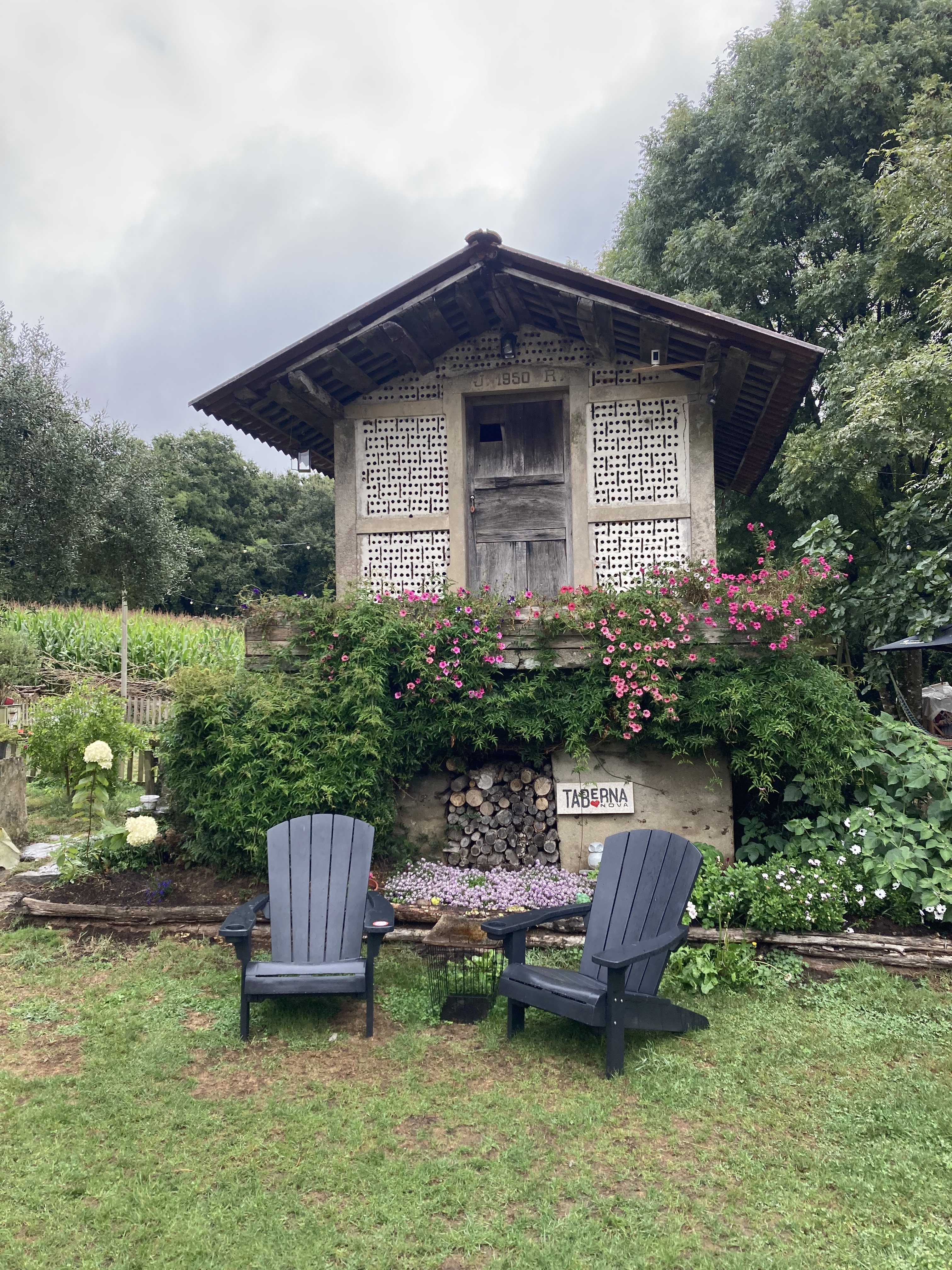

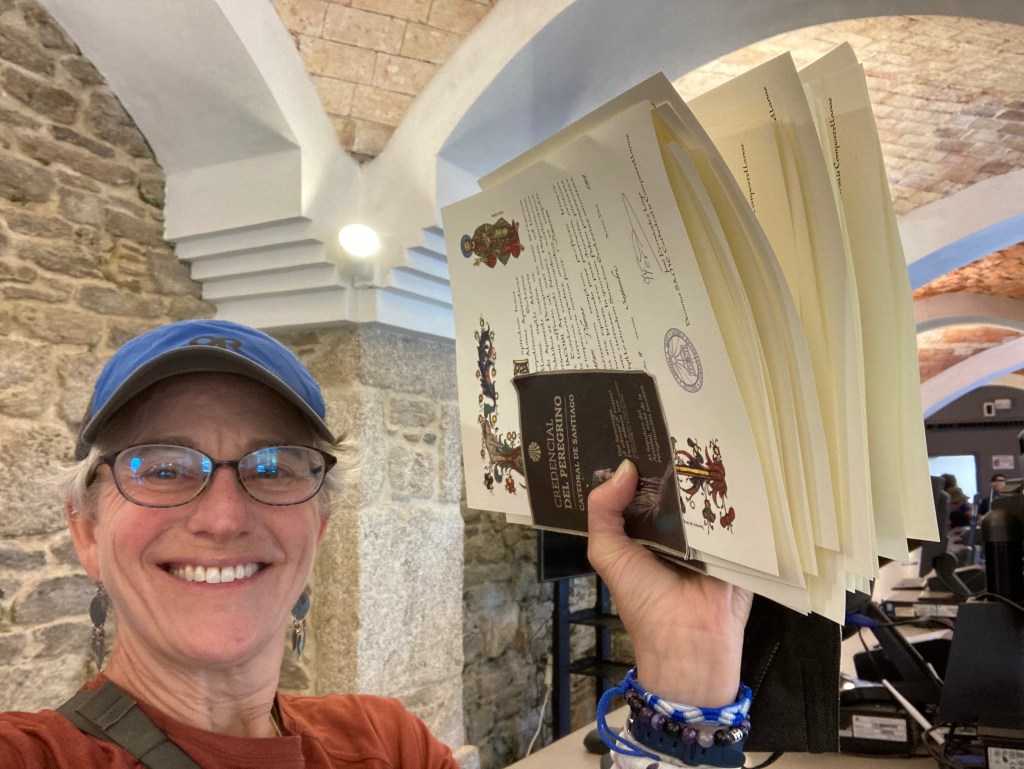

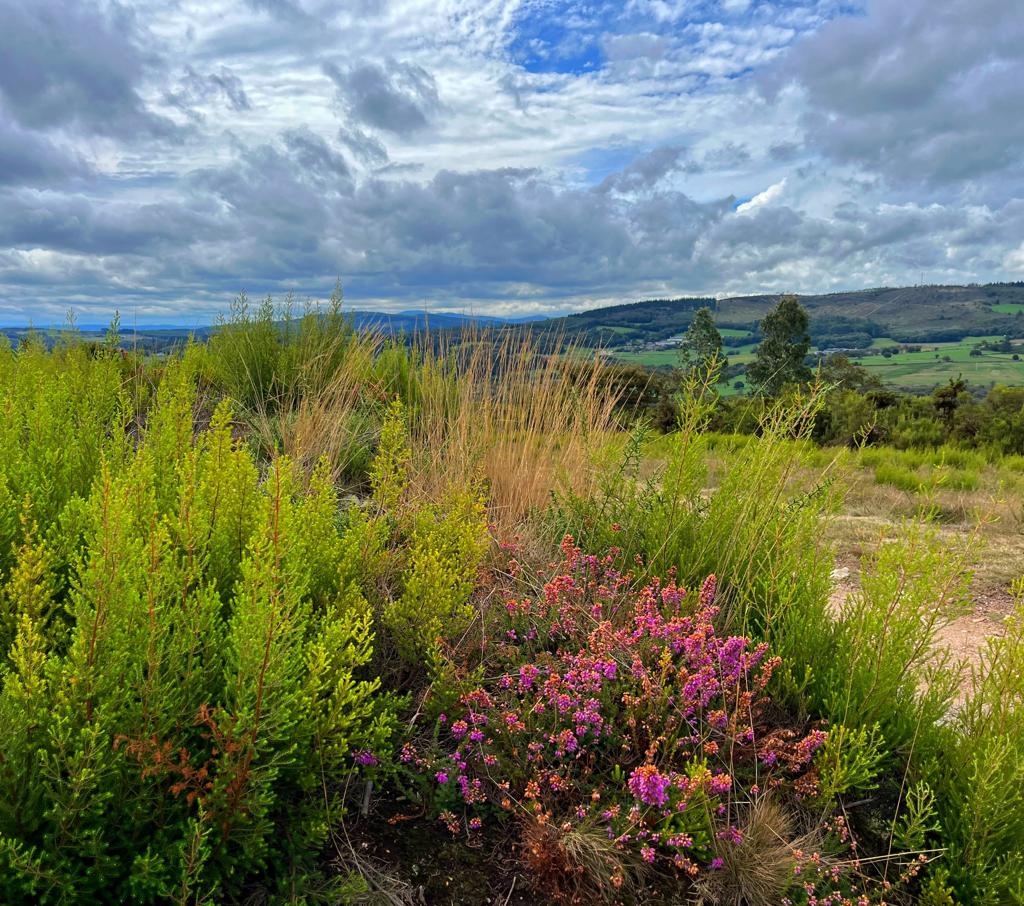
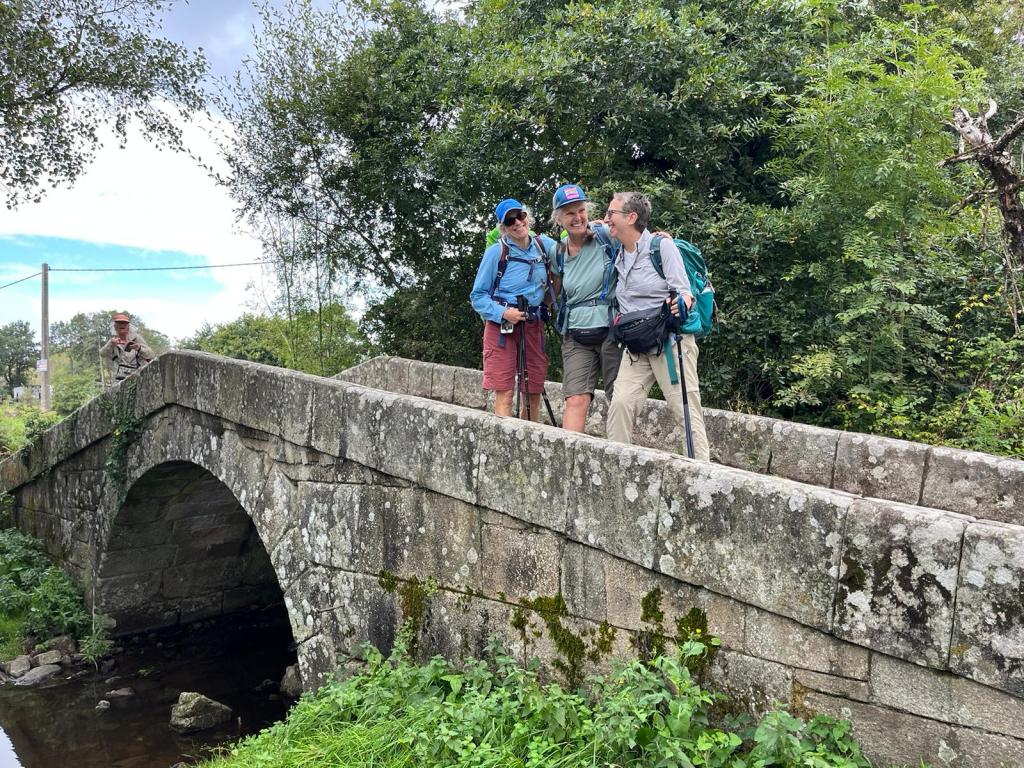

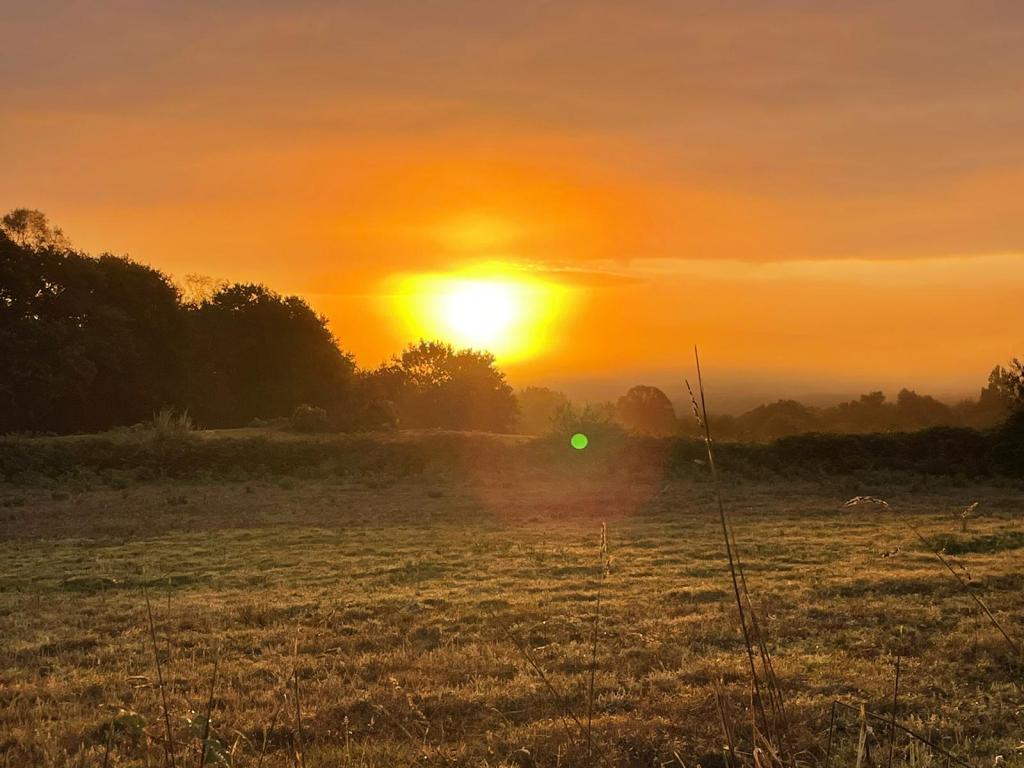

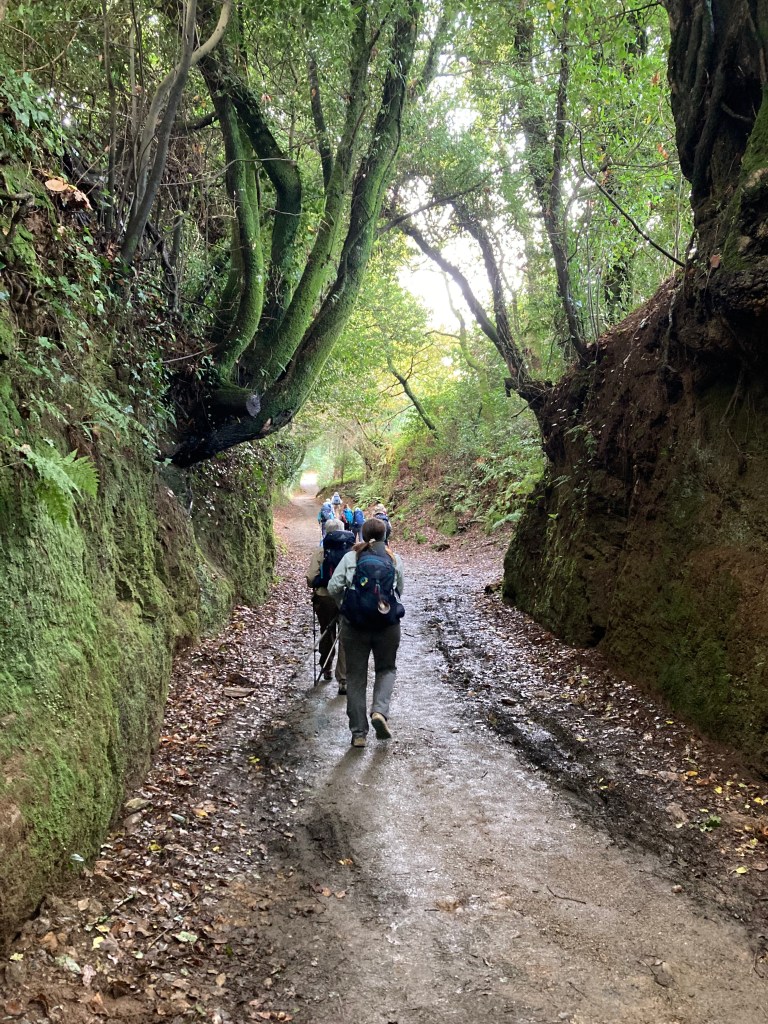


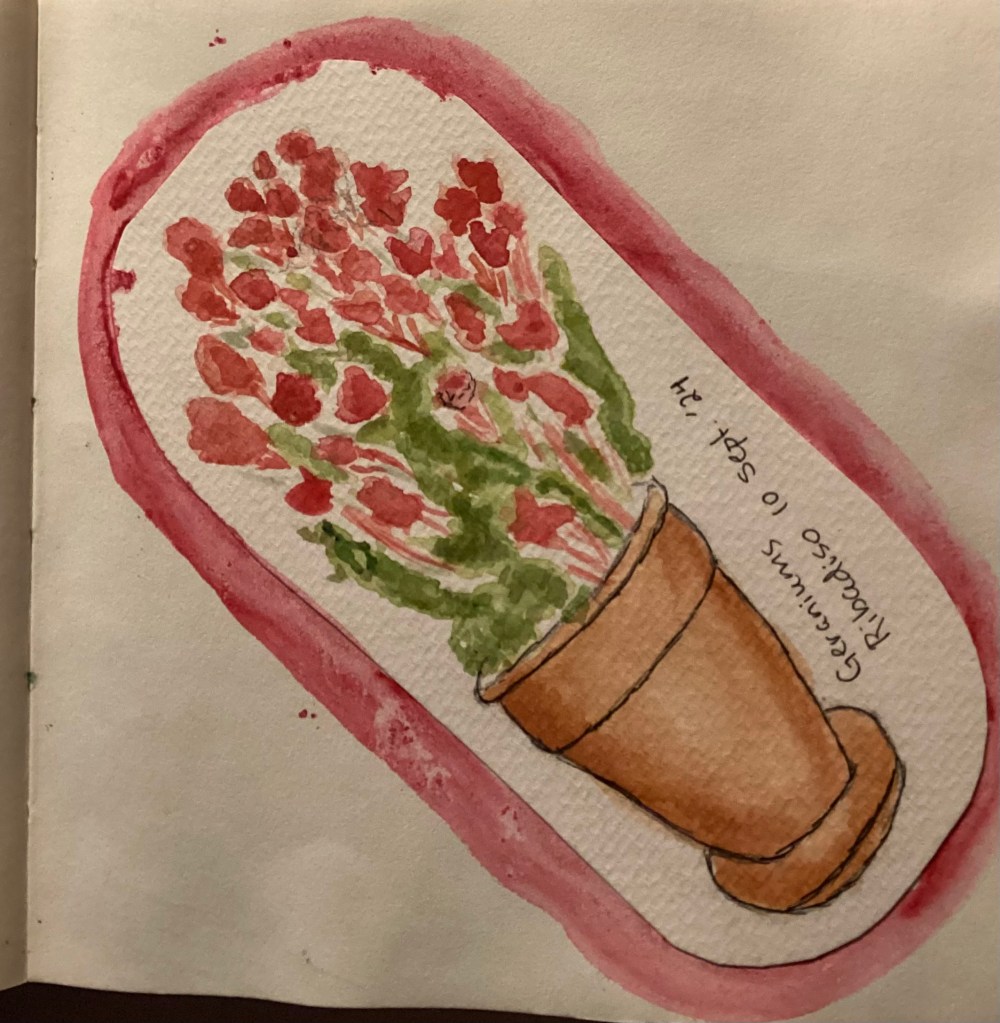
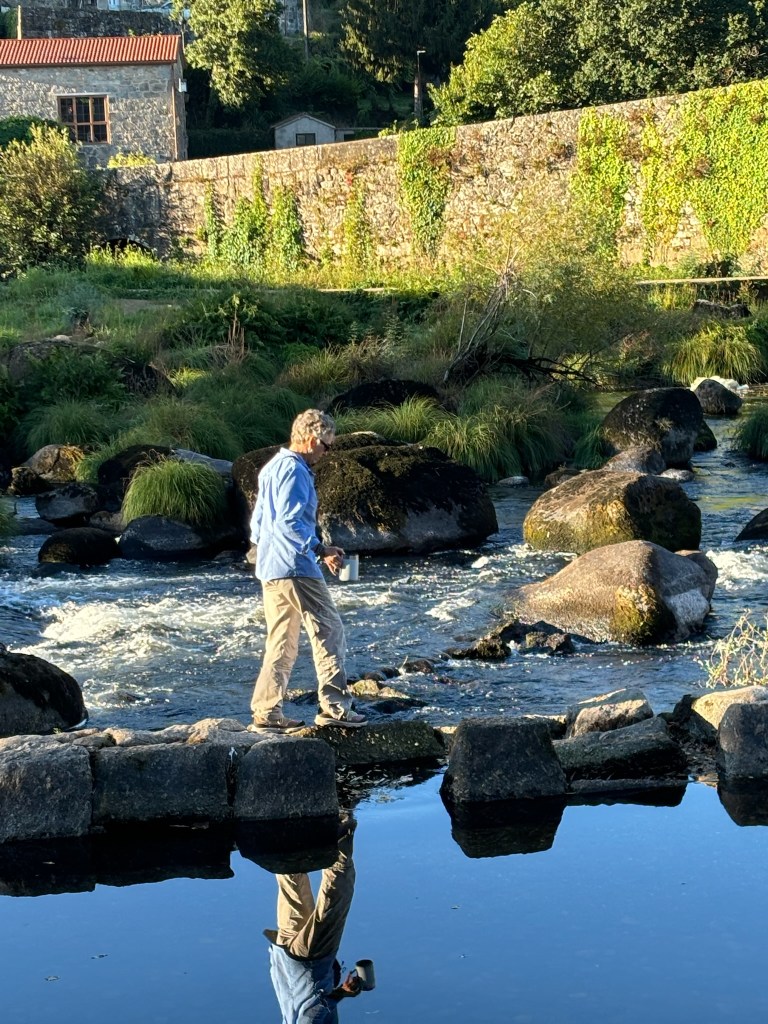


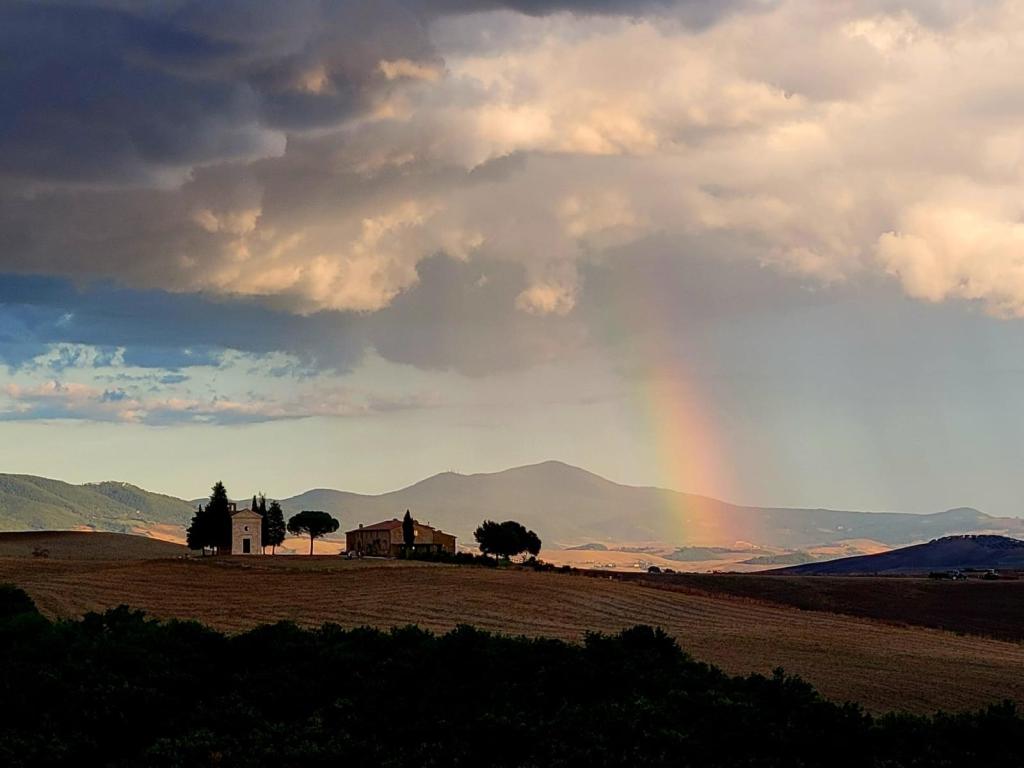
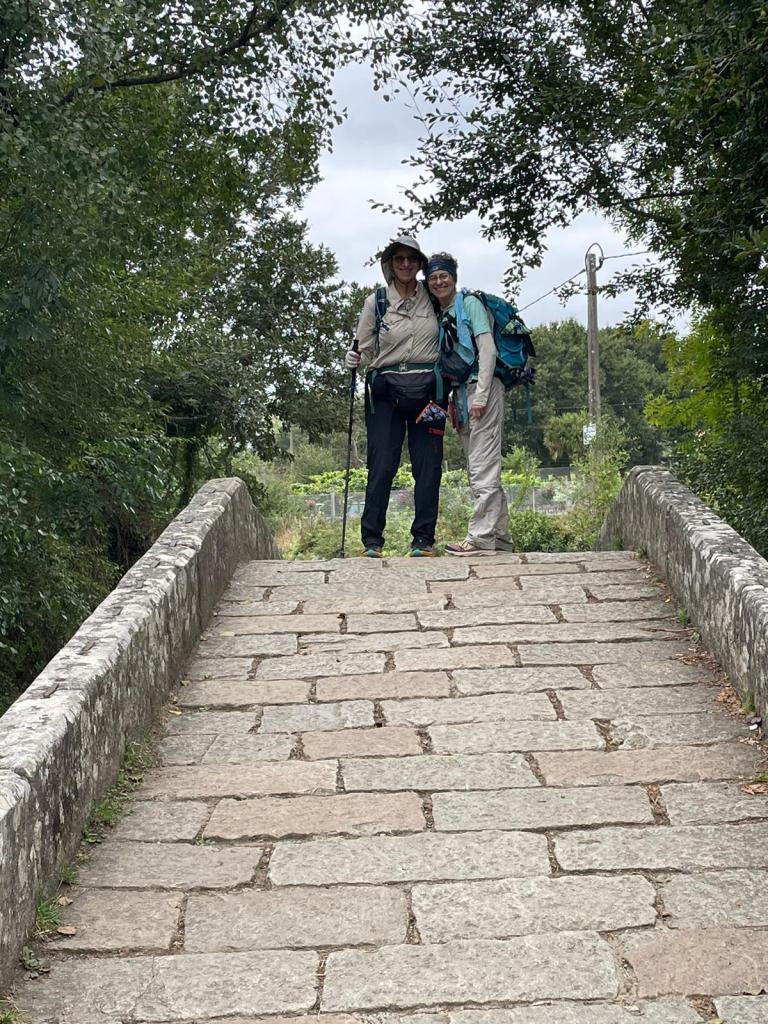


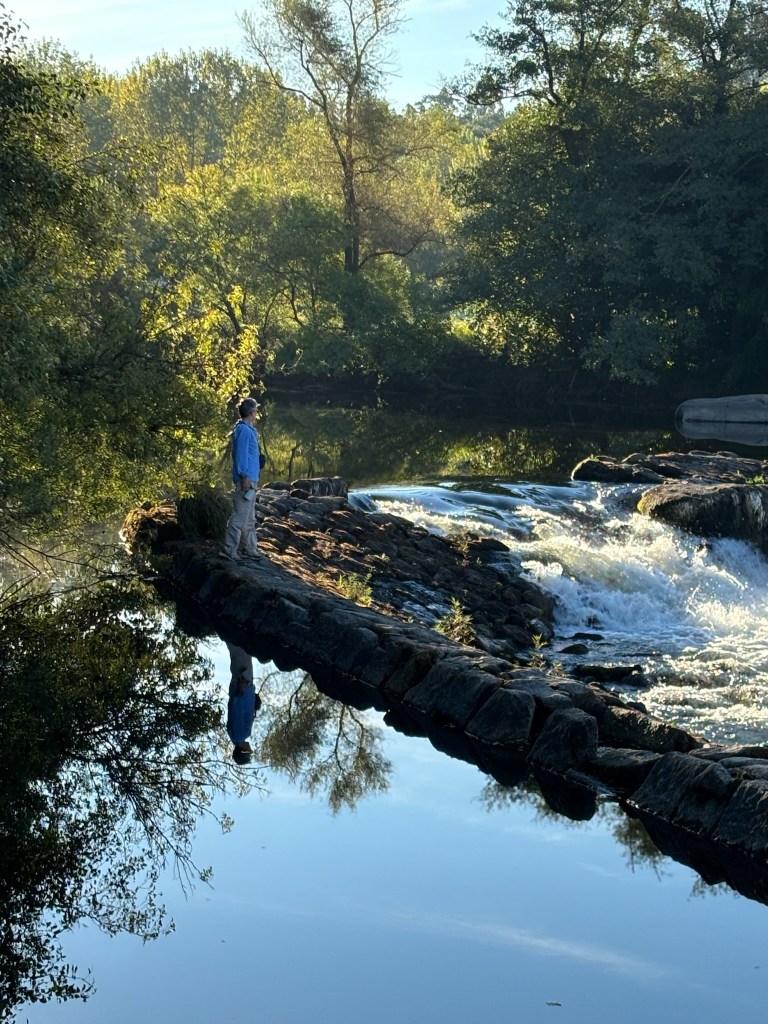

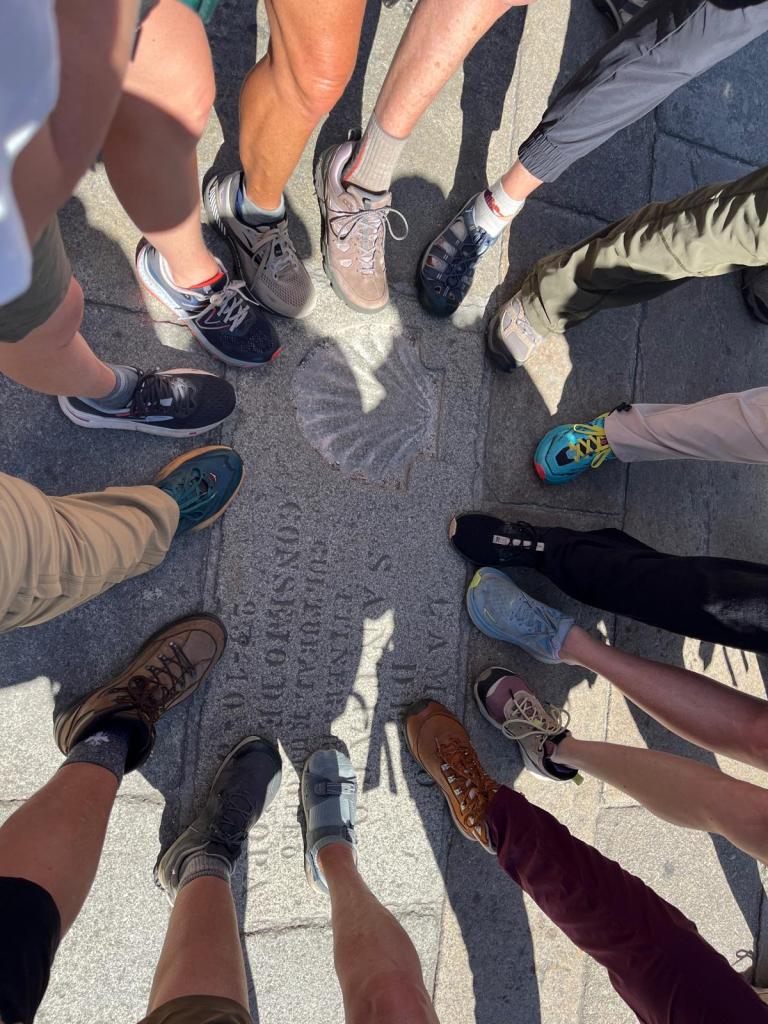

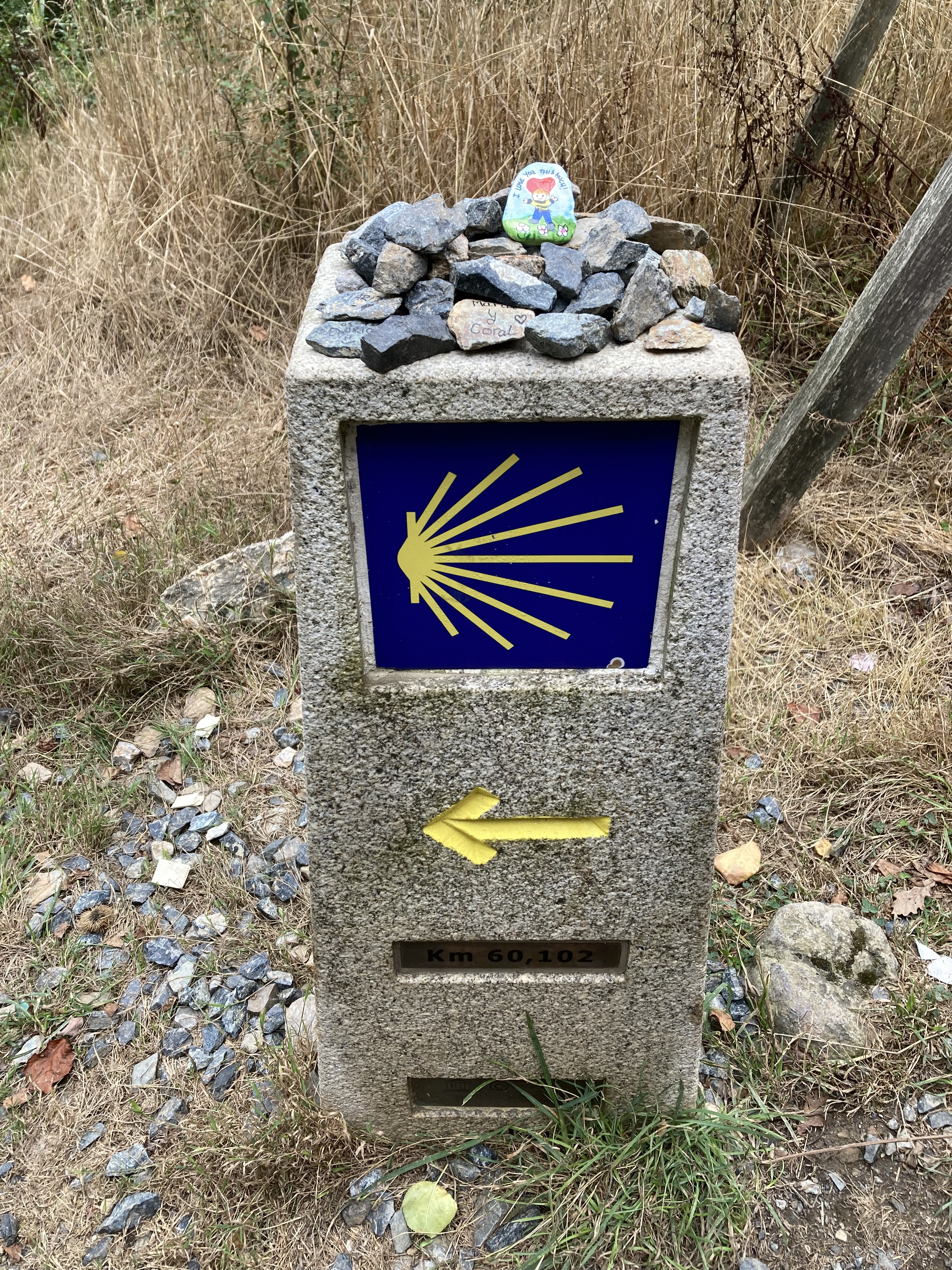
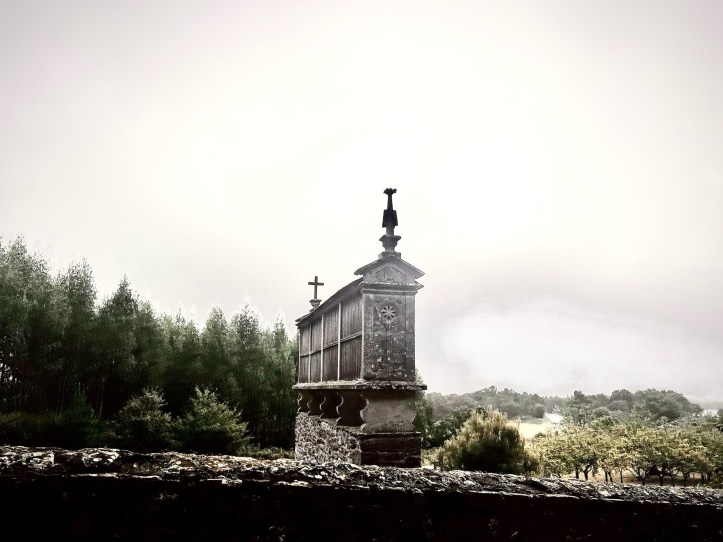
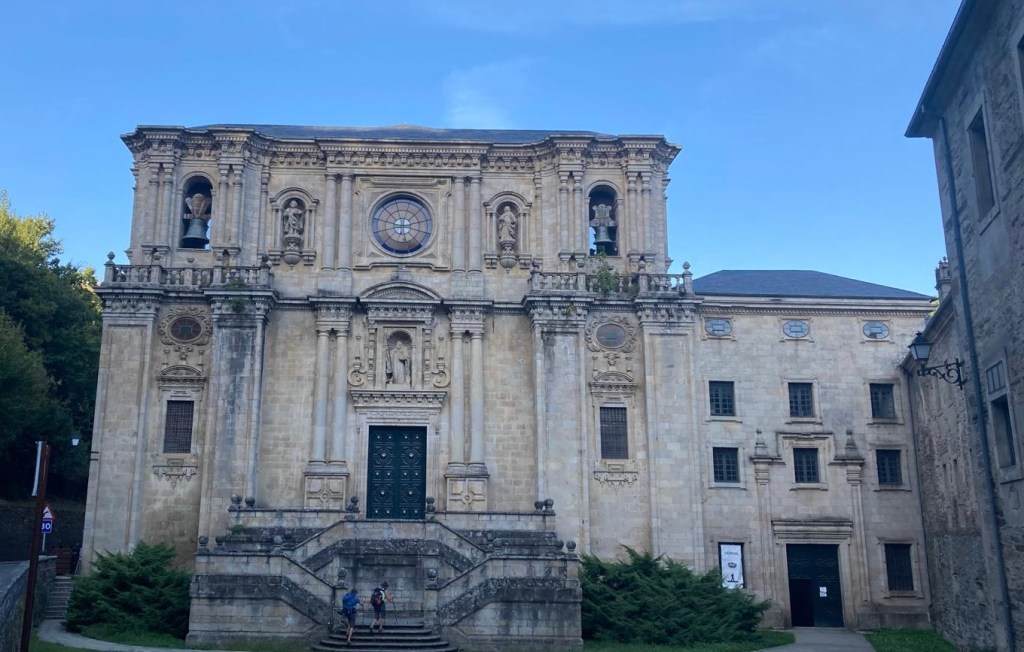


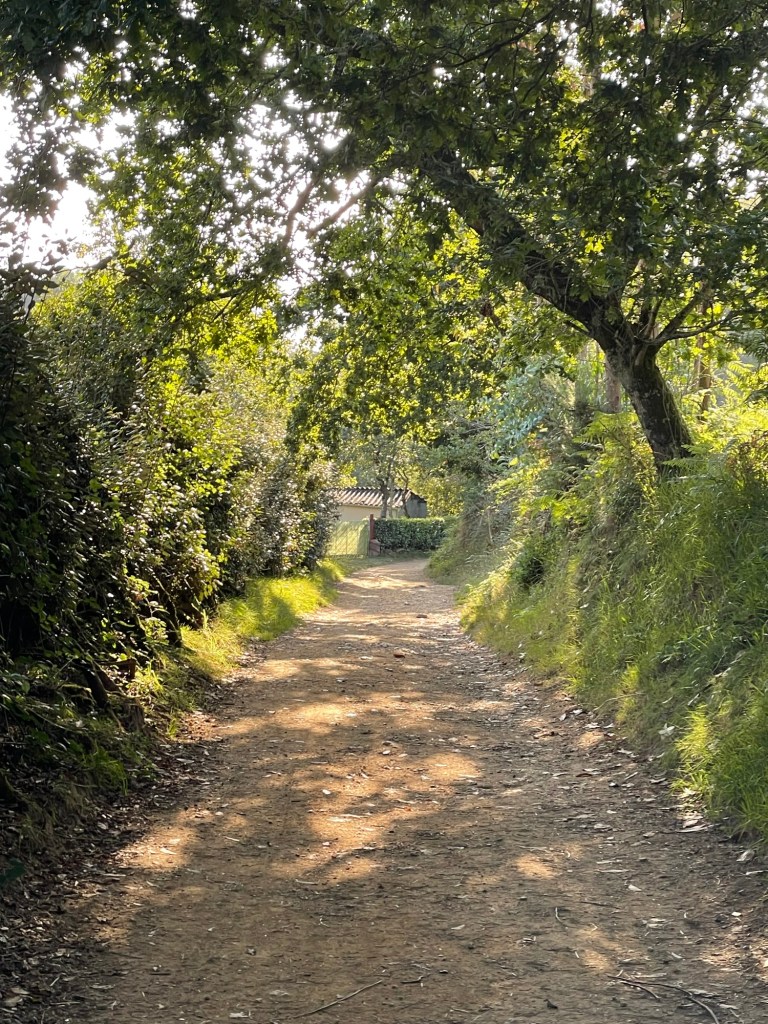
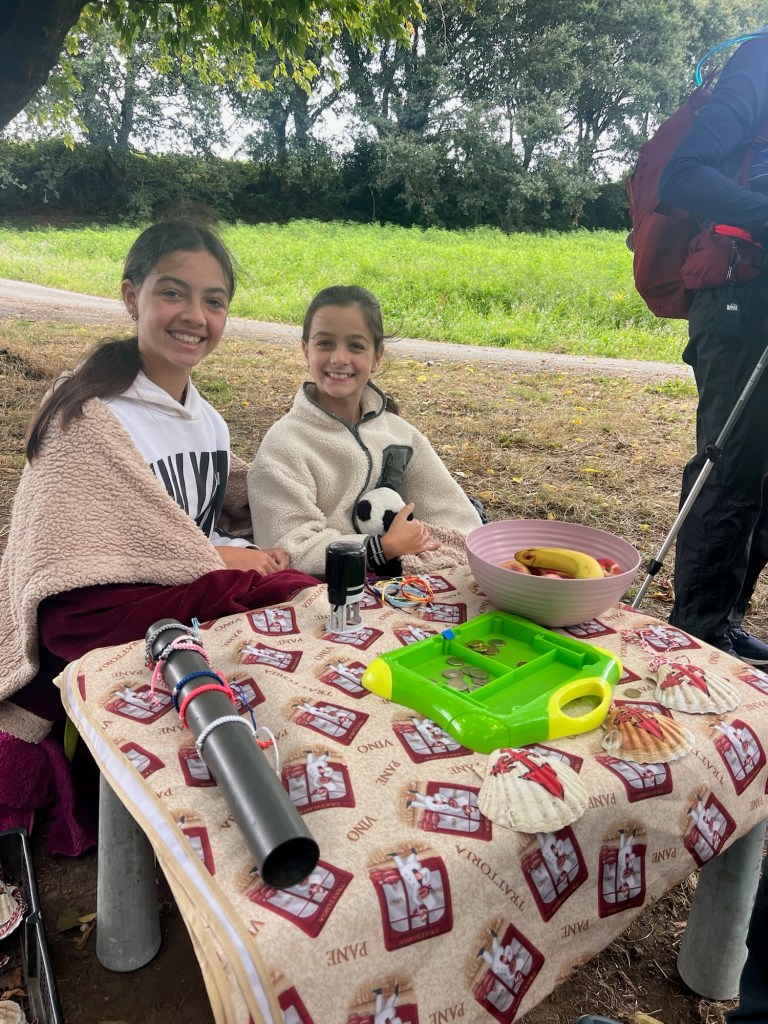

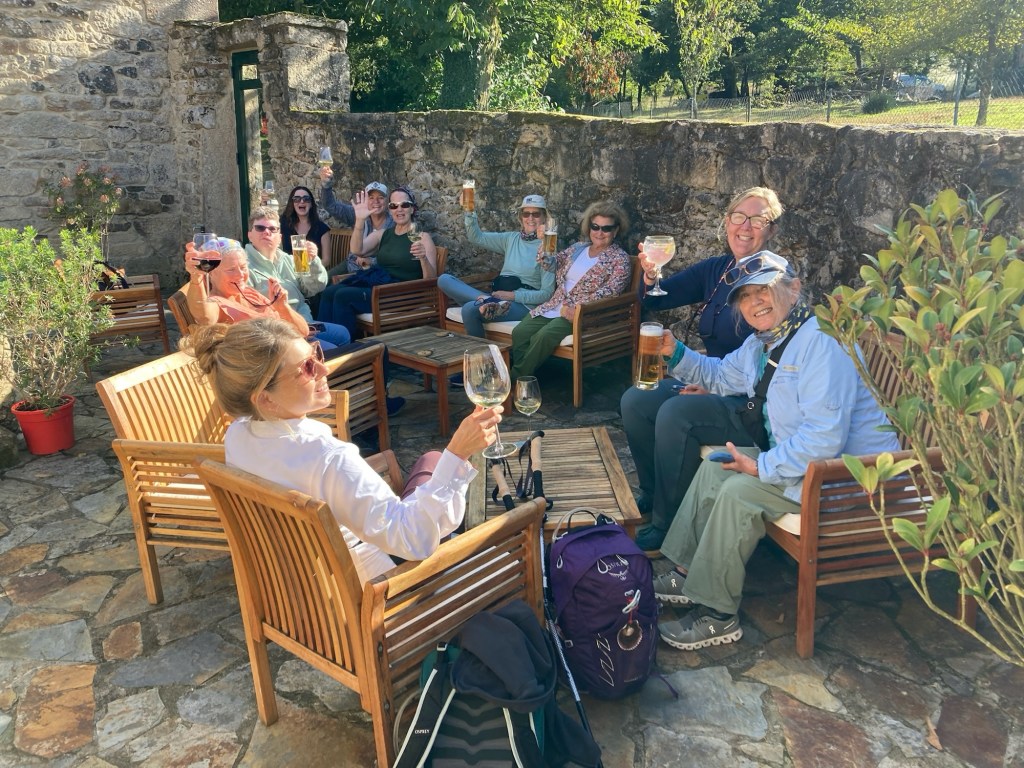

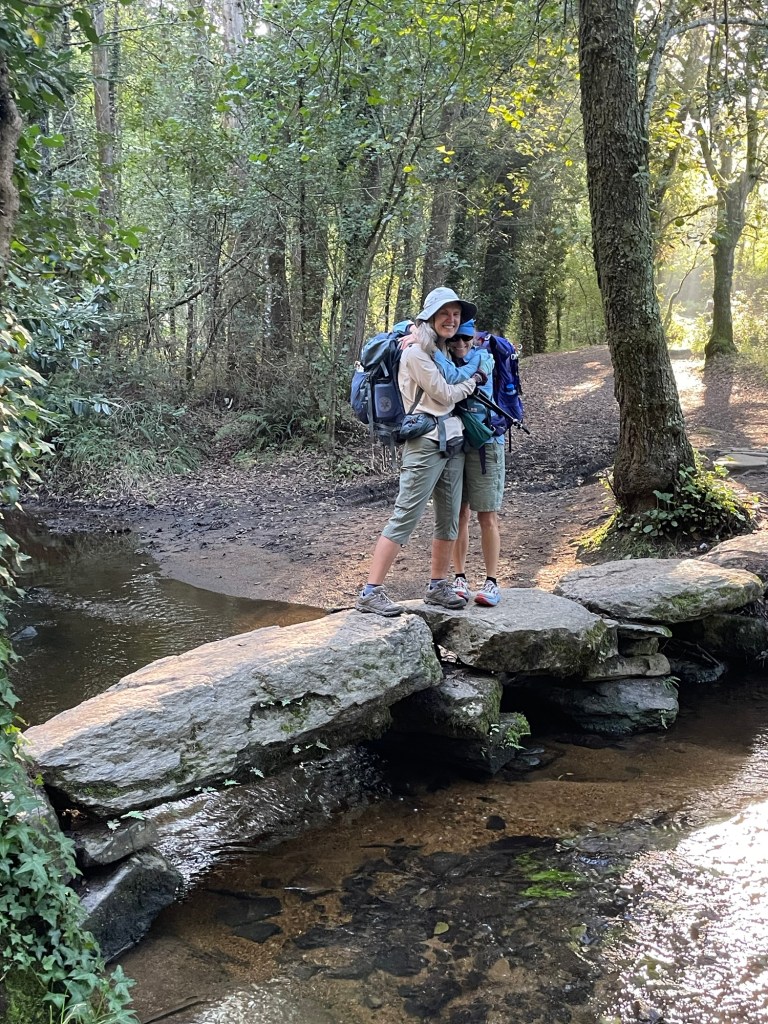
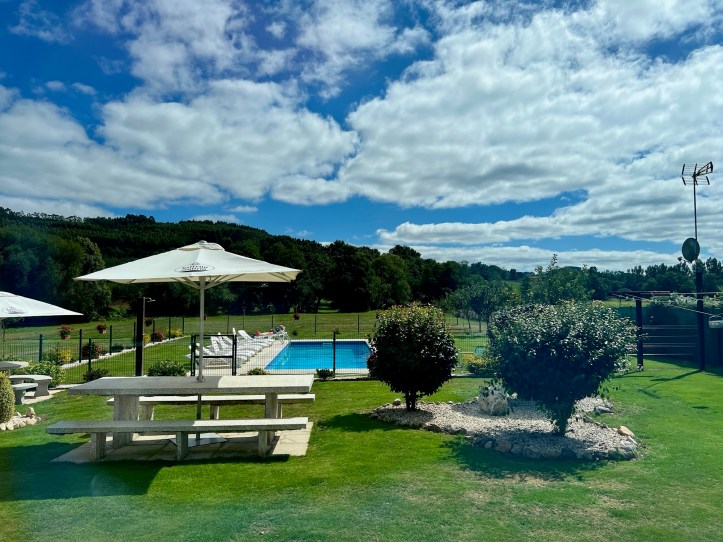

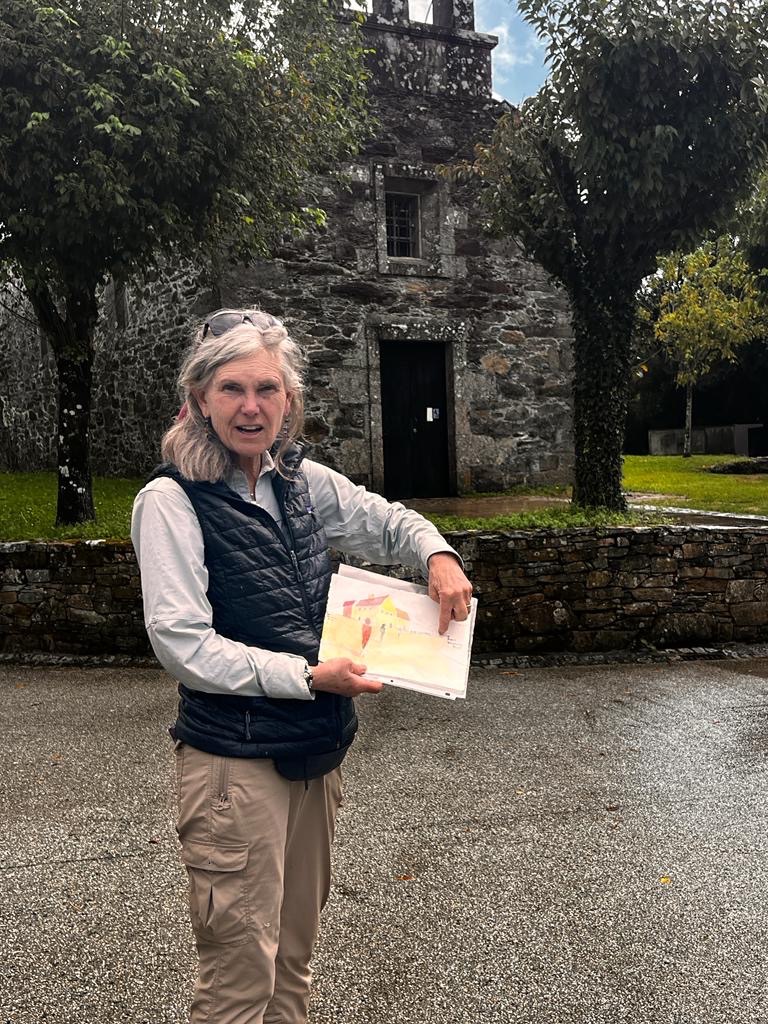

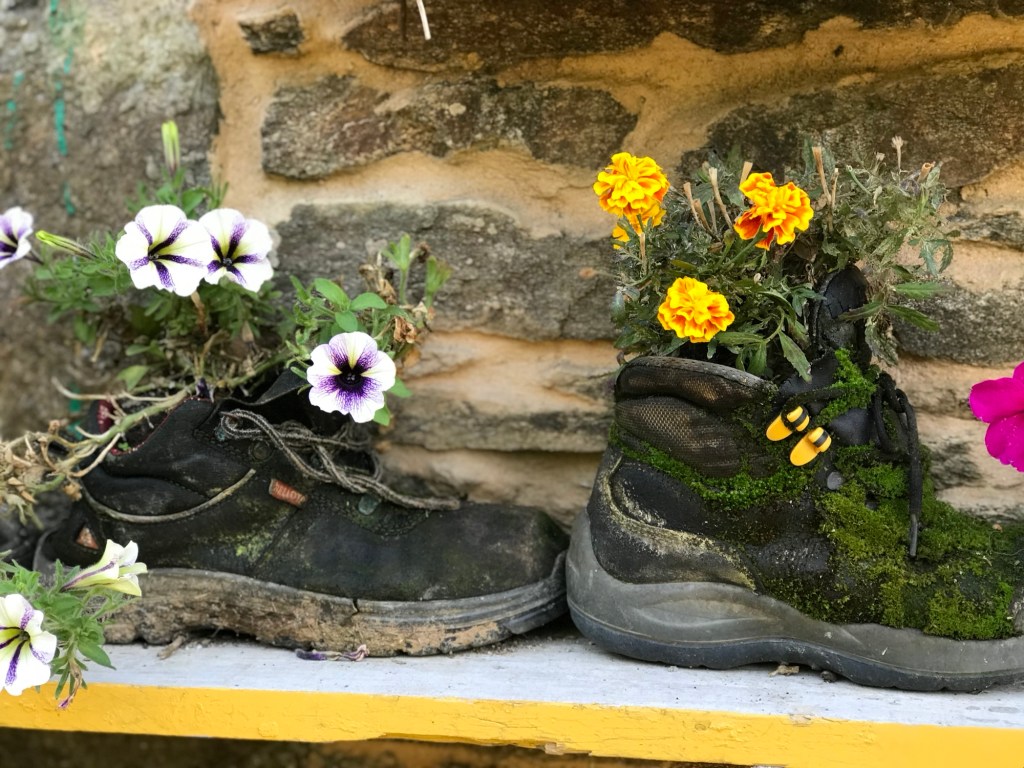


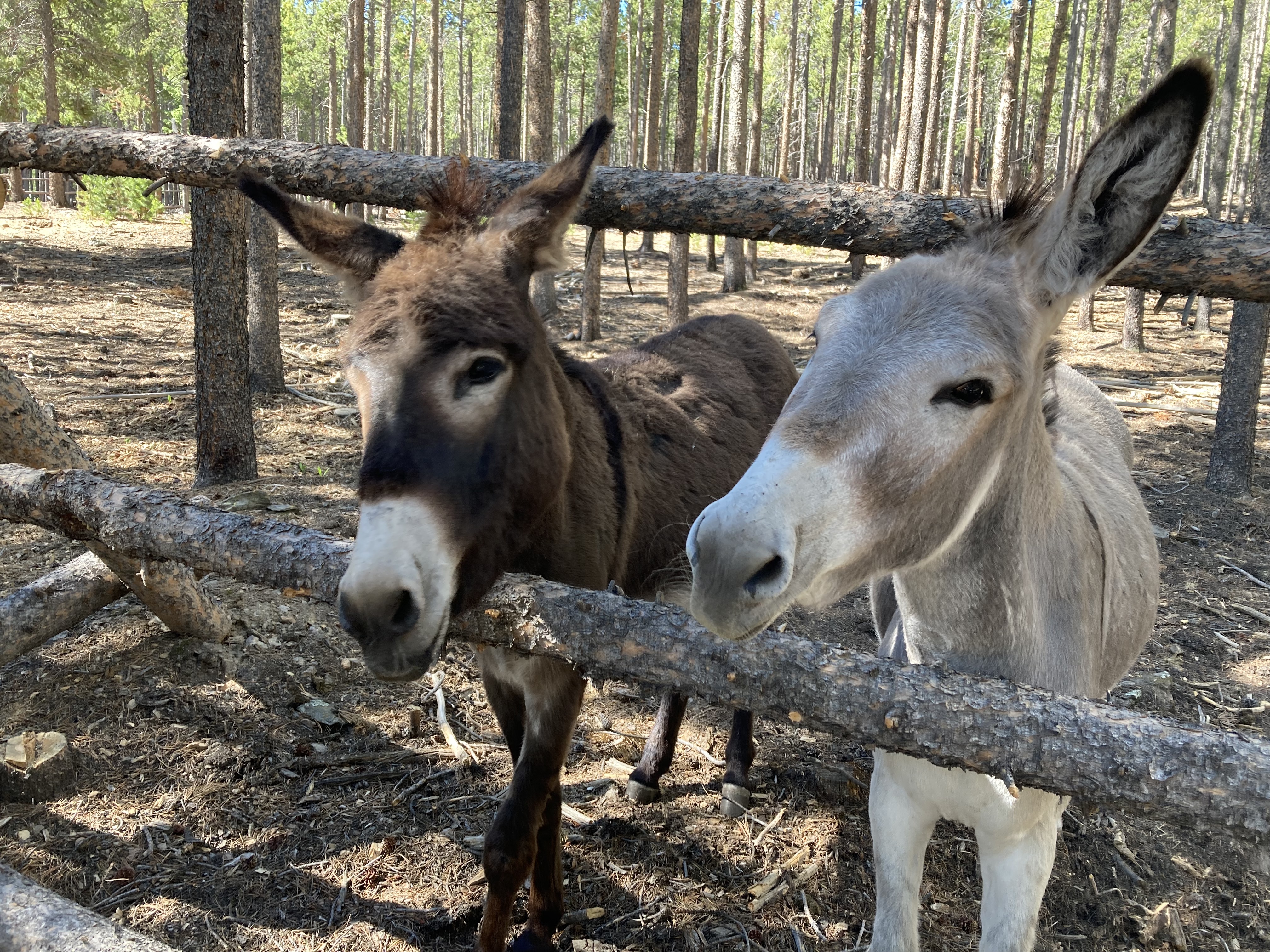
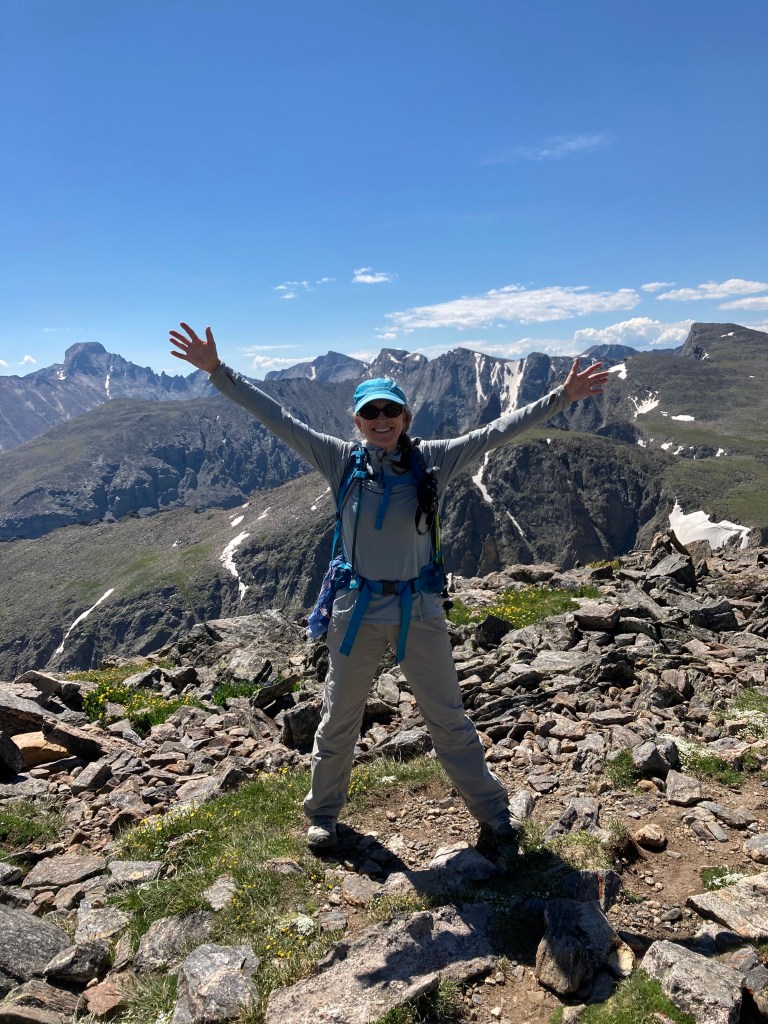
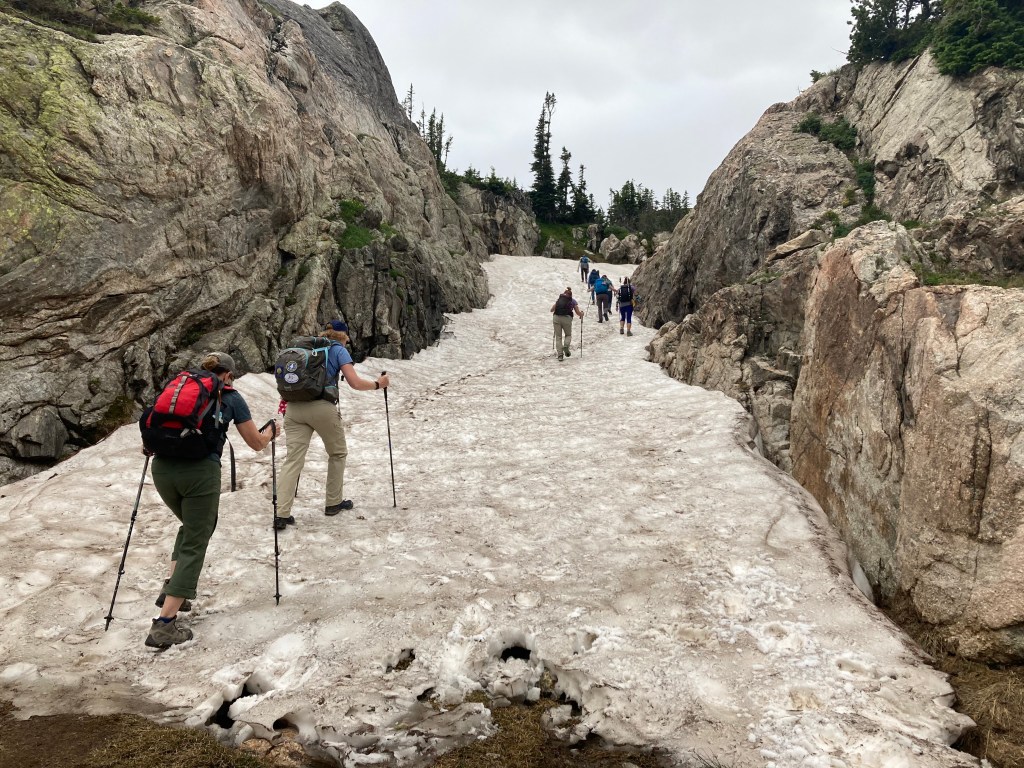


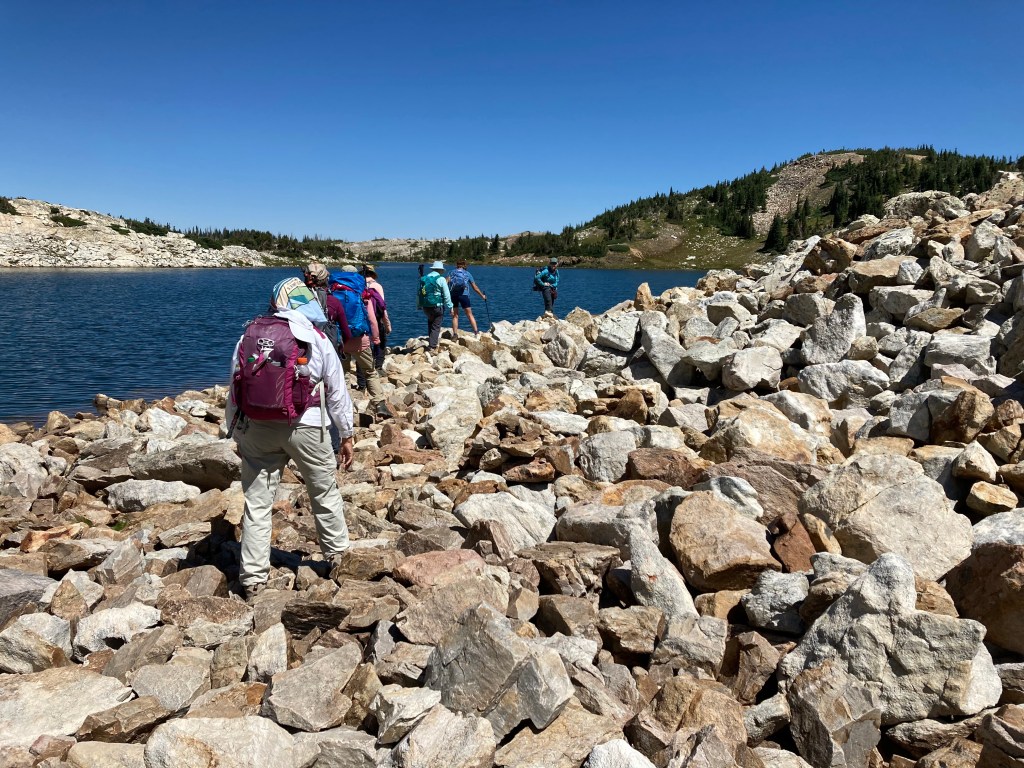

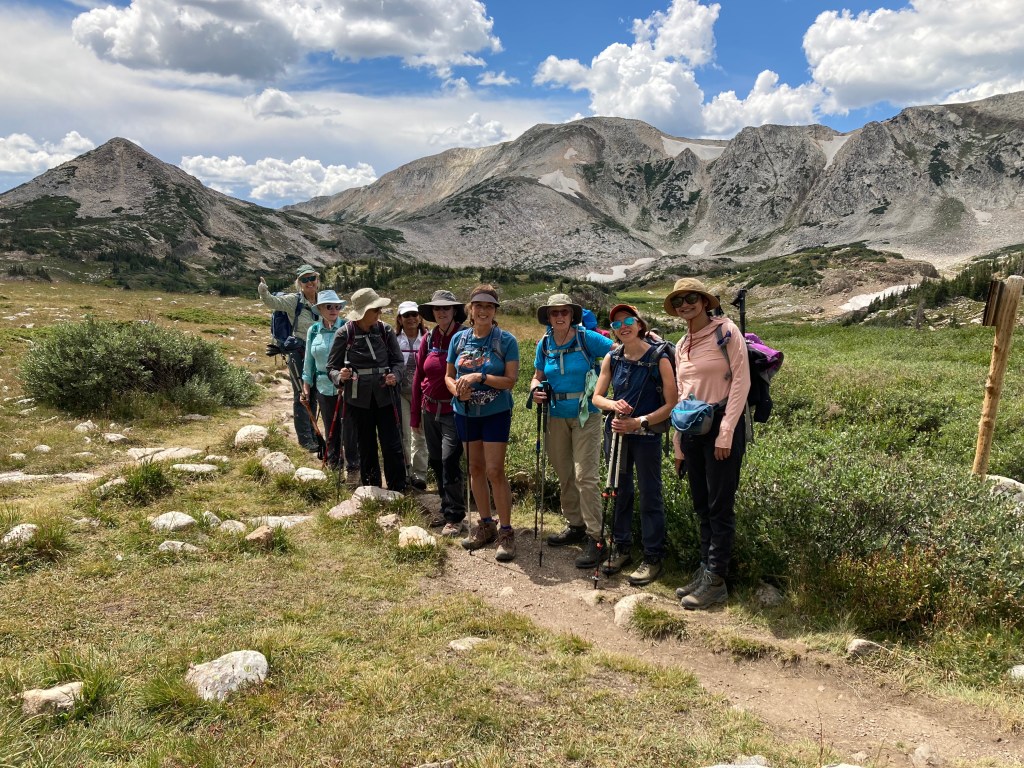



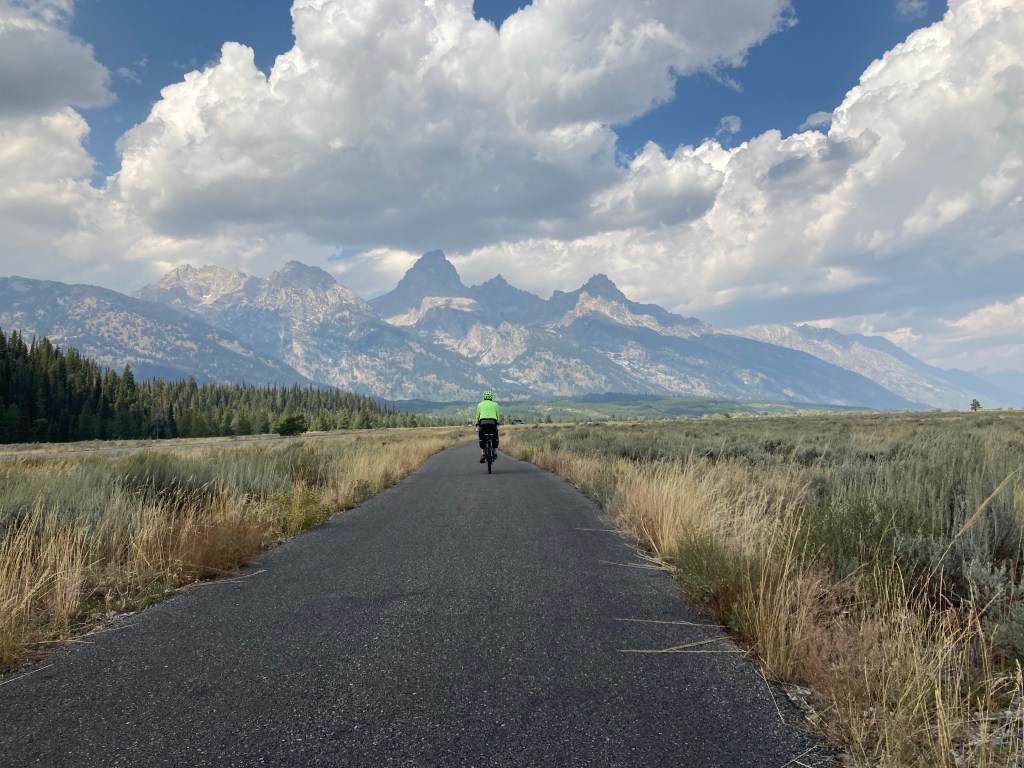
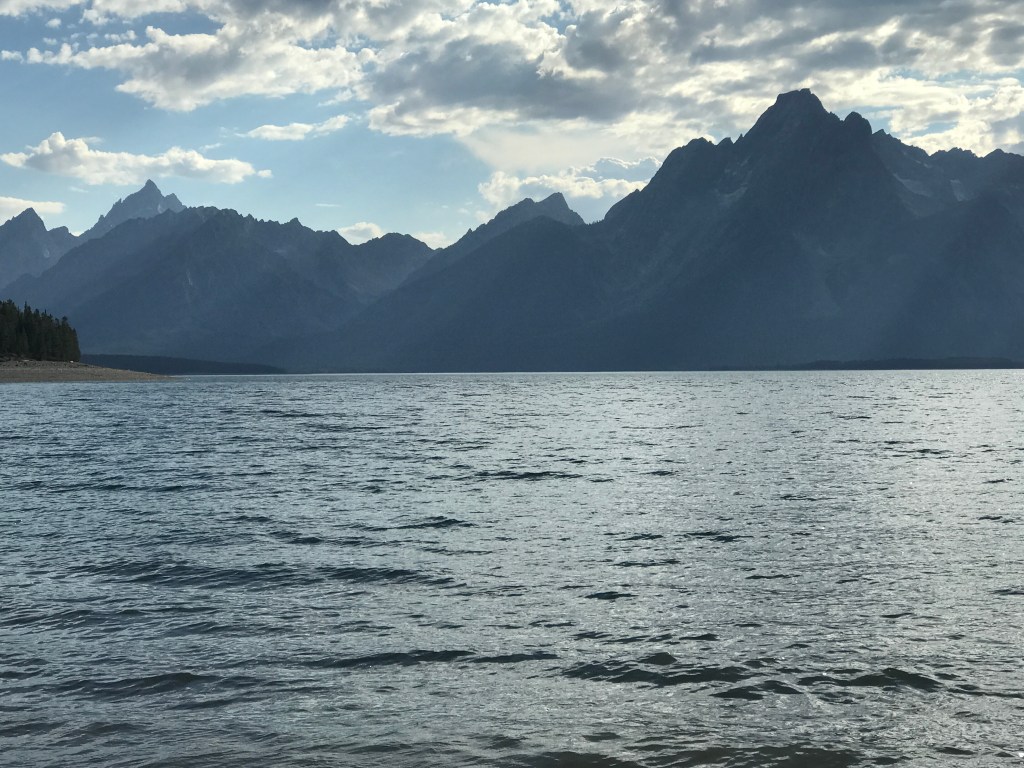
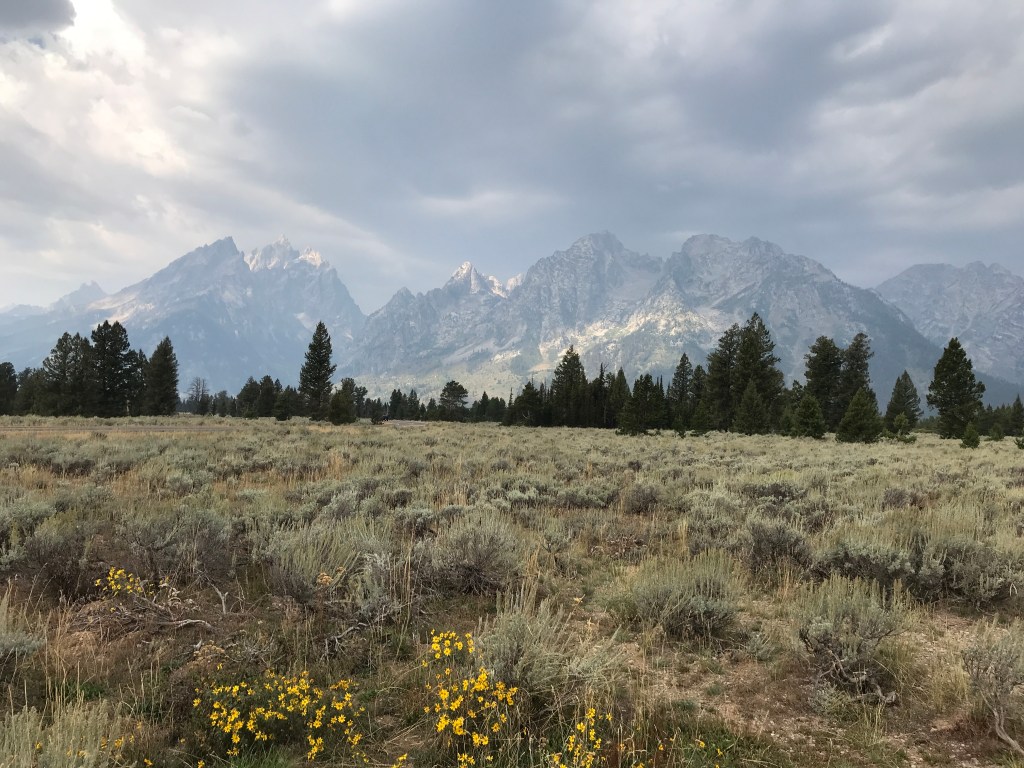


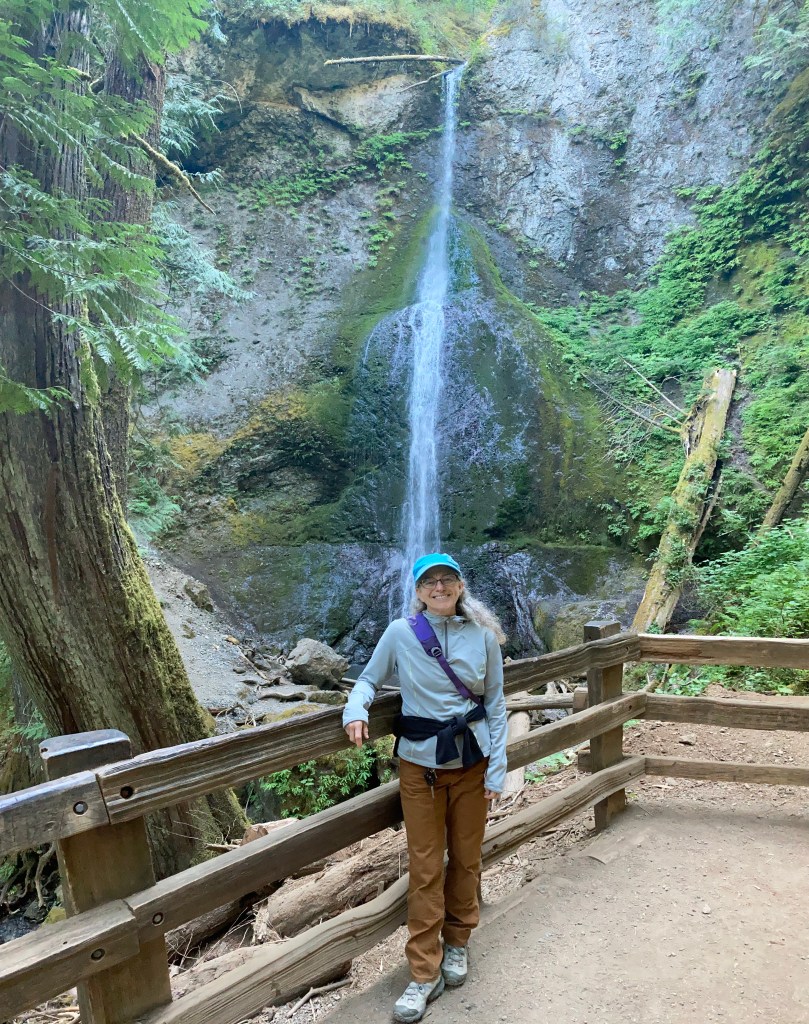

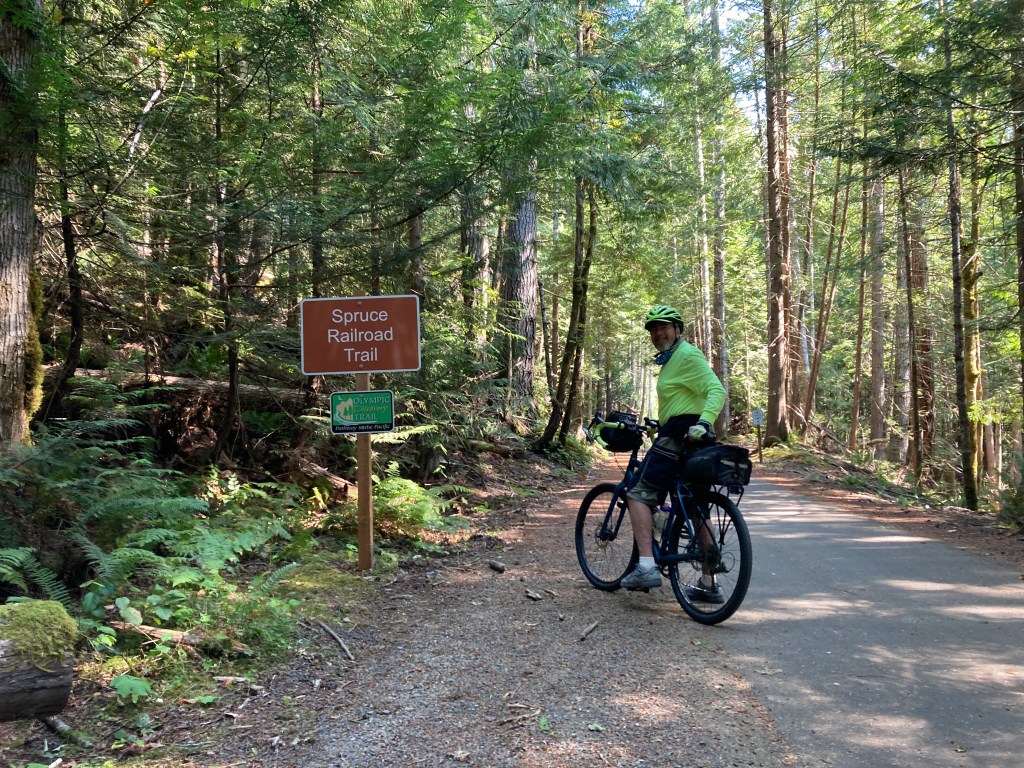


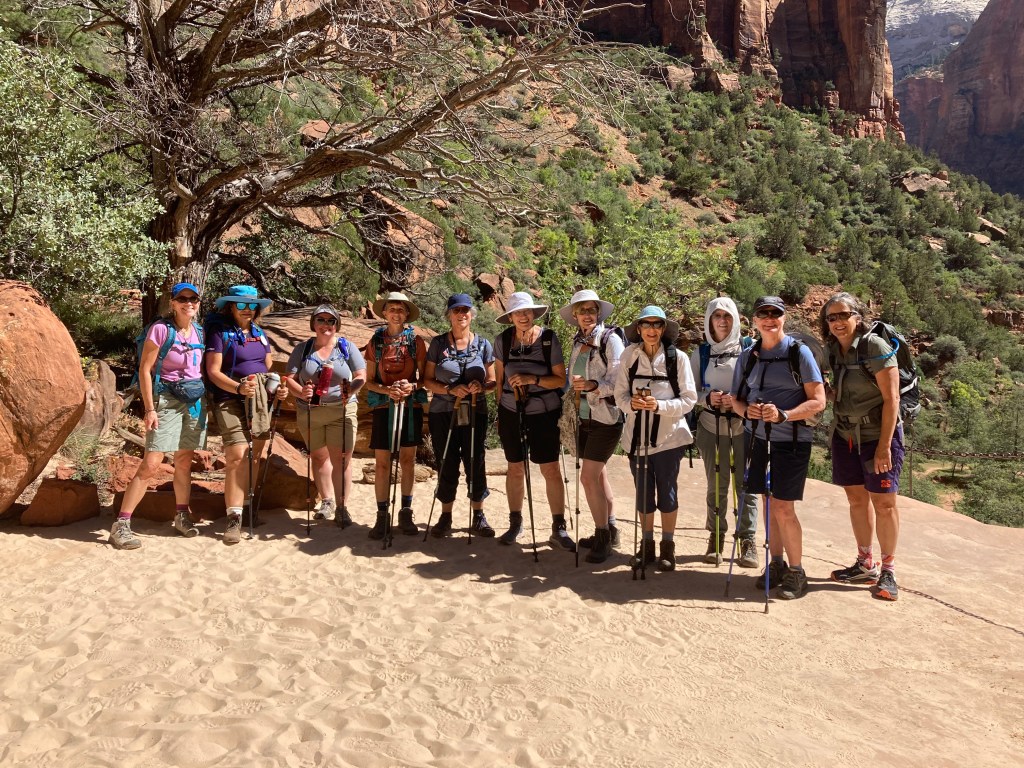
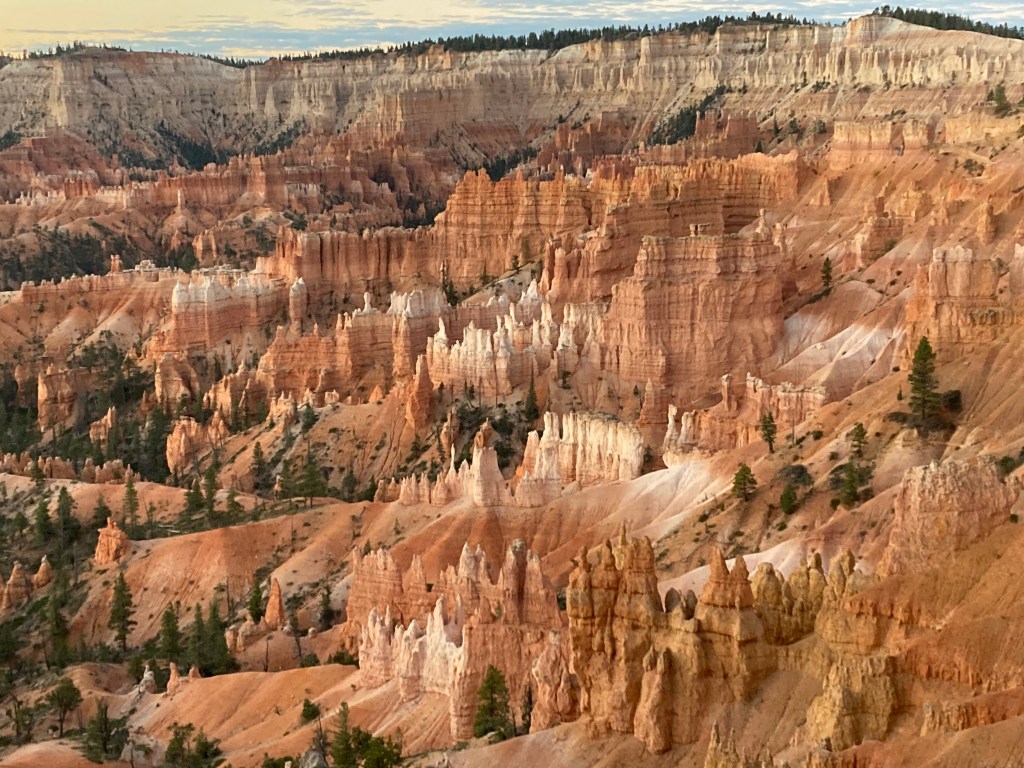



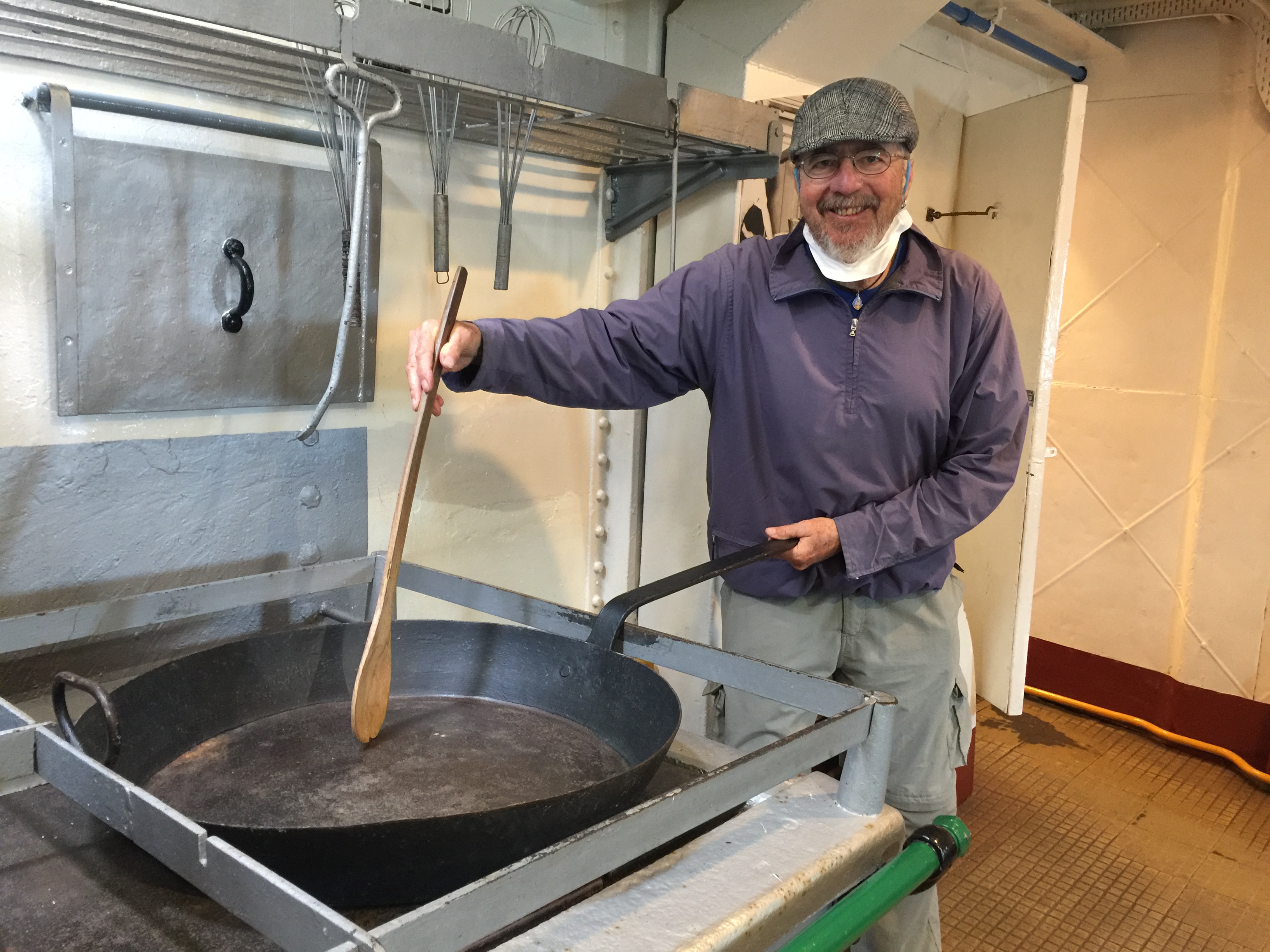


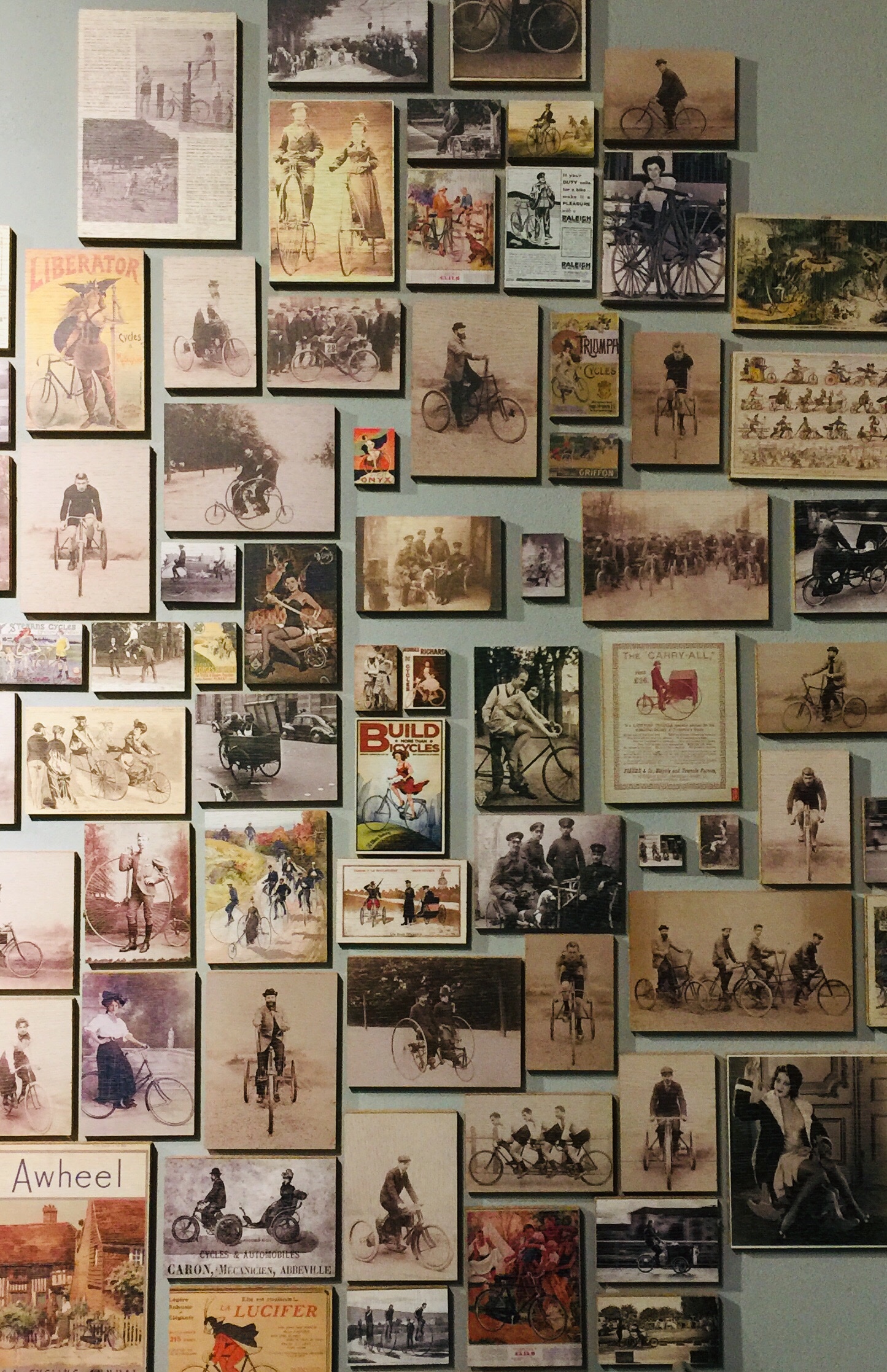


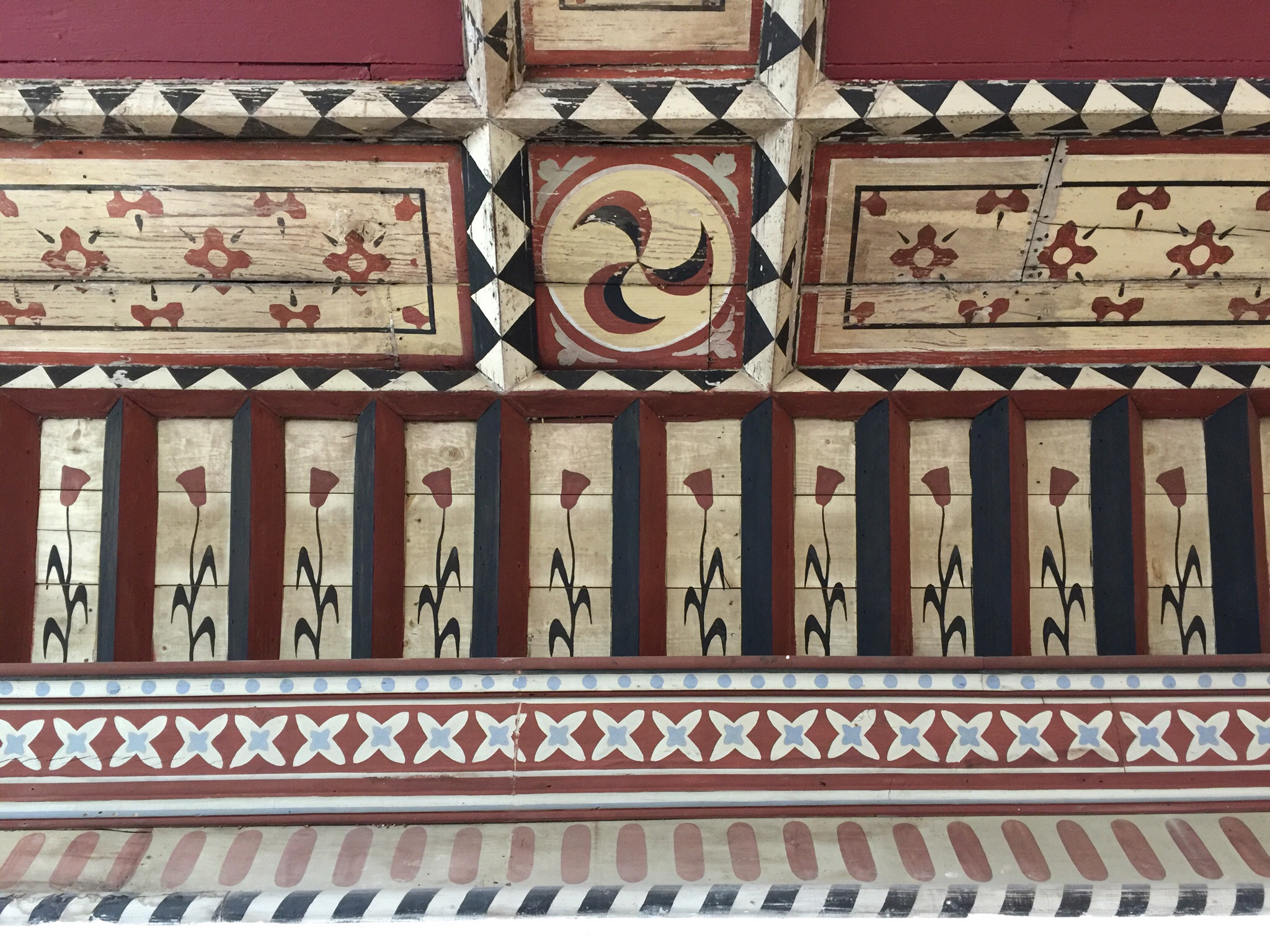


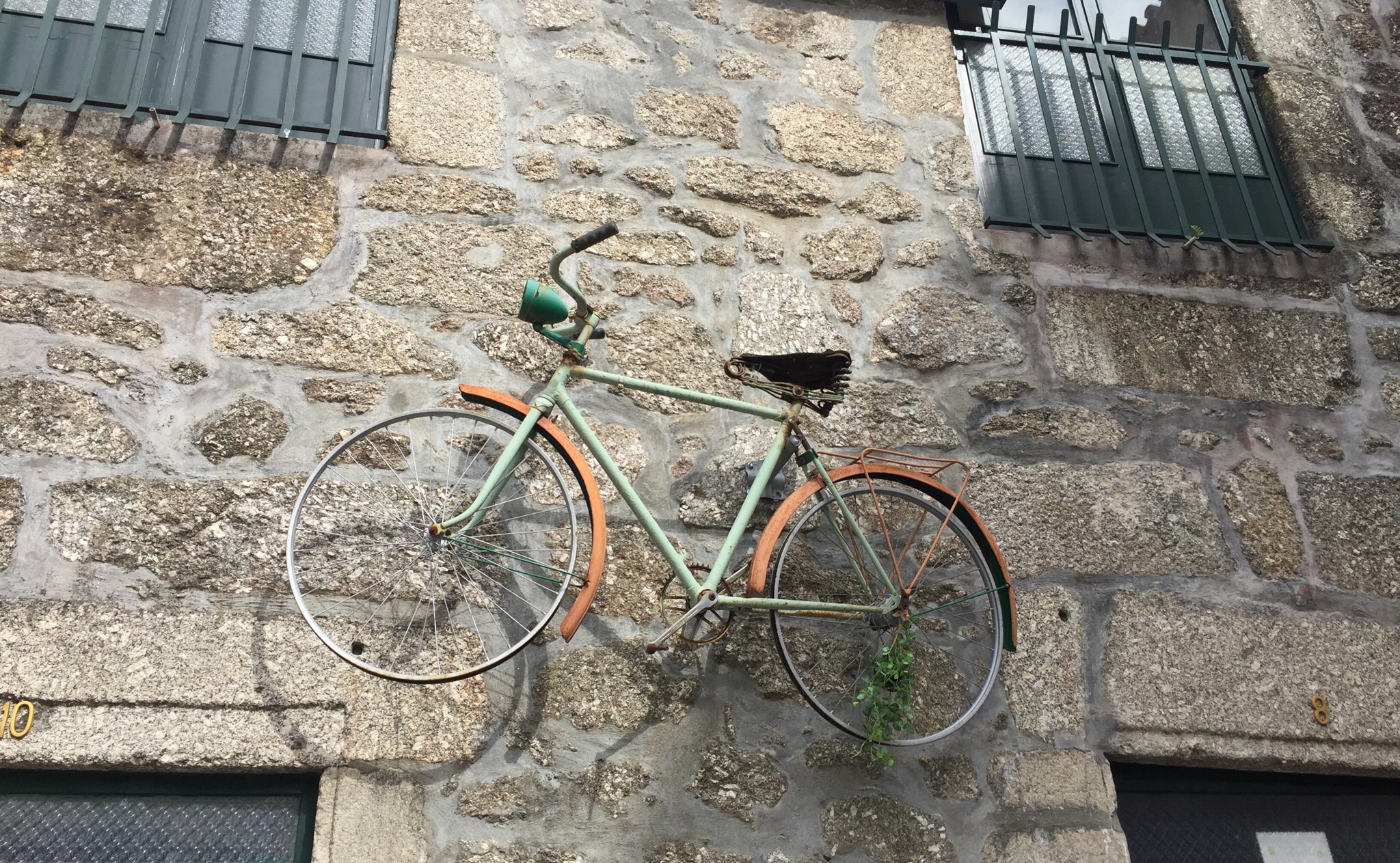


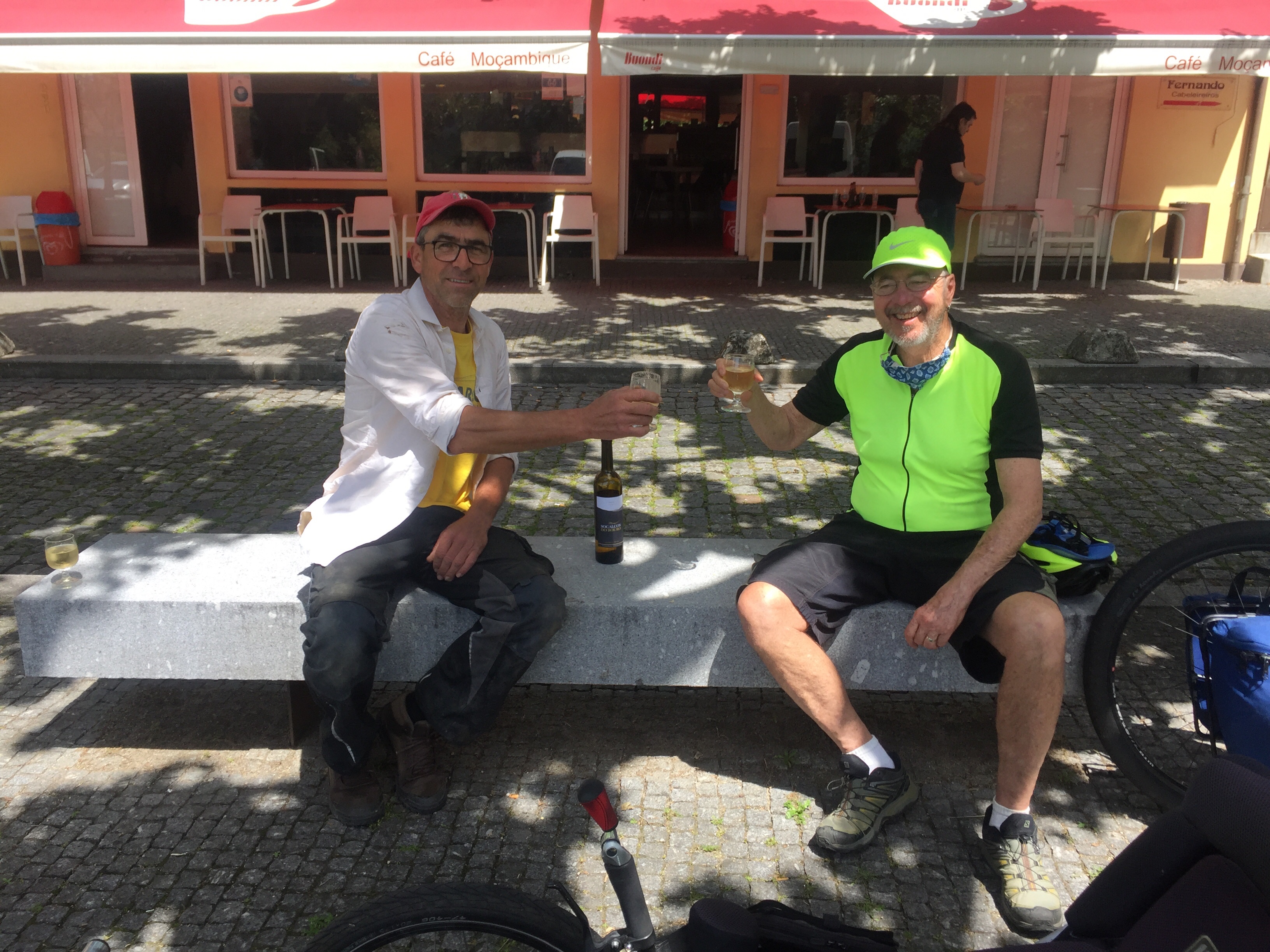
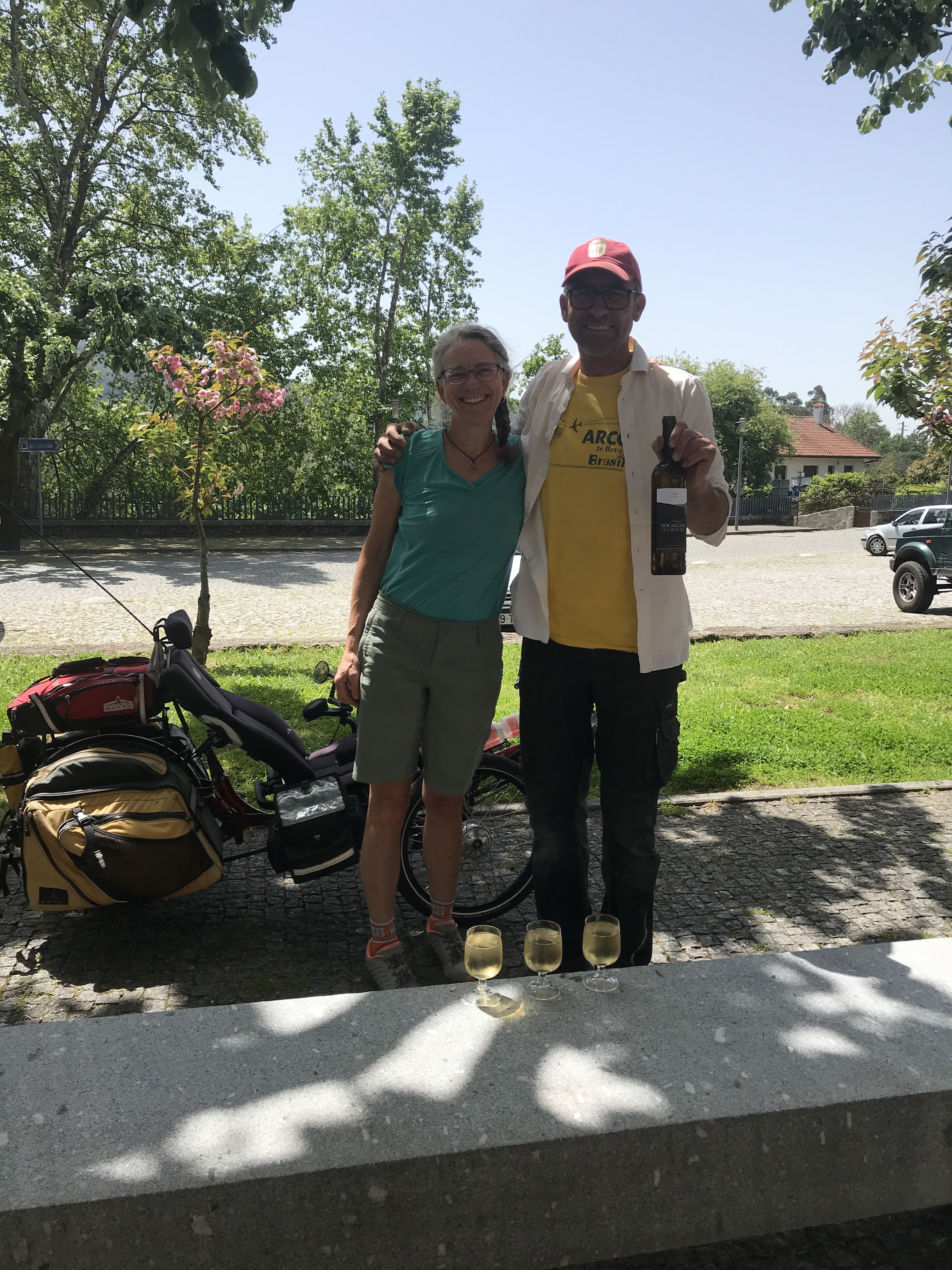
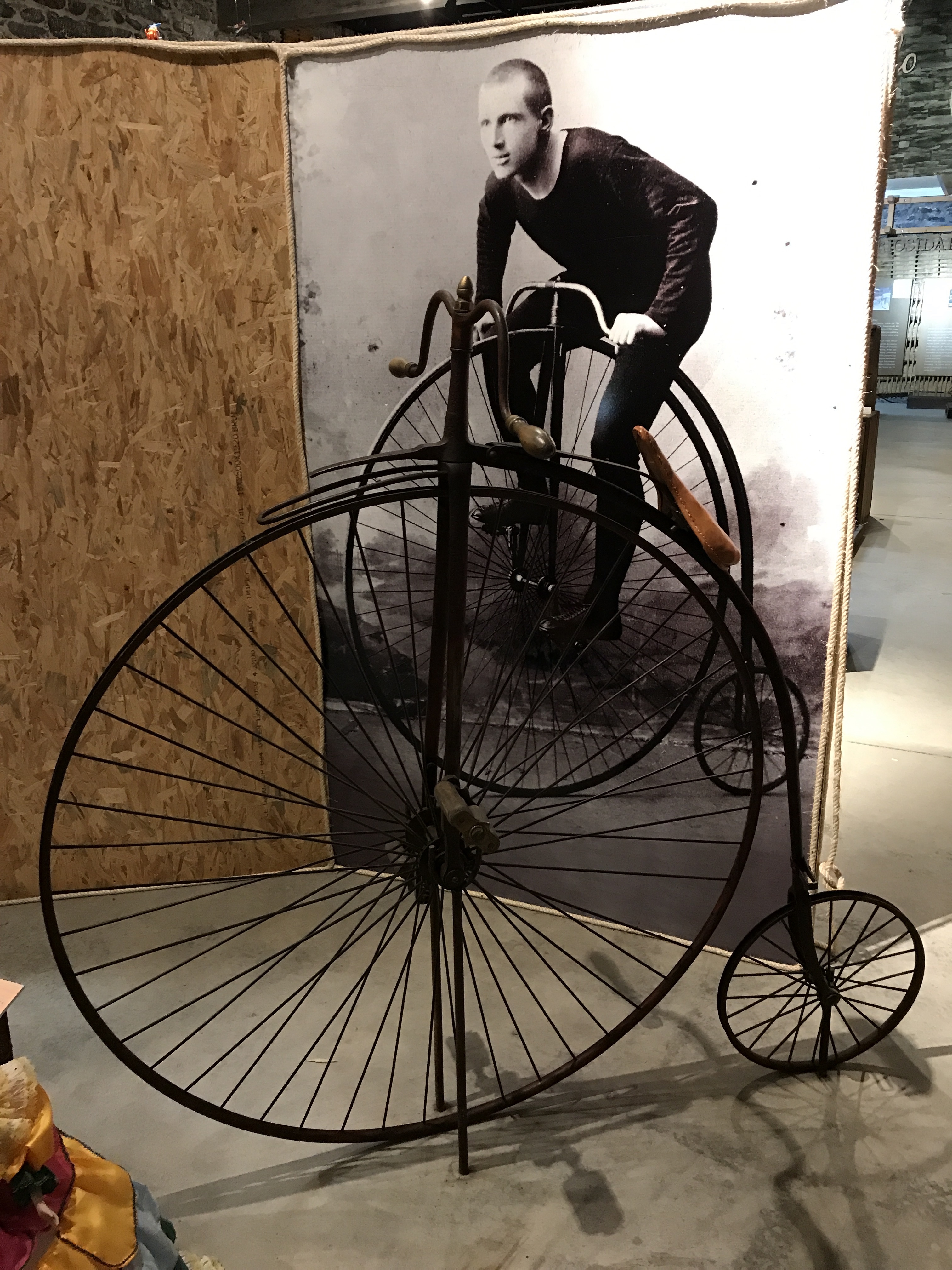
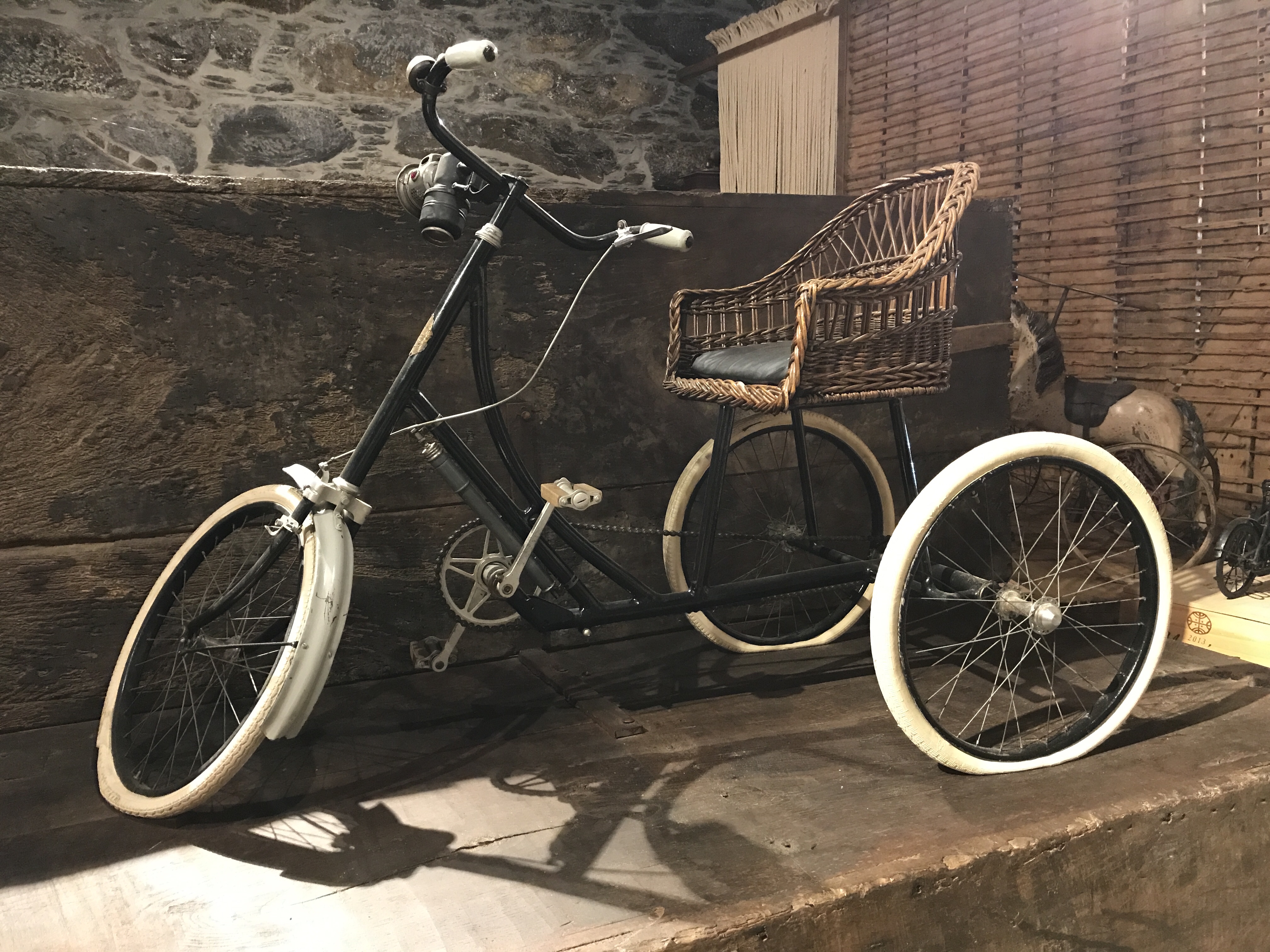
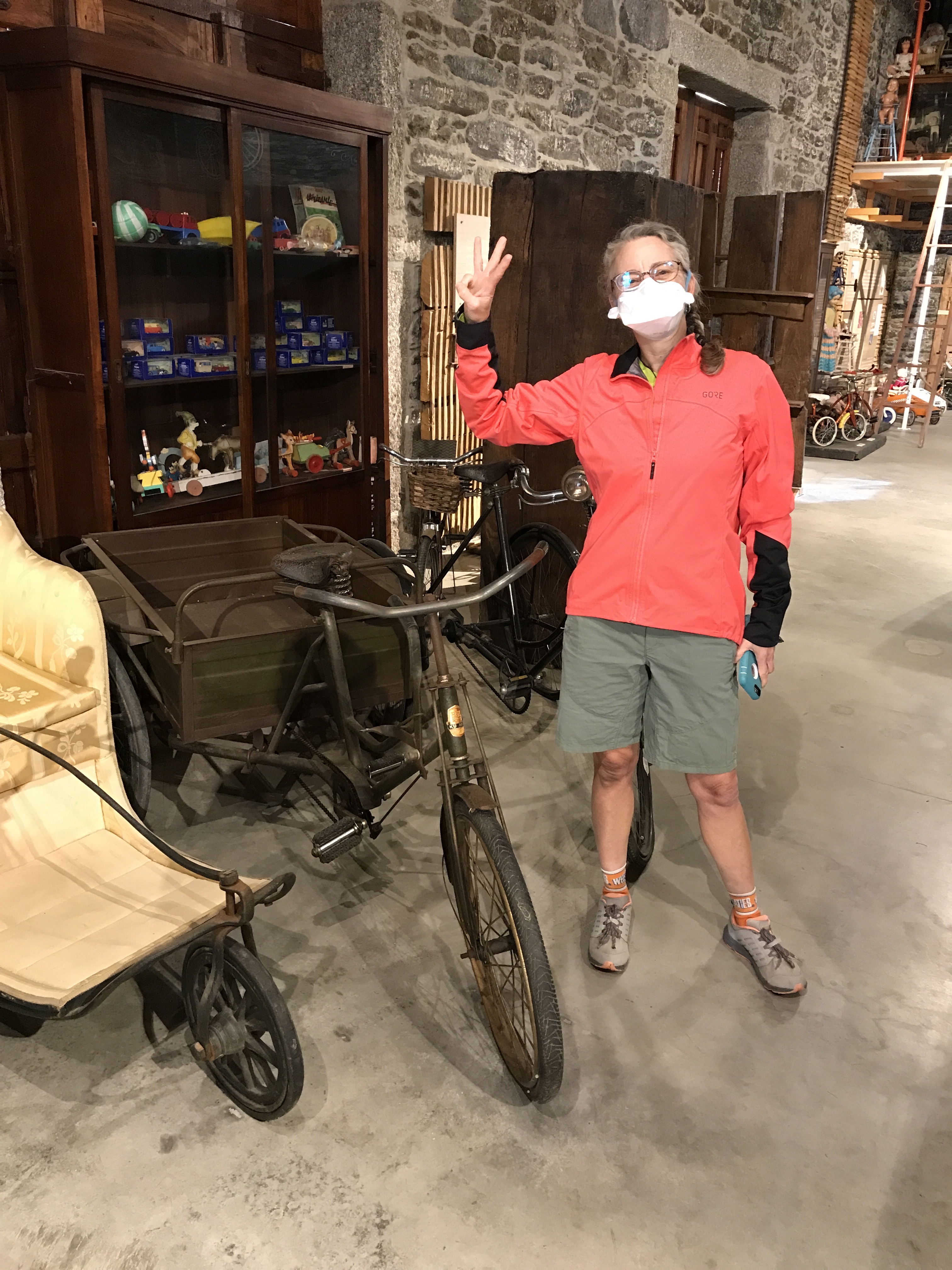


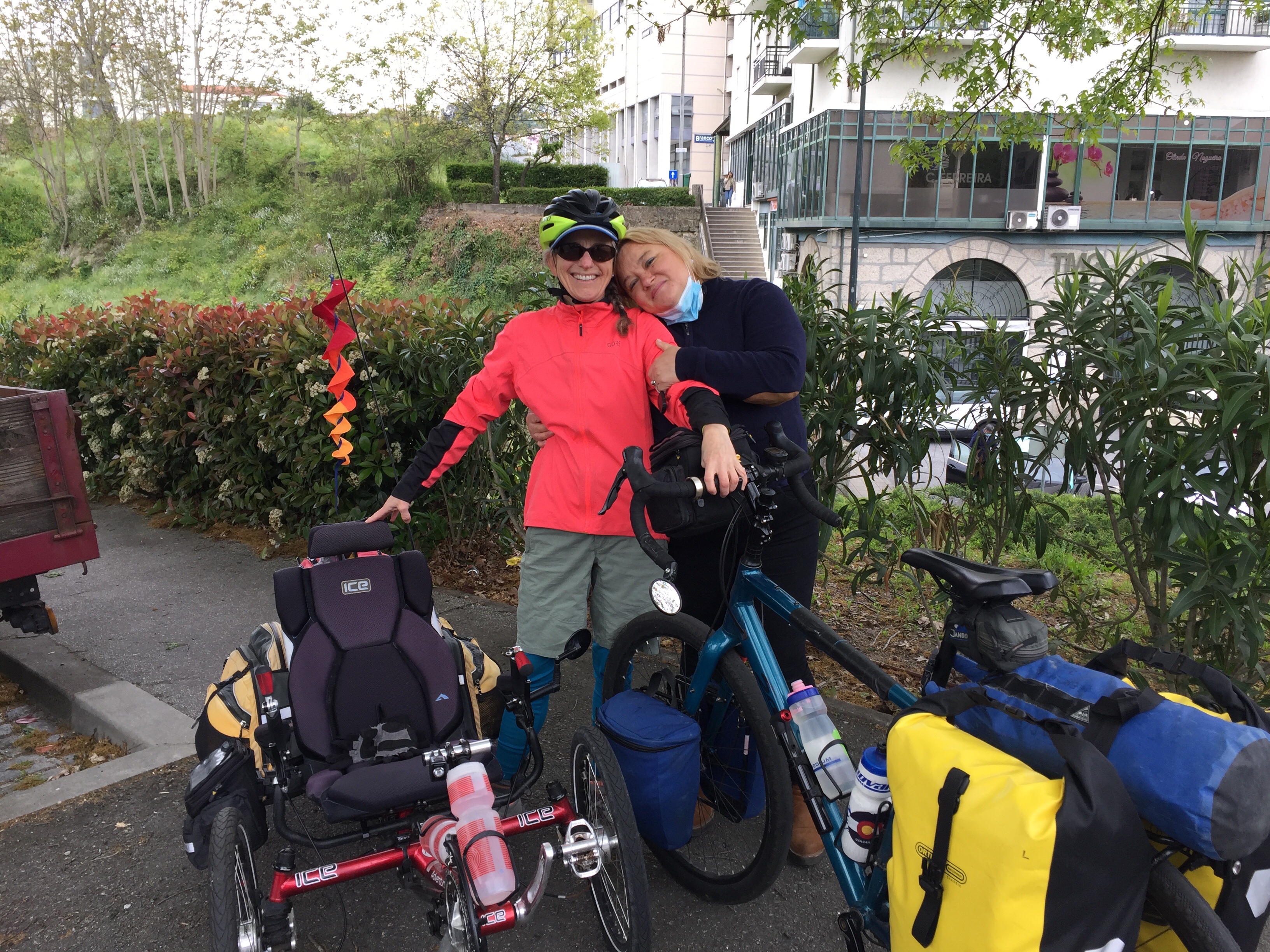
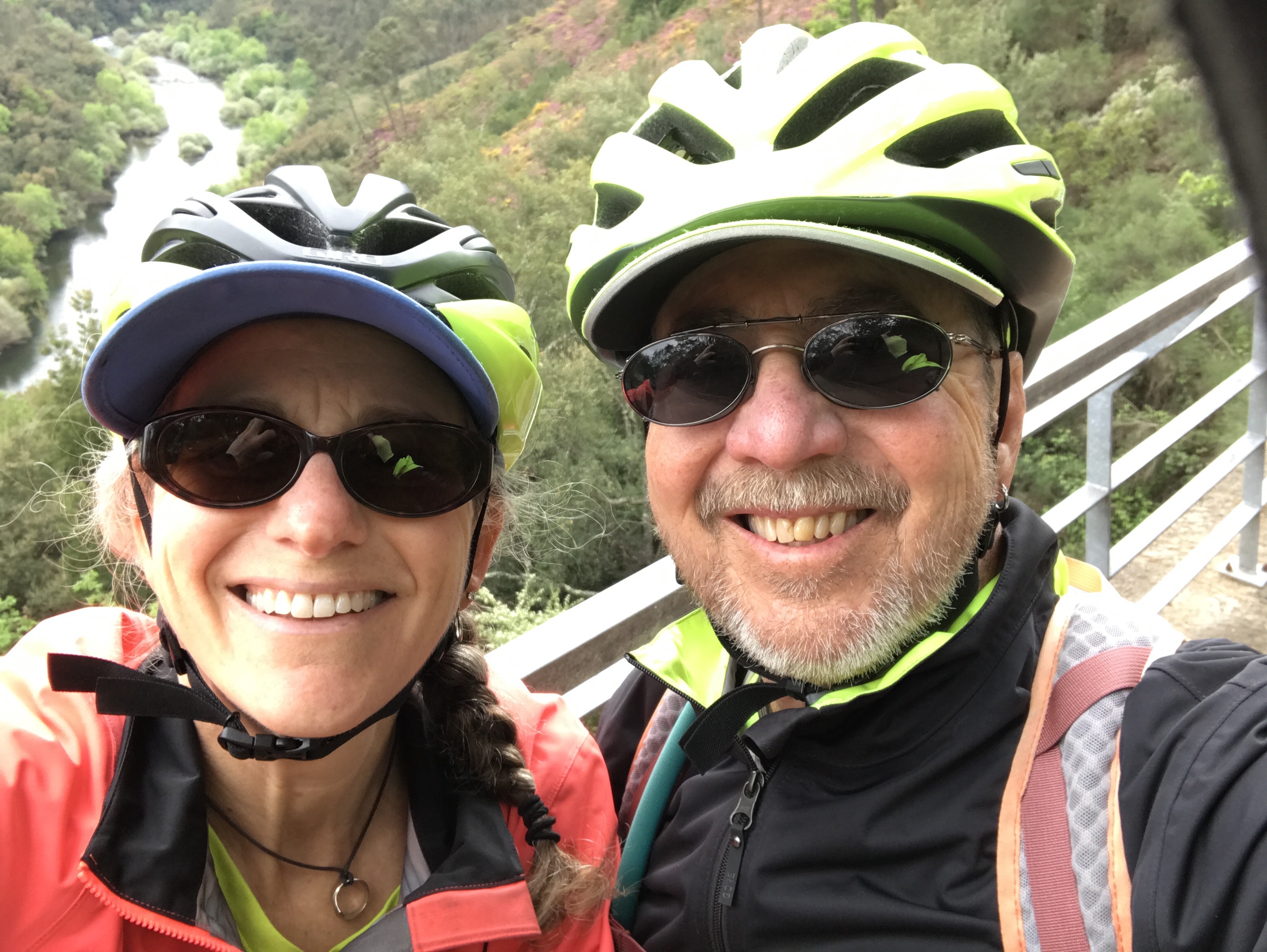


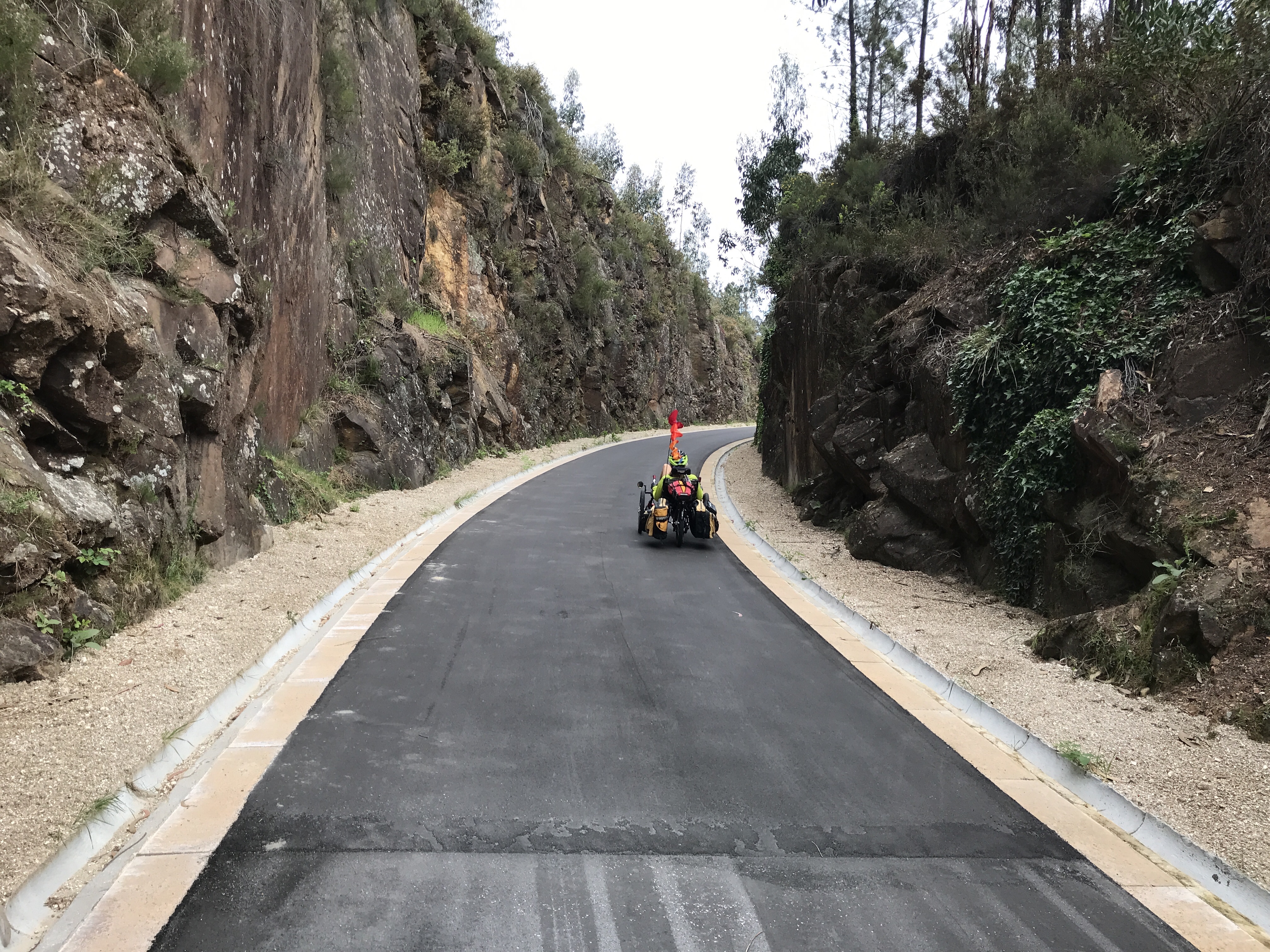
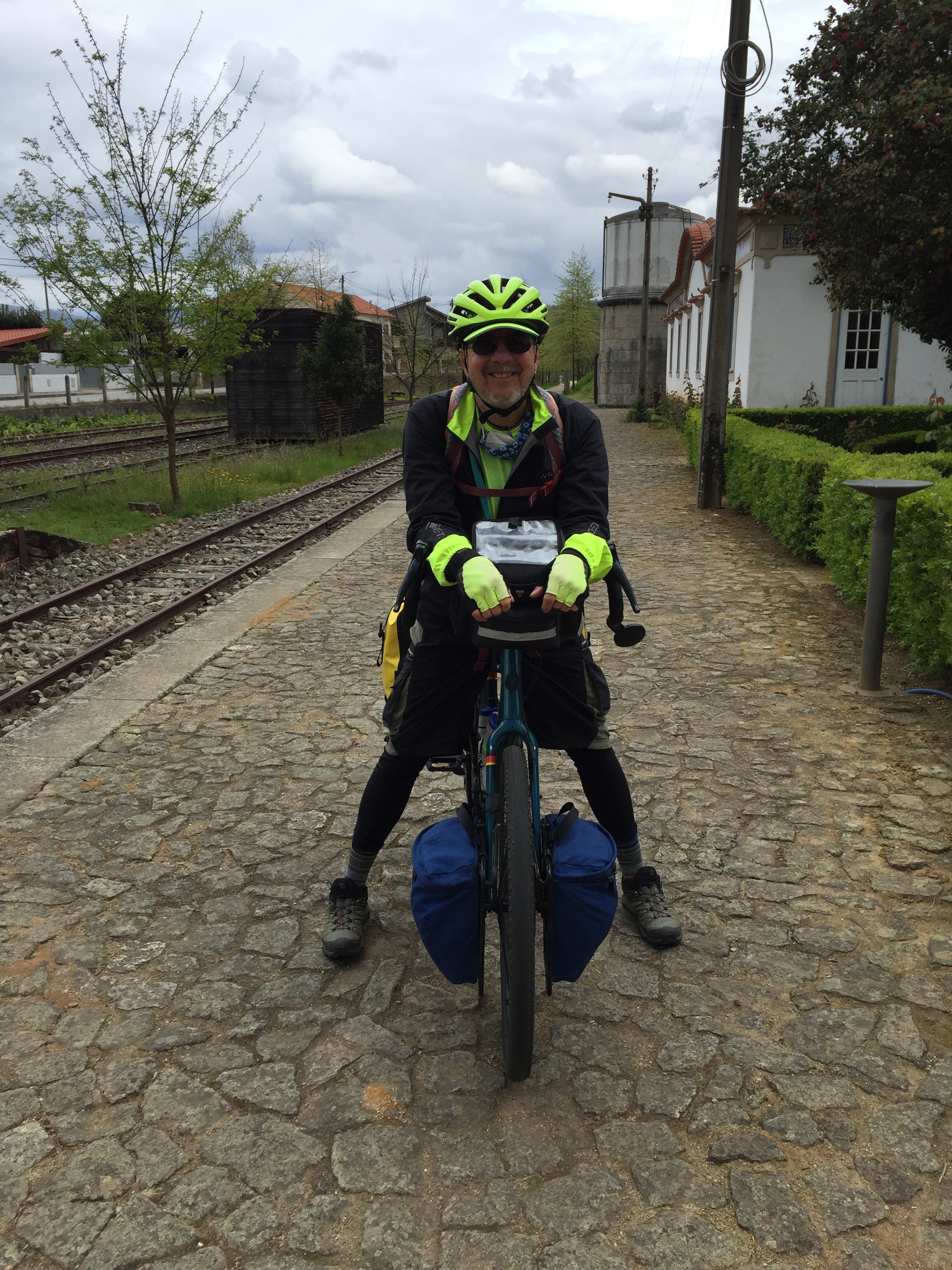


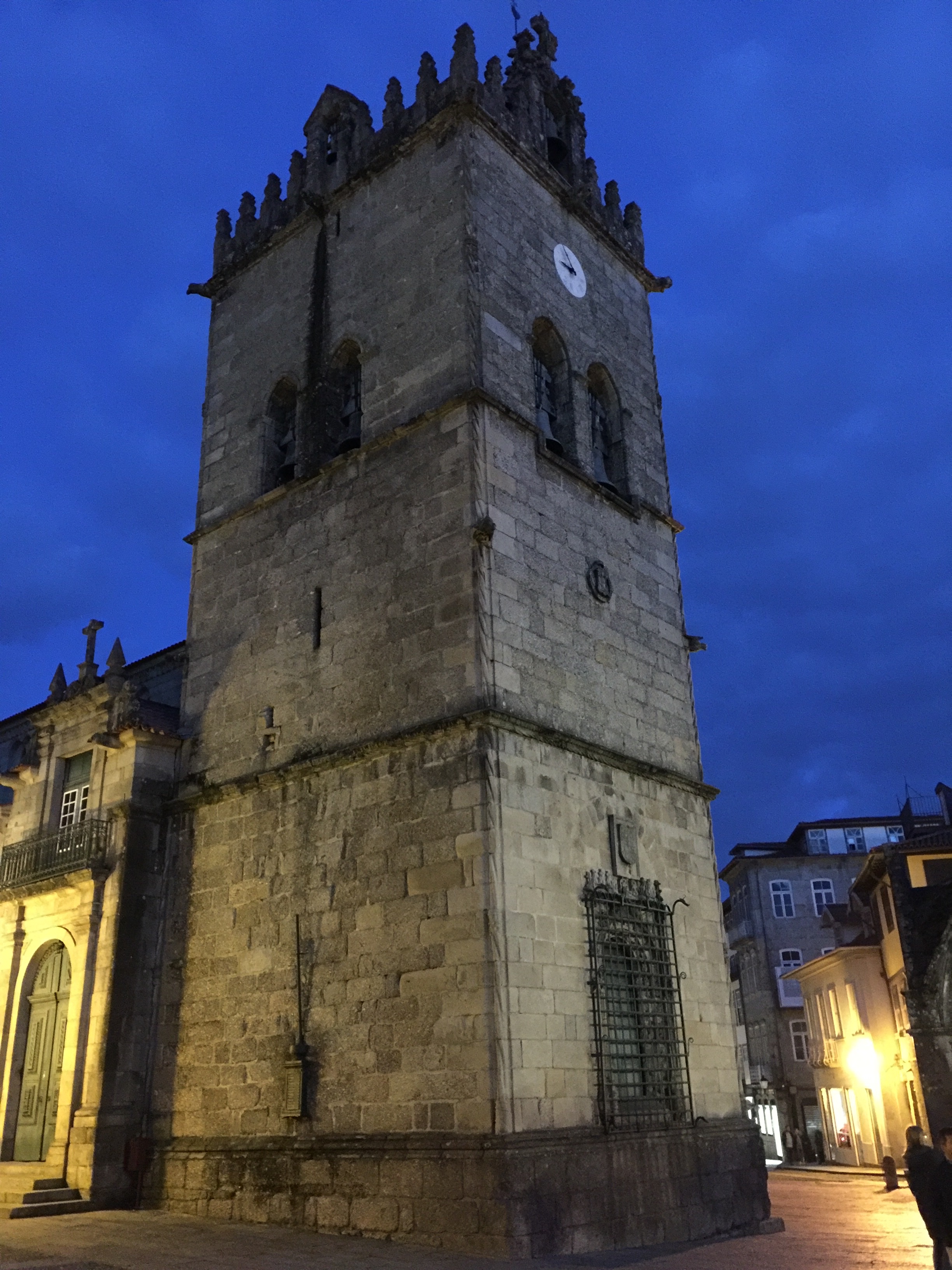
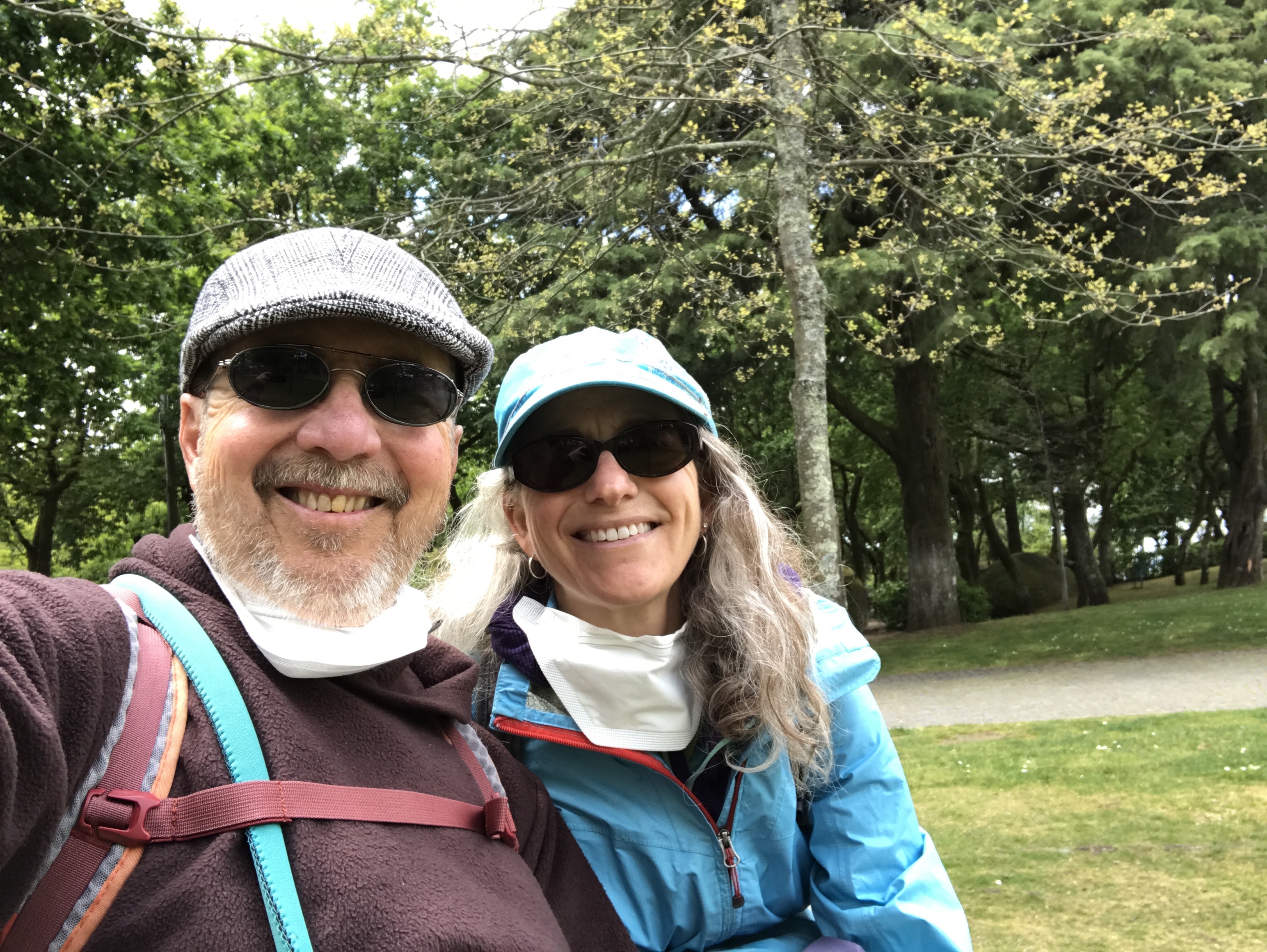
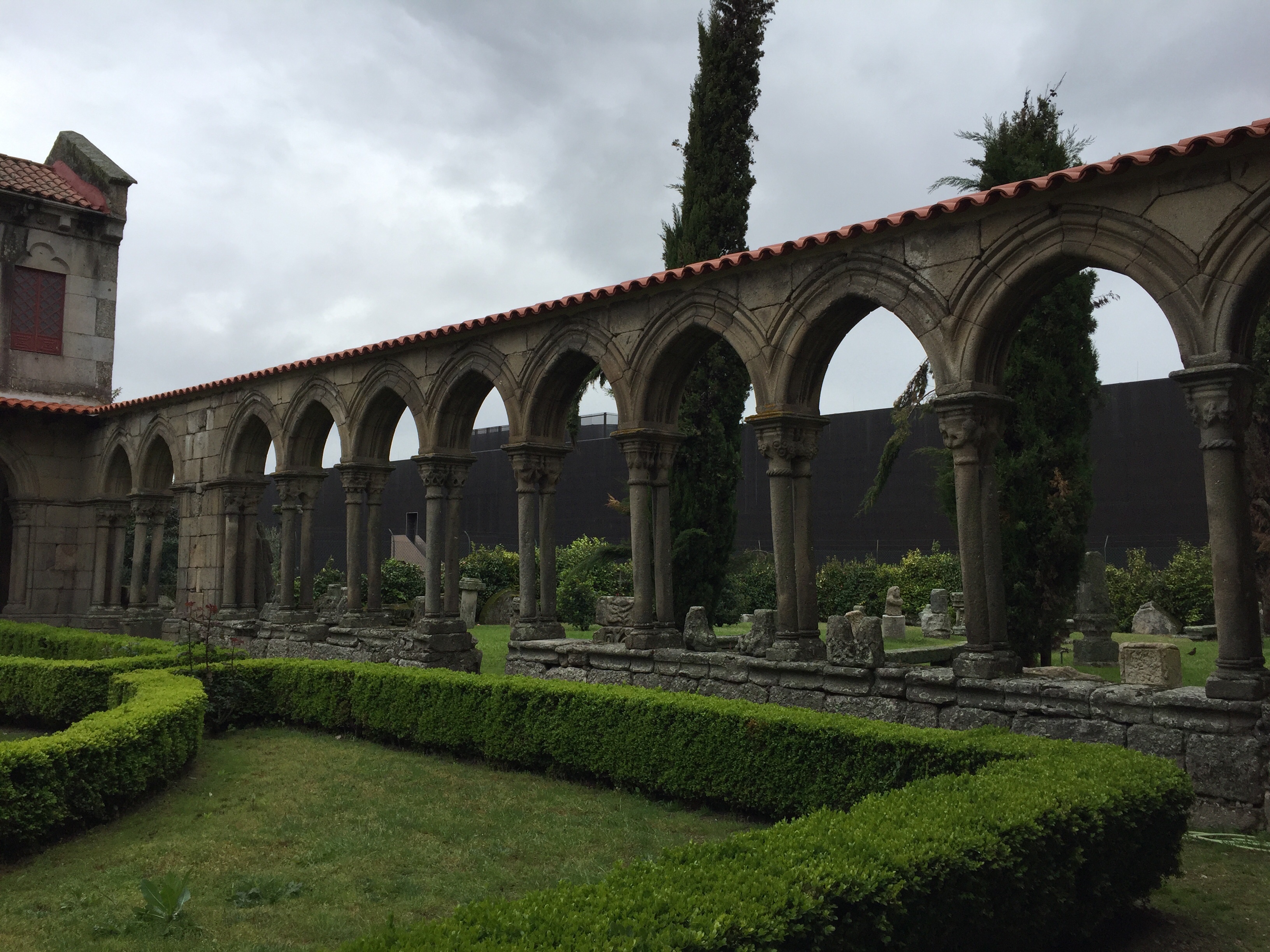


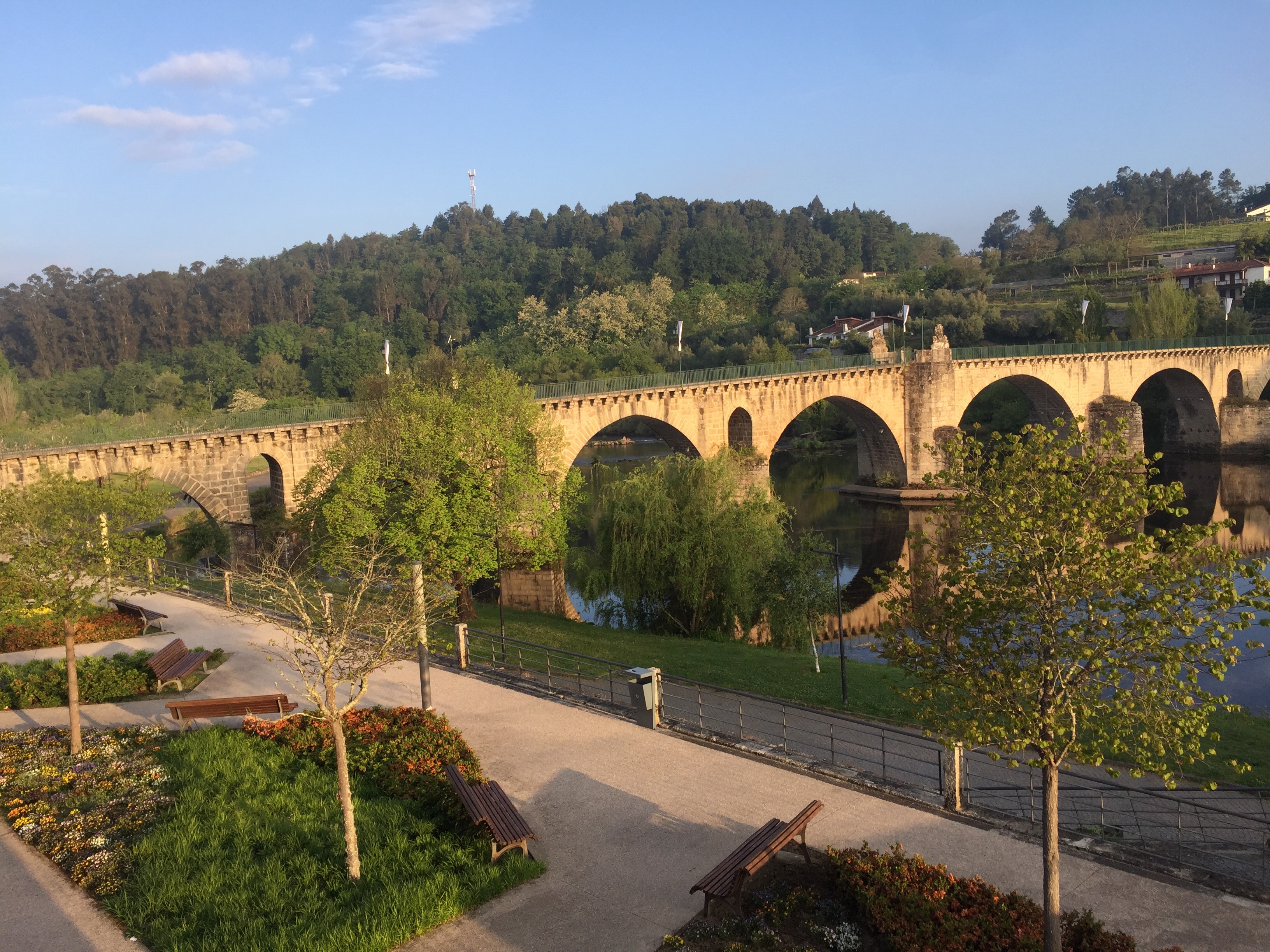


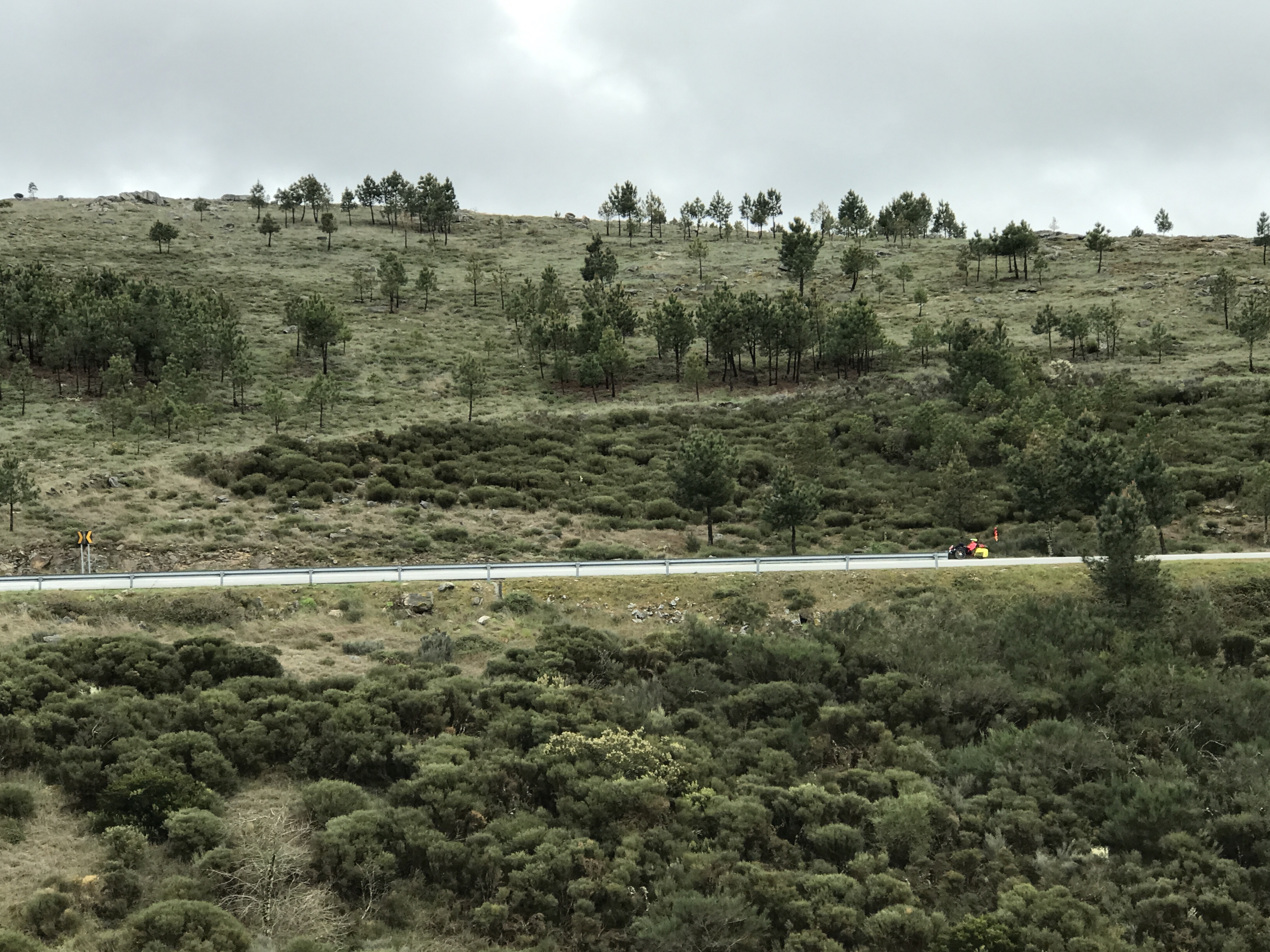

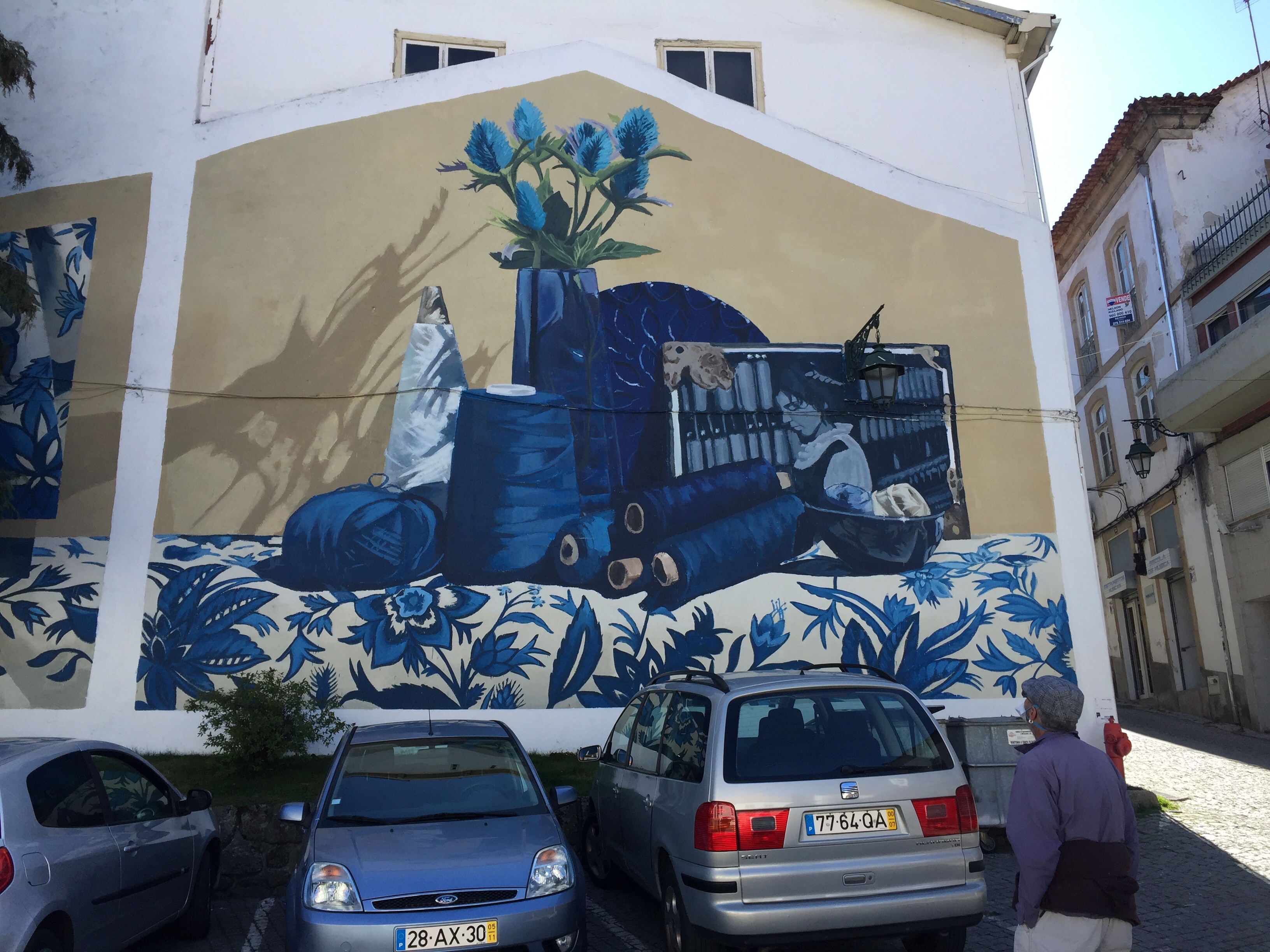
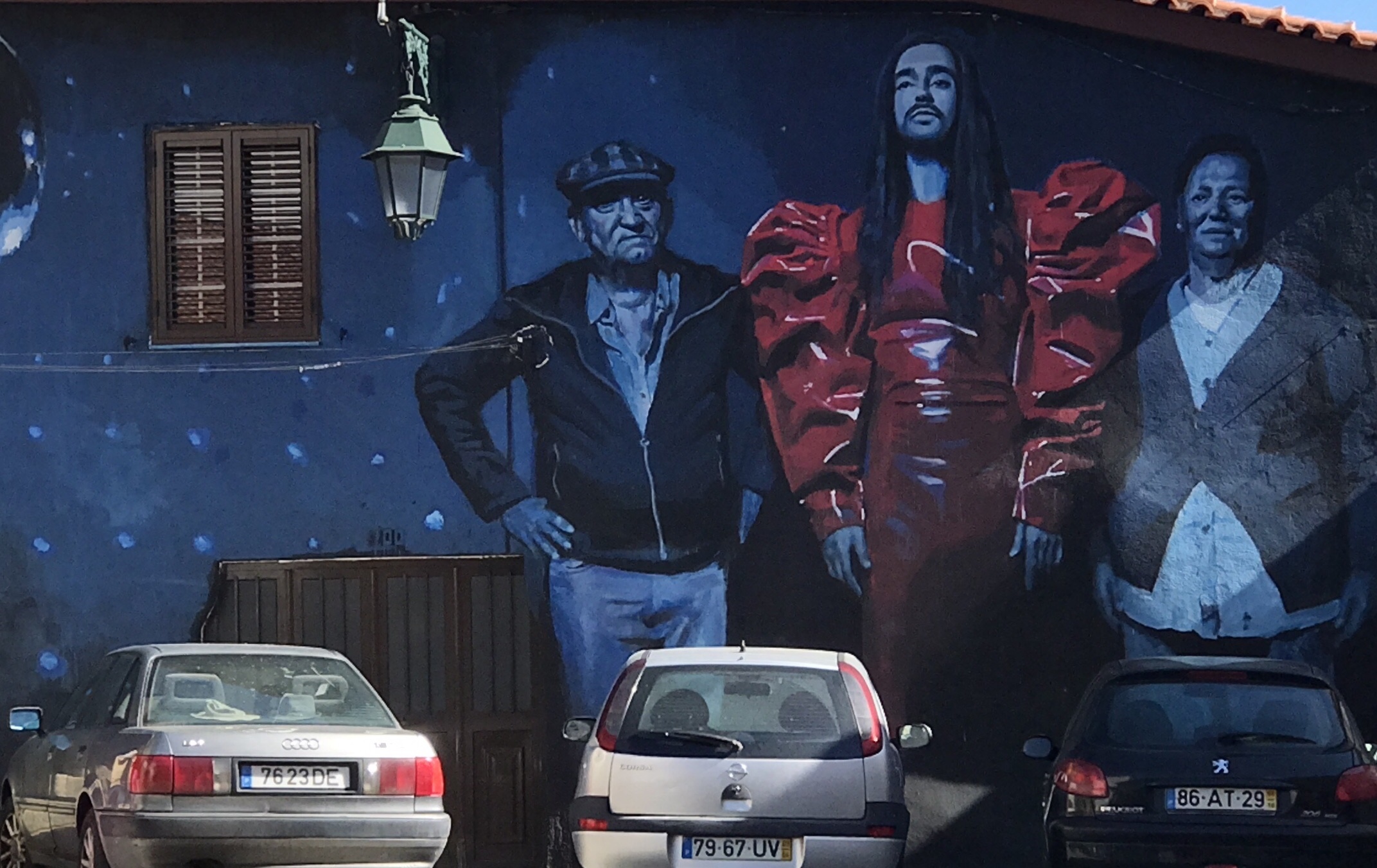

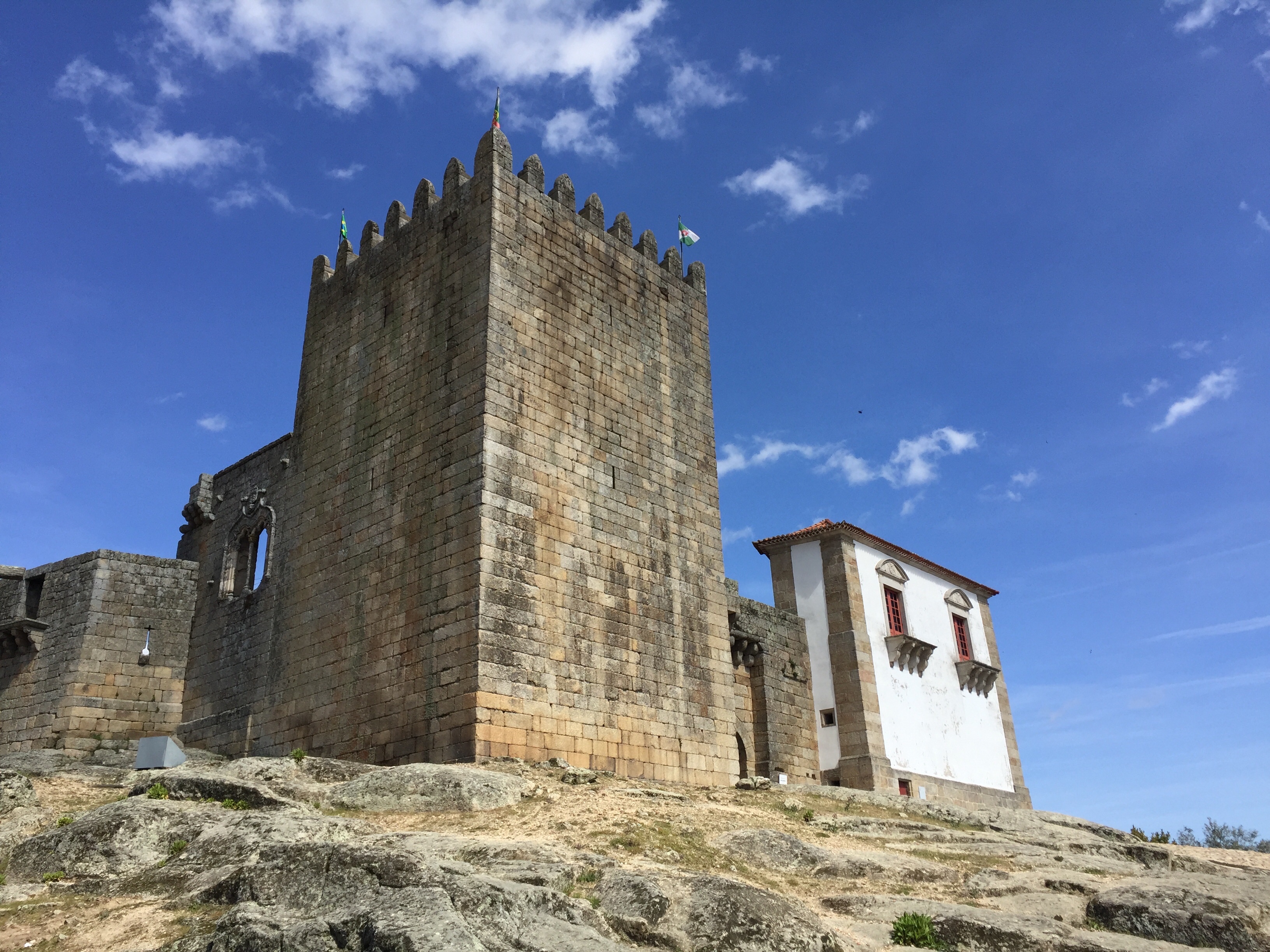

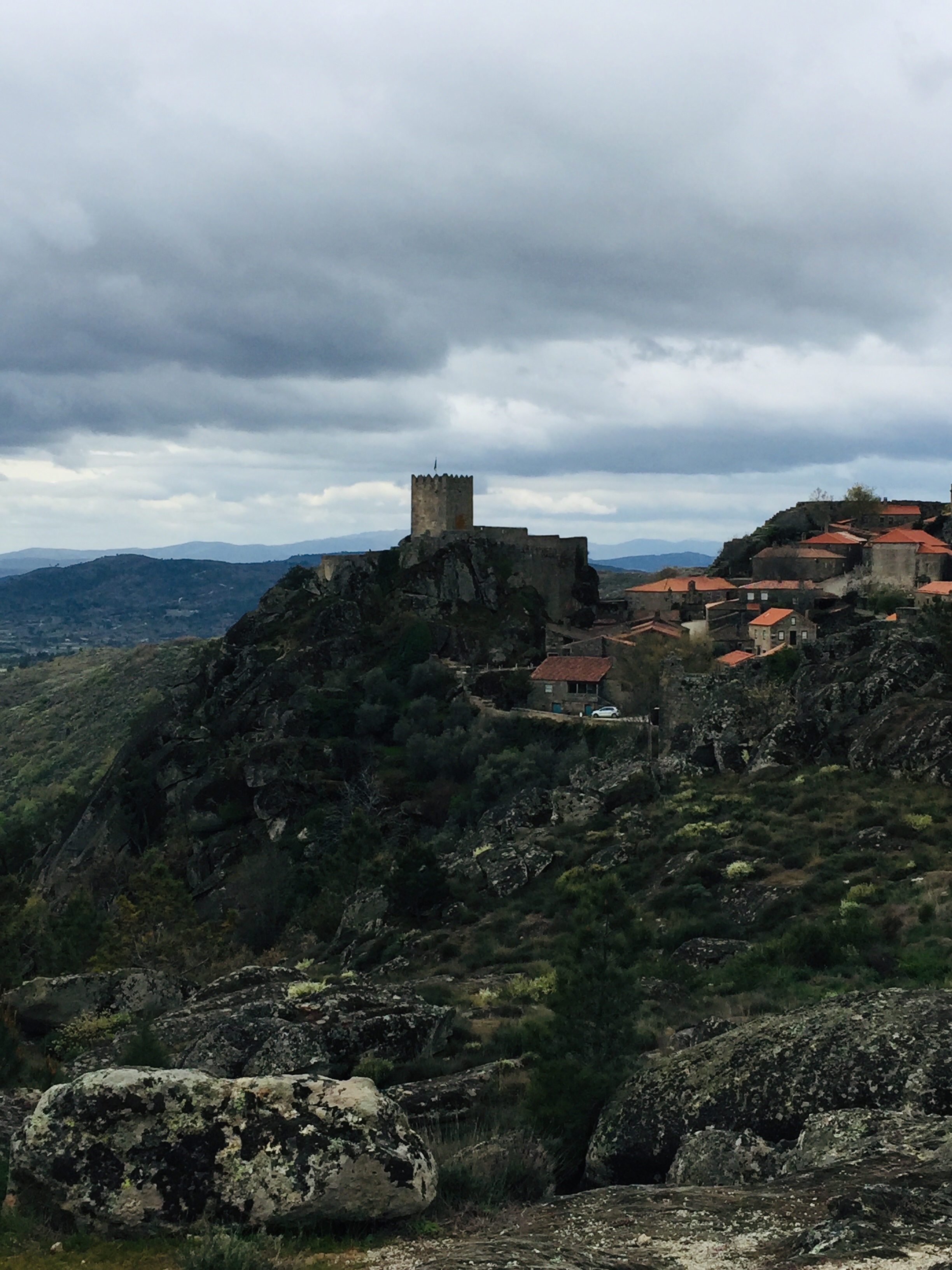


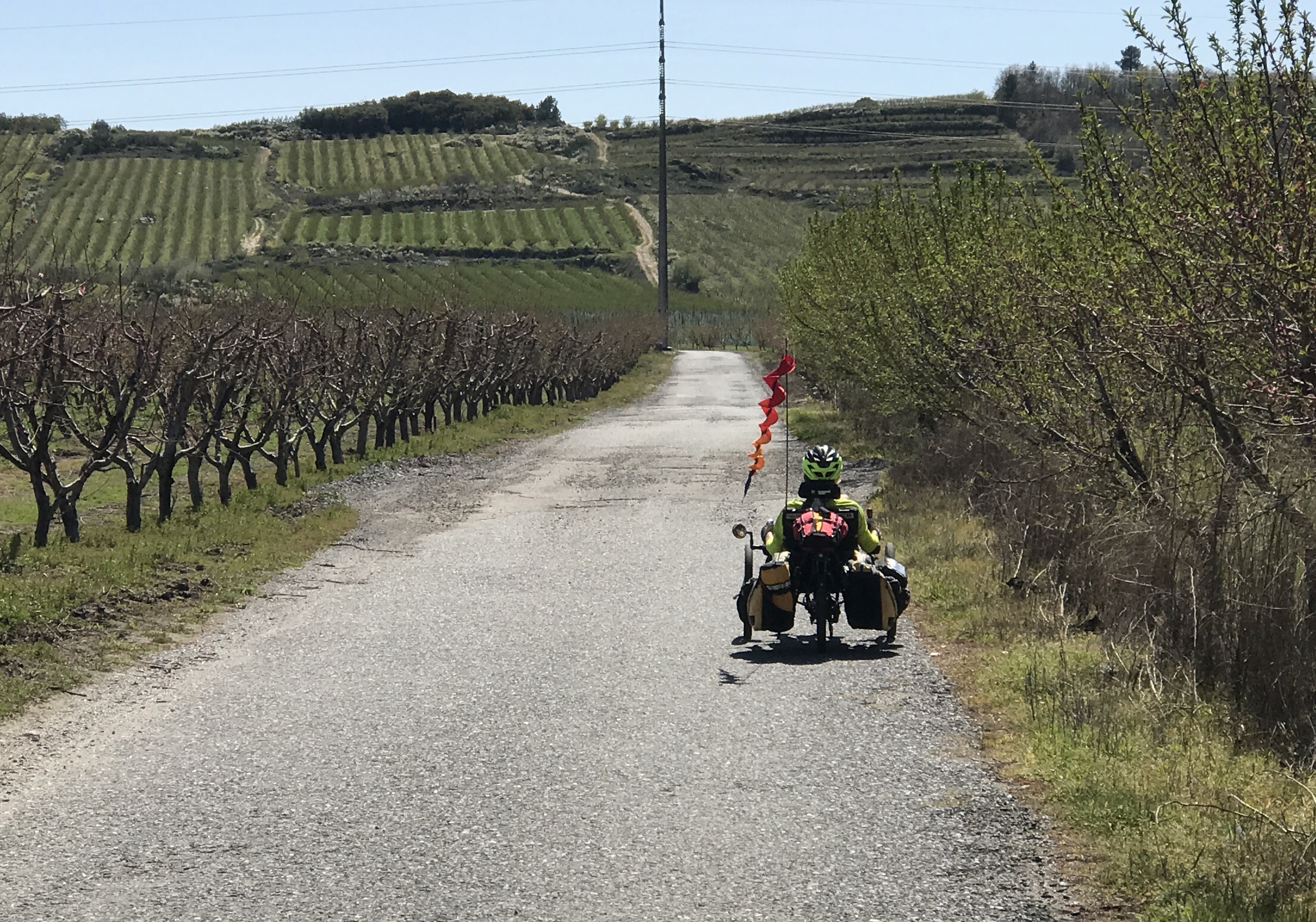


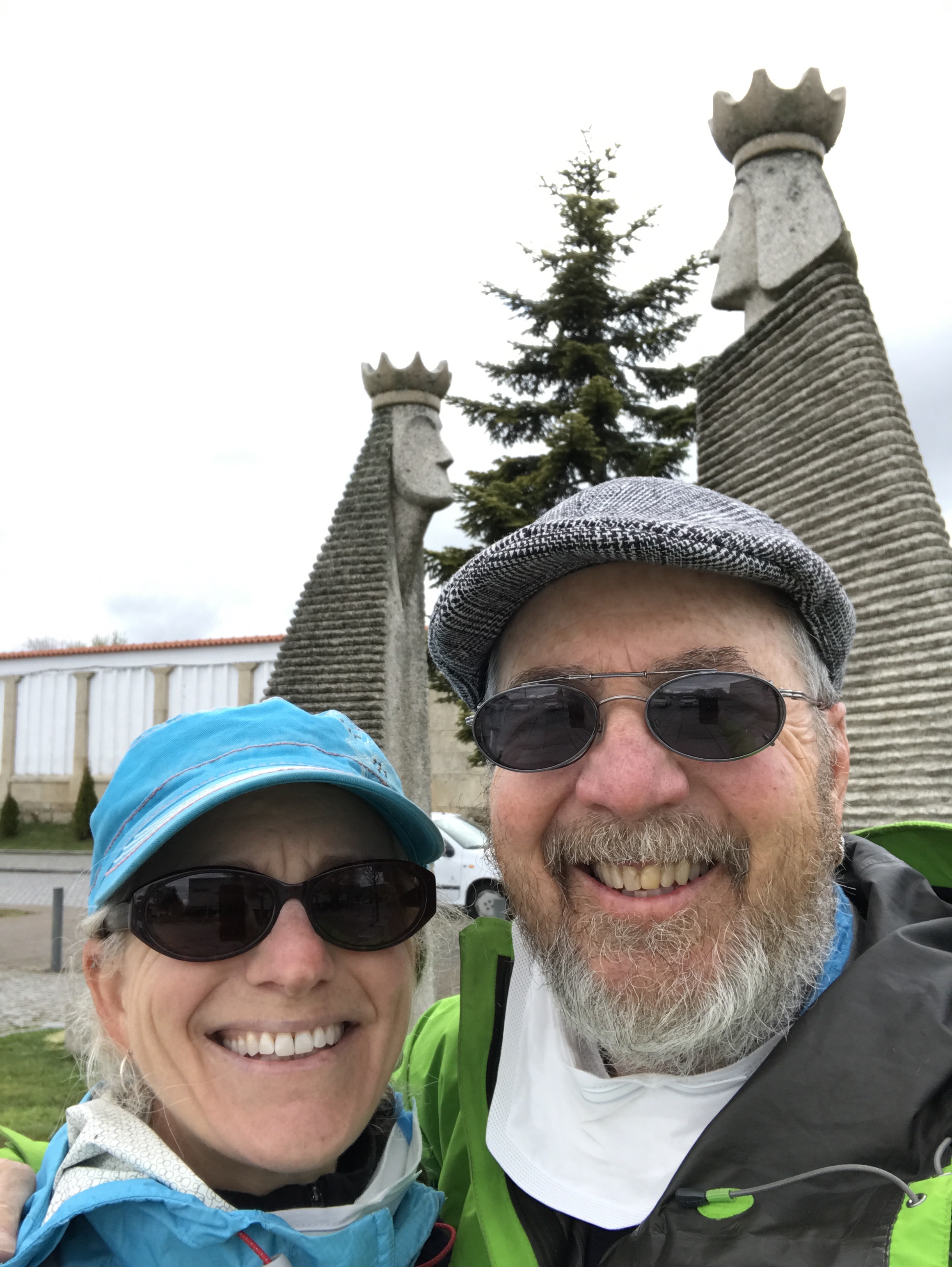


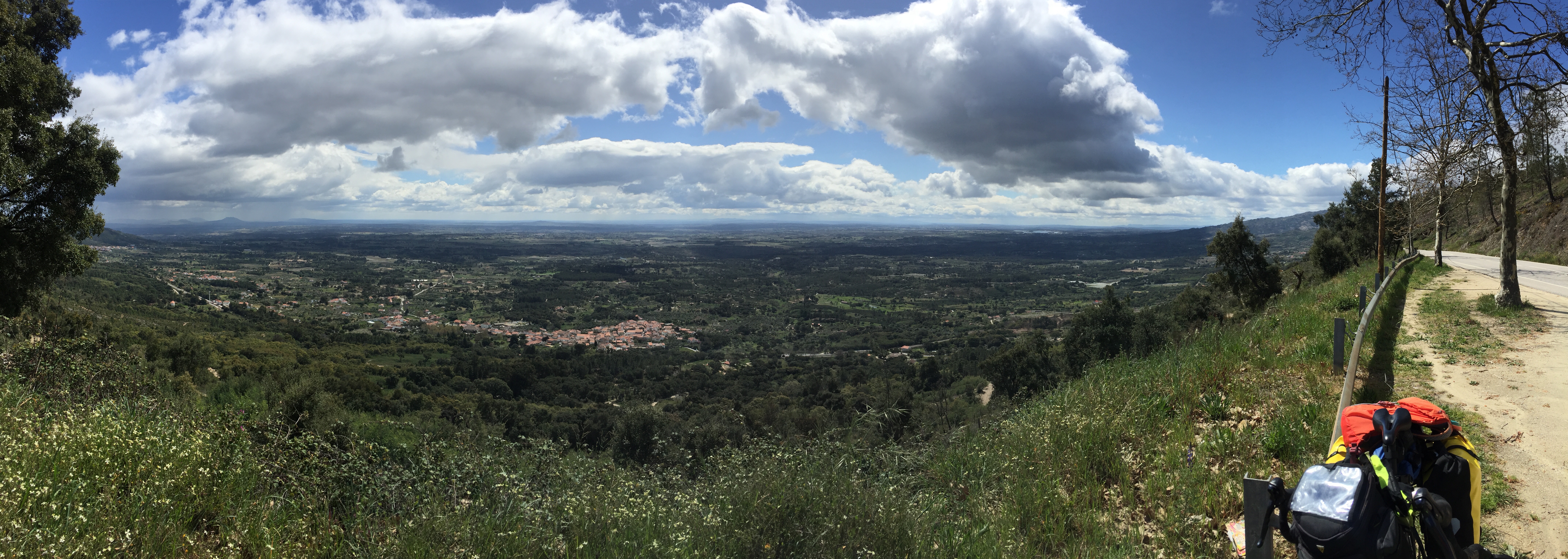

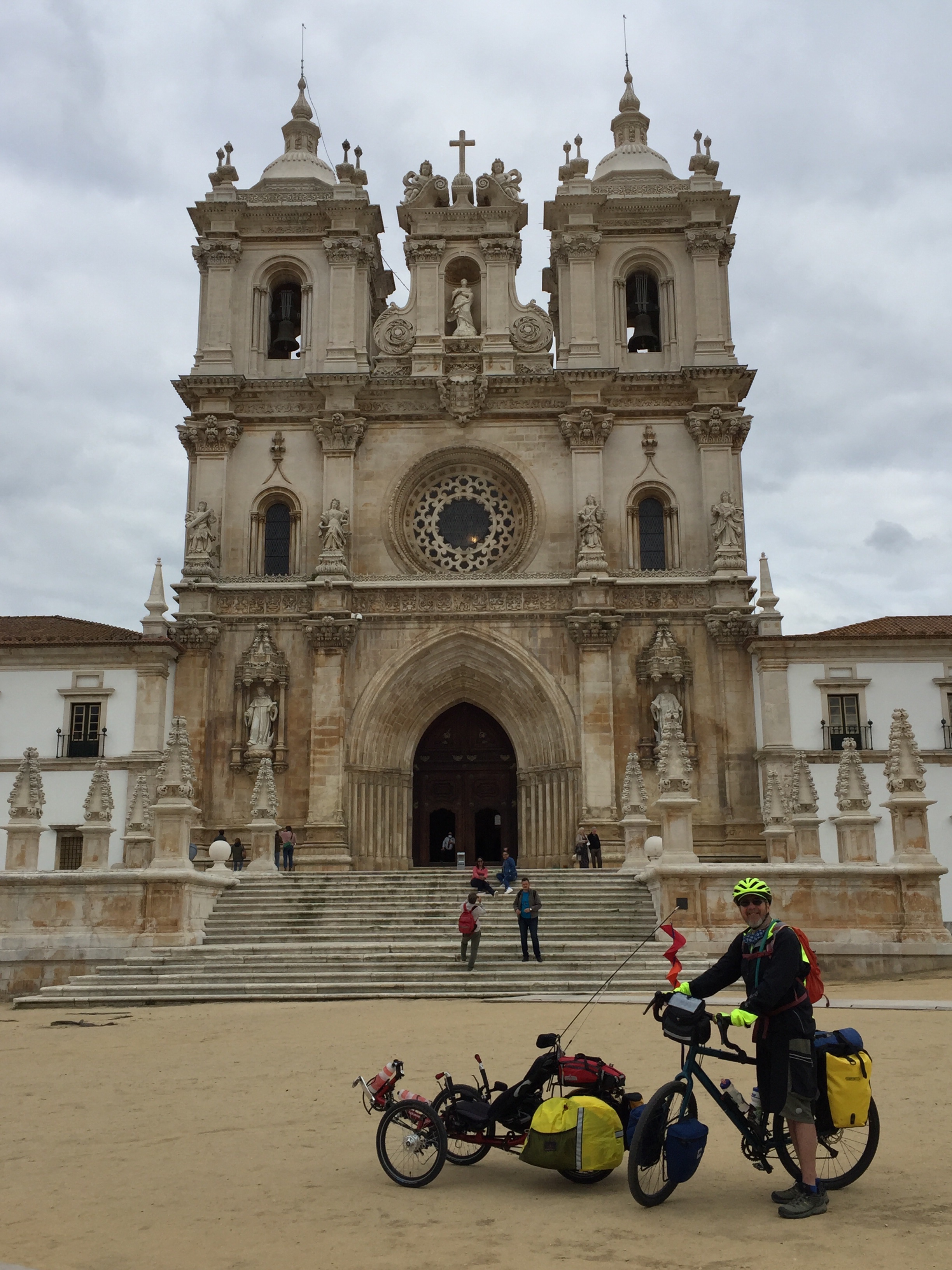

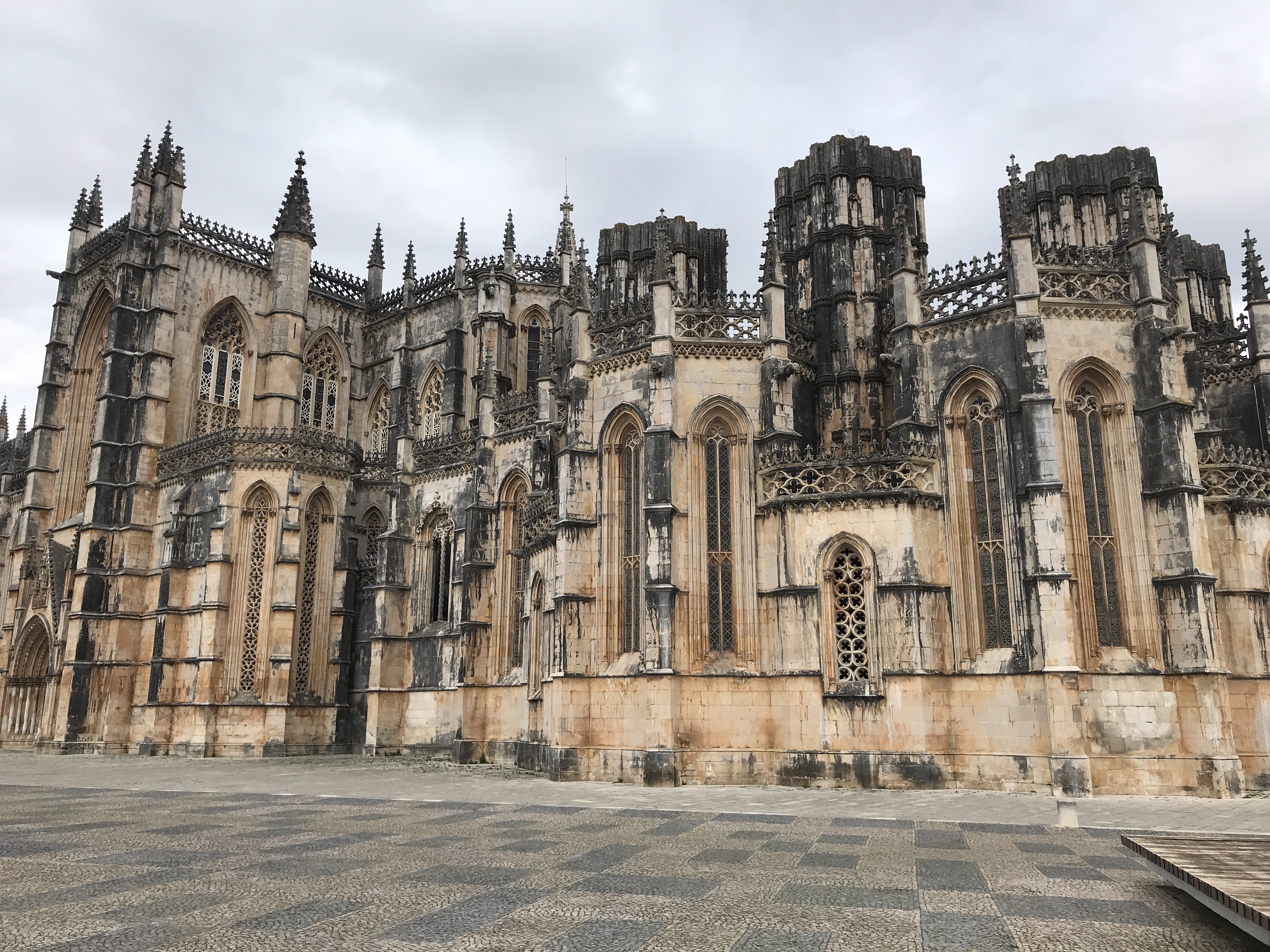
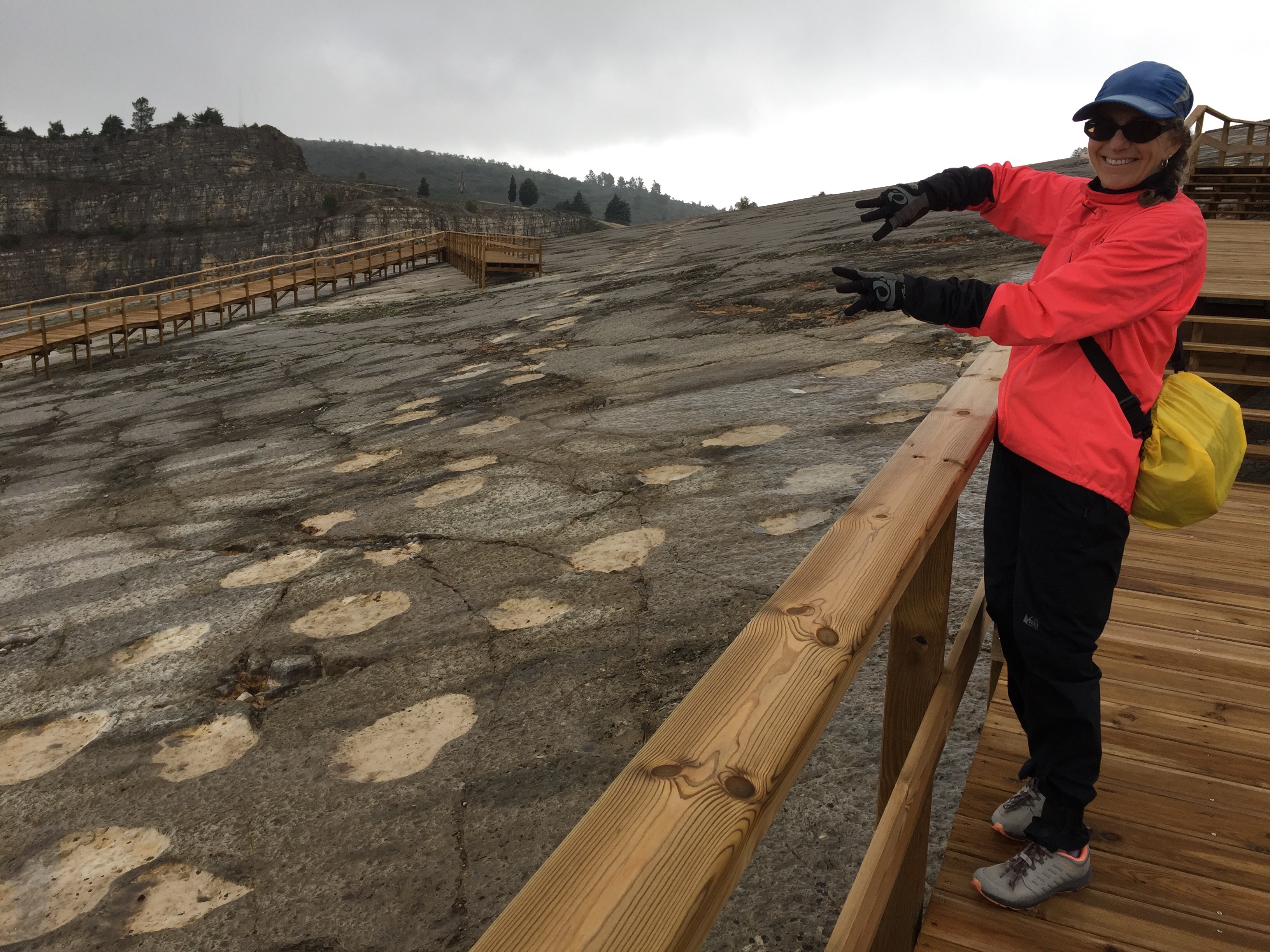


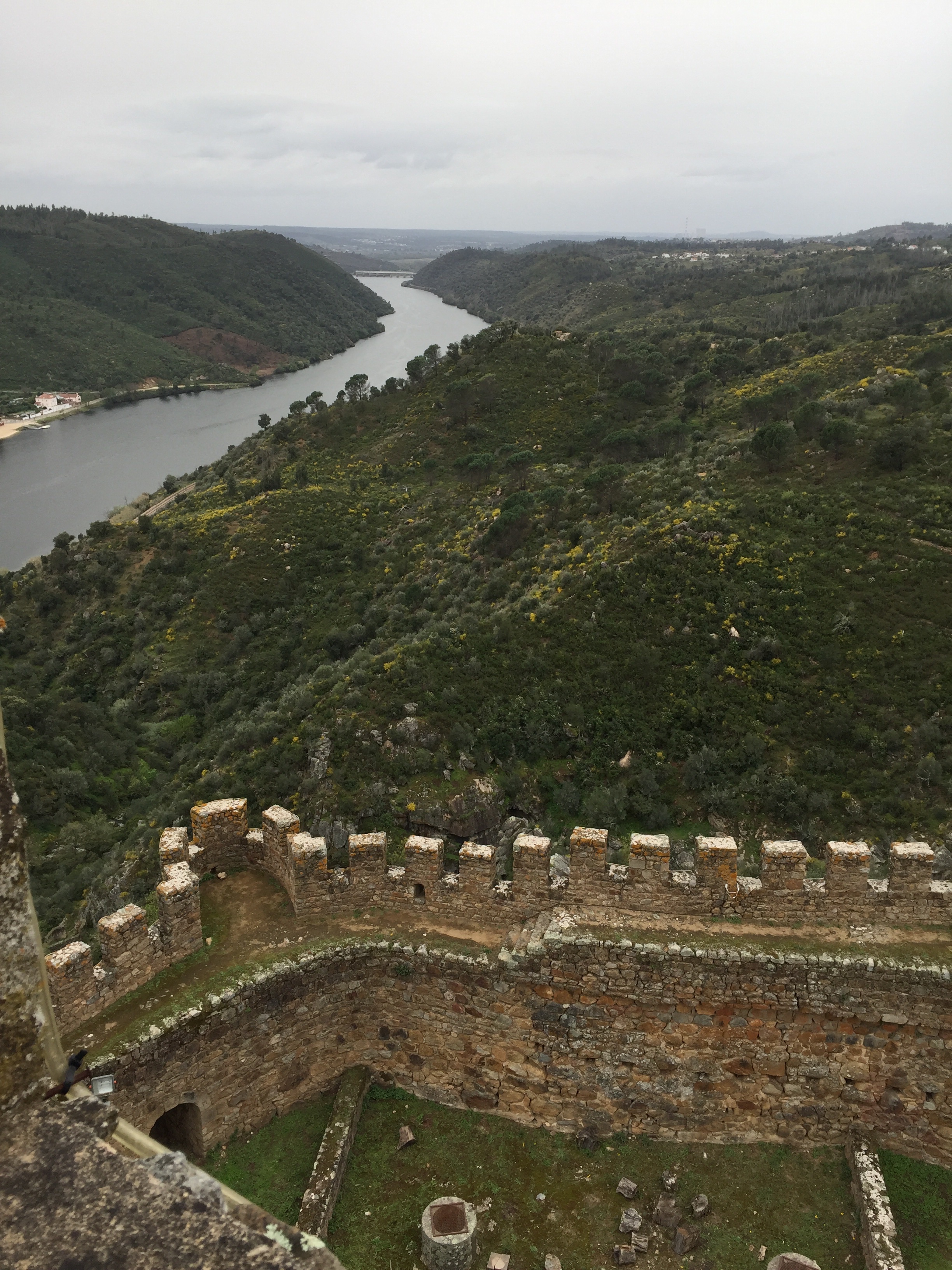


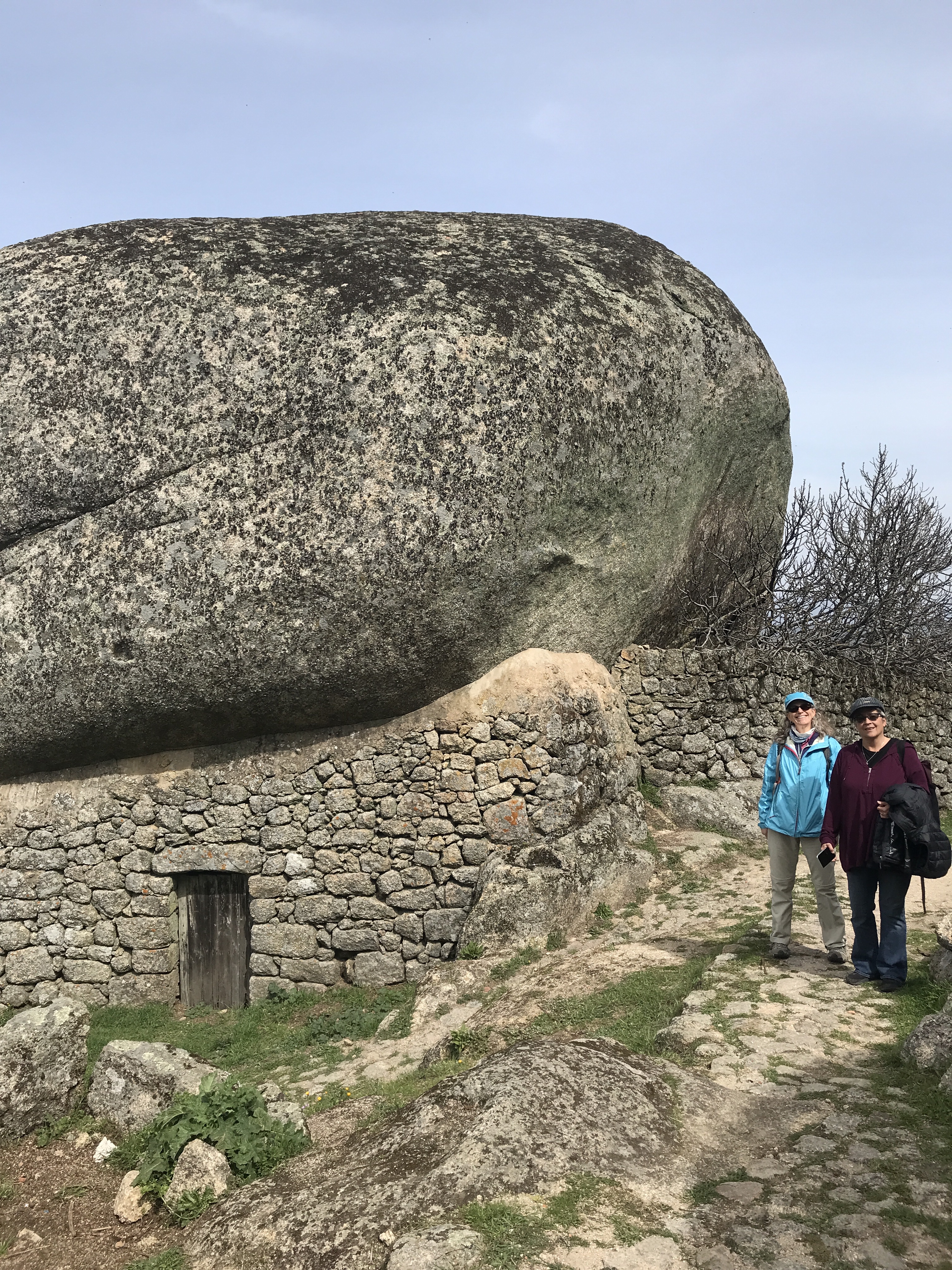

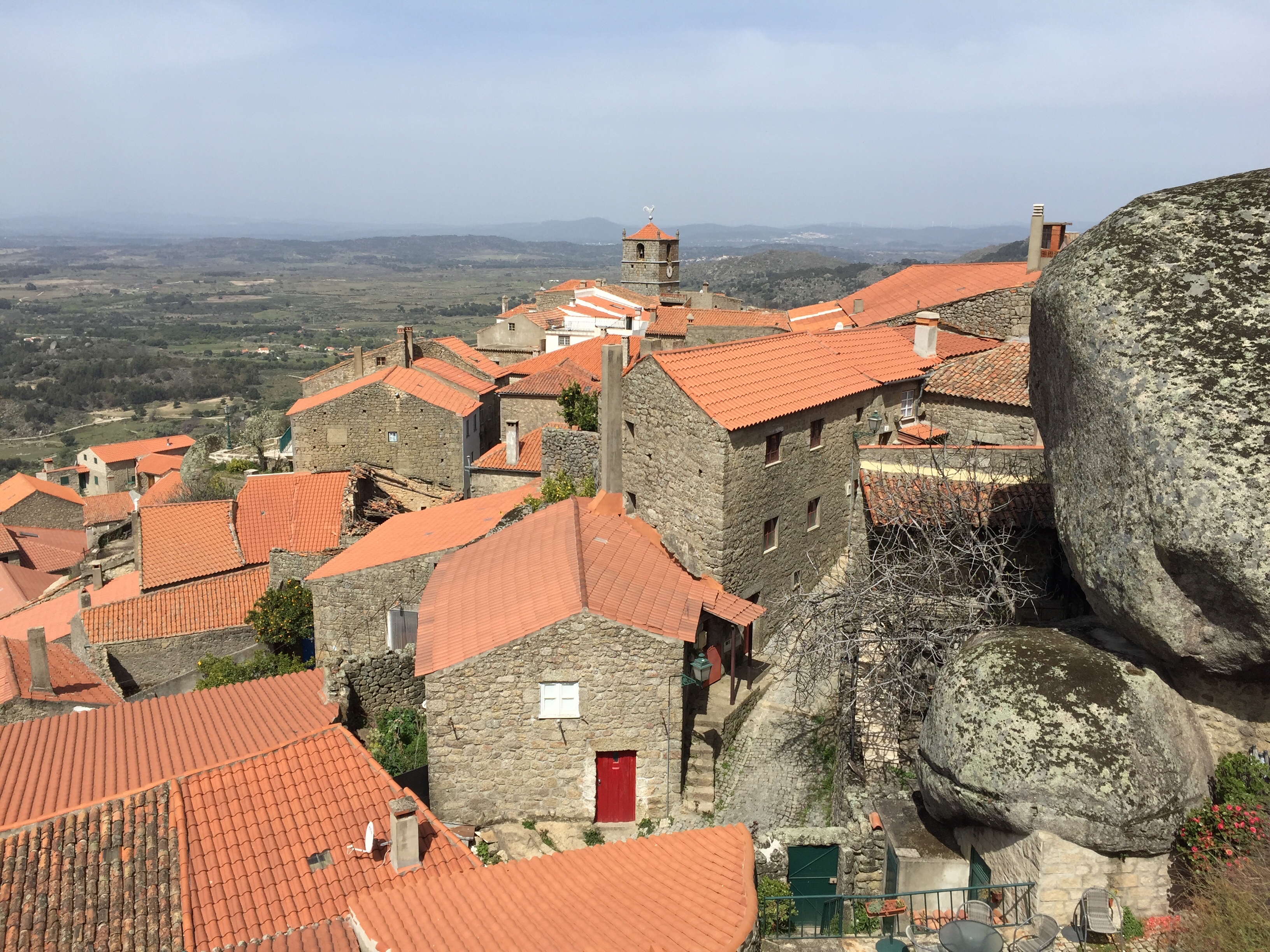




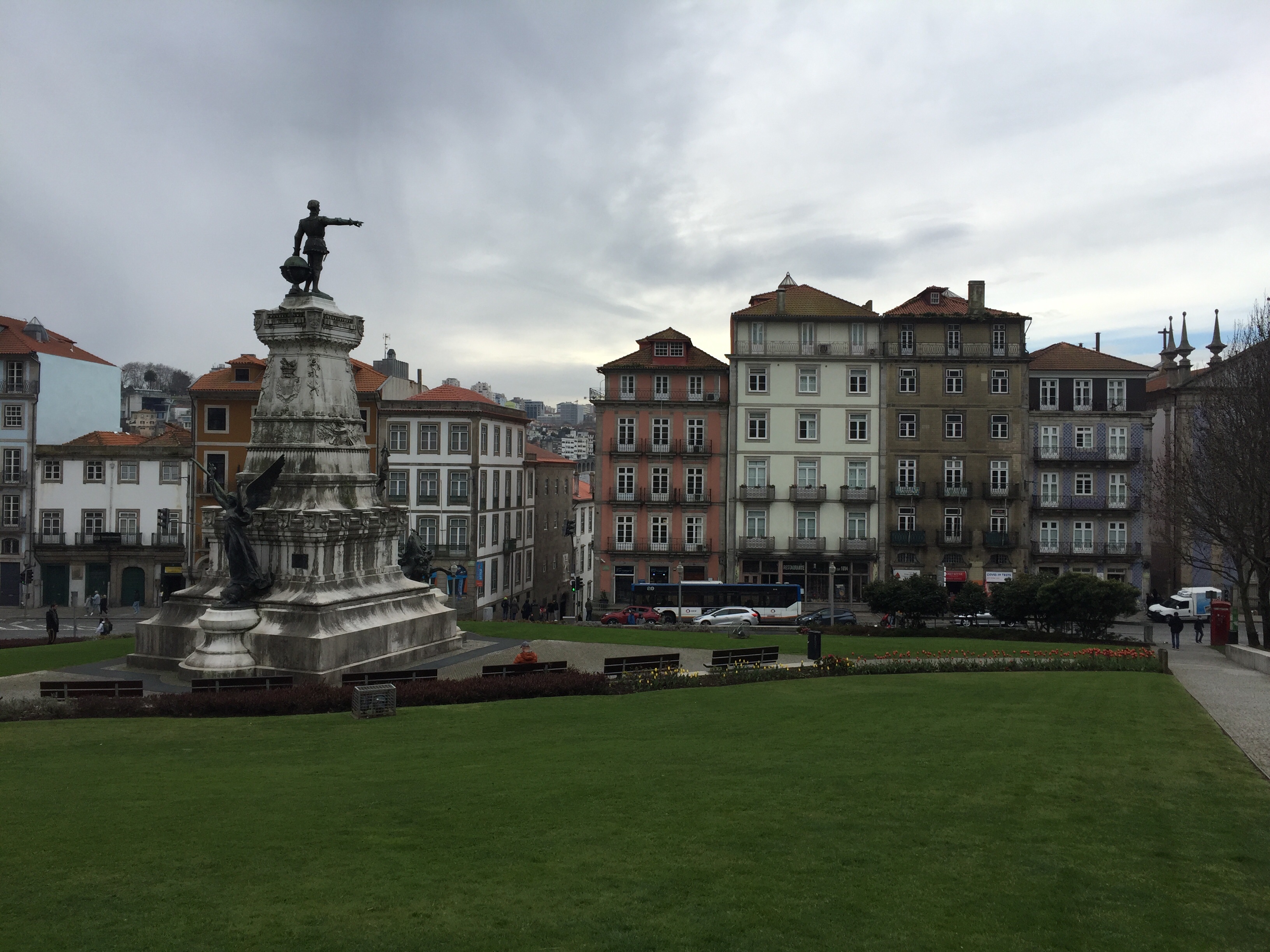


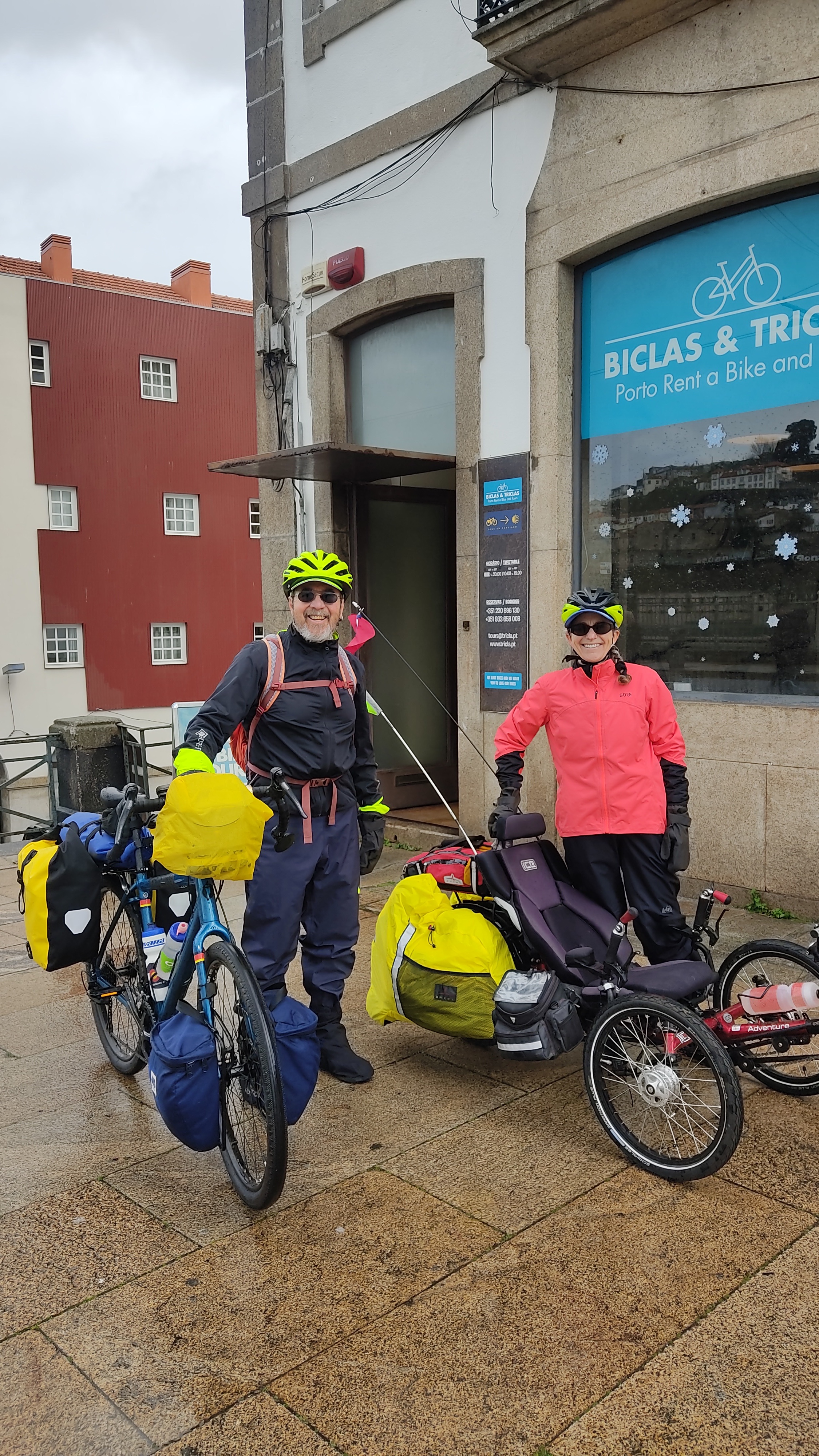



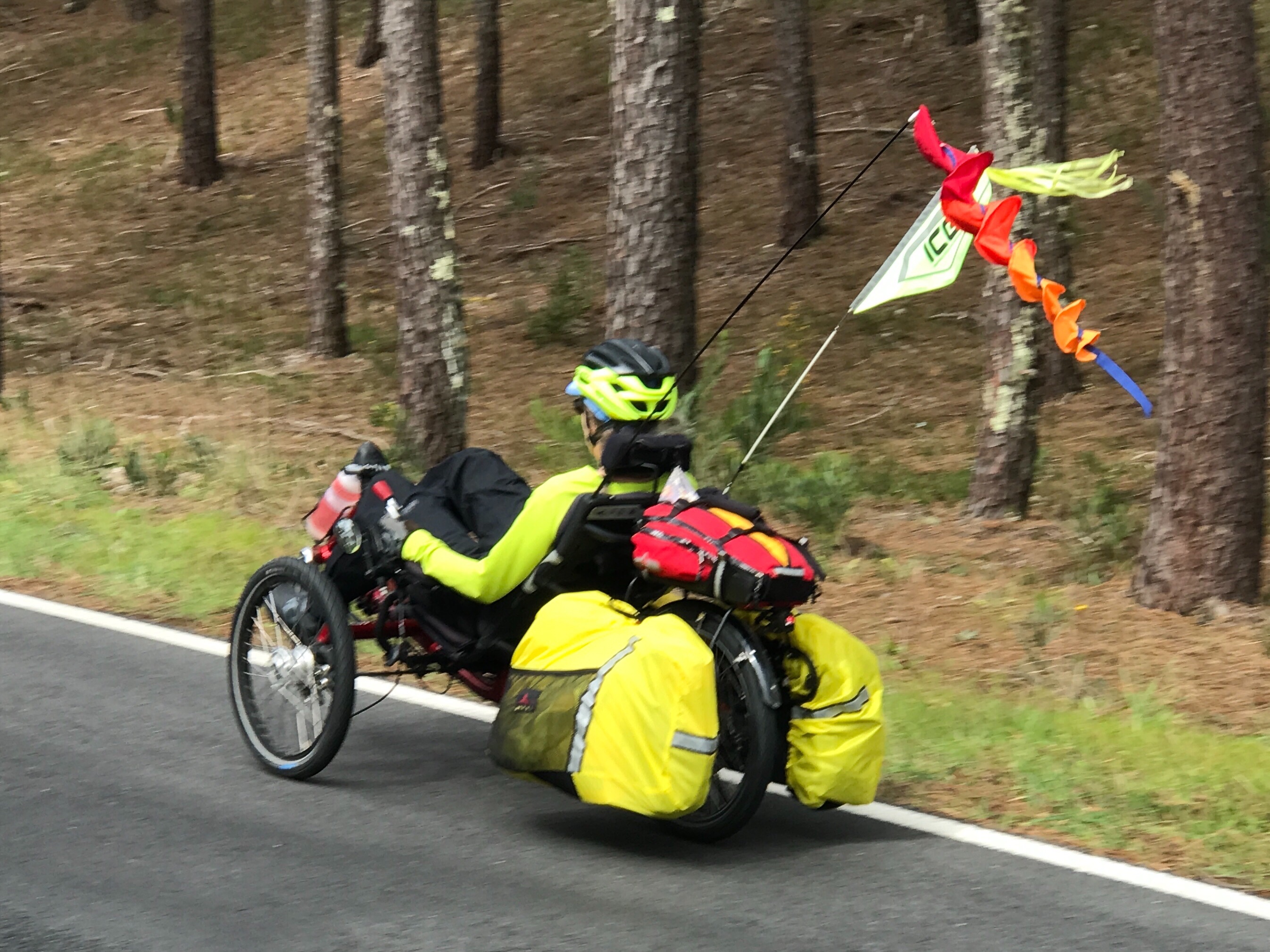
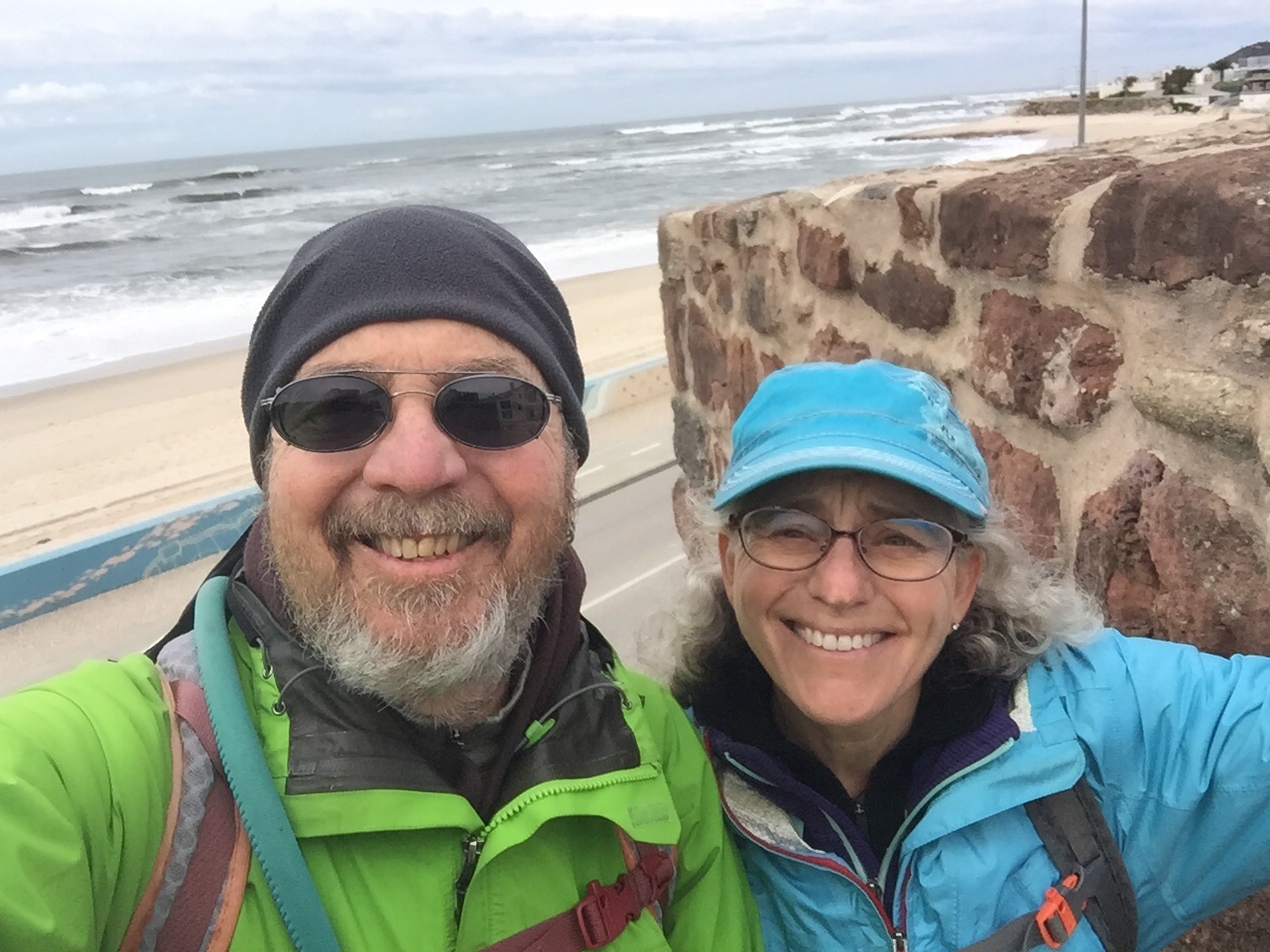

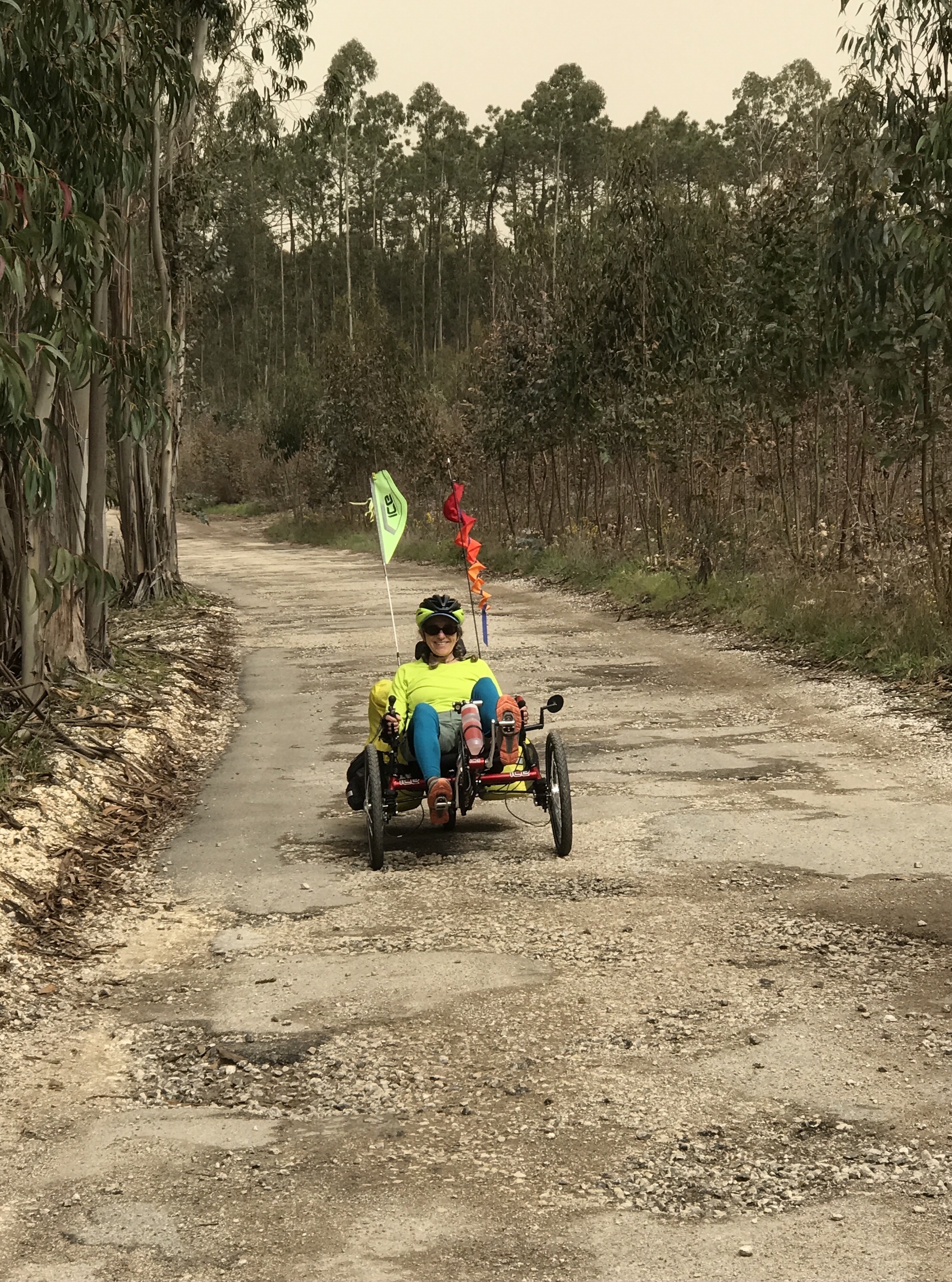


 The Travails of Diplodocus