
The Camino de Santiago was never on my radar. I knew about it, of course, knew that it was a pilgrimage of Christian origins, ending in Santiago de Compostela in northern Spain. Santiago, in Spanish, translates to Saint James in English (Tiago in Portuguese or Galego; Diego in Spanish). The story goes that James traveled to Iberia to spread the word about Jesus and his teachings after Jesus’ death. He didn’t have much success and eventually he headed back to Jerusalem. Having survived the arduous journey in both directions, as well as what was likely a fair amount of scorn from suspicious naysayers in Celtic Galicia, once safely home in Jerusalem, James was promptly beheaded by the Romans for heresy and then was subsequently sainted.
And so the story ends, until around 800 CE (common era), when a shepherd tending his flocks one night followed the arc of a star to what is now Santiago de Compostela. There this humble herder, whose name was Pelayo (Paio in Galego or Payo in Spanish), found the remains, or relics, of Saint James. The story explains that two of James’ disciples carried his body in a boat made of stone and guided by angels from Jerusalem back to Santiago to be entombed there. Somewhere over the course of many generations, the remains were divided and now James’ head is supposedly entombed in Santiago while the rest of his body is in Jerusalem.



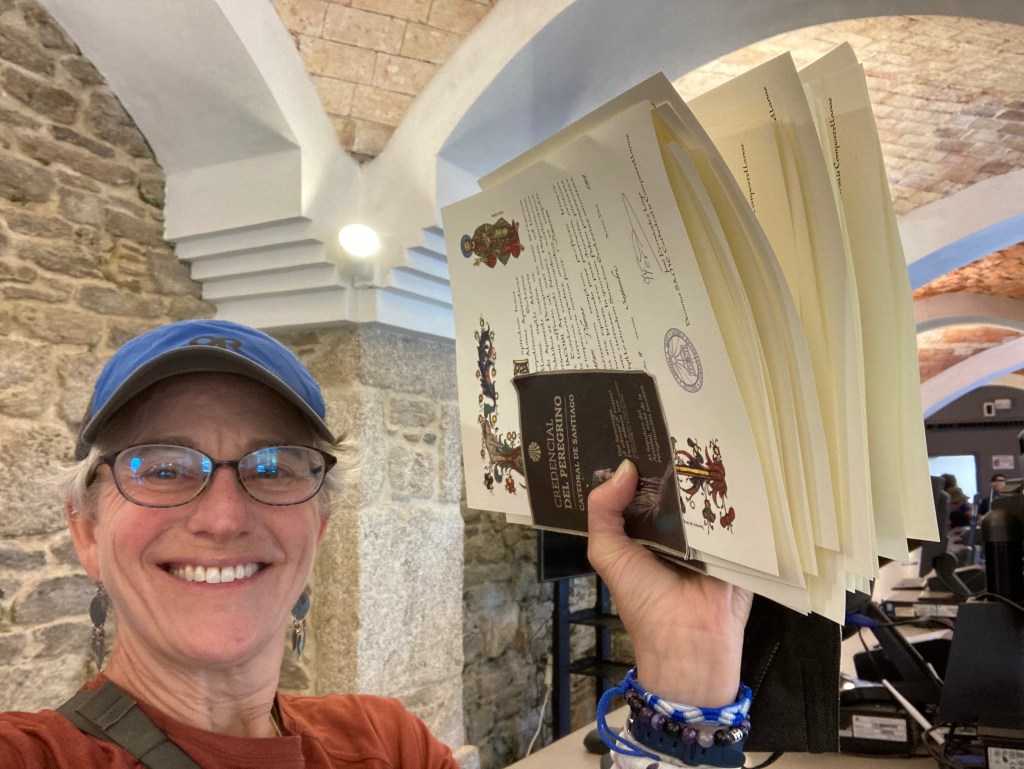
The details of this legend, and the cultural history and significance behind the famous pilgrimage, have solidified for me while walking the Camino de Santiago both last fall and again a couple of weeks ago as I guided it with renowned author Laura Davis and my dear friend, co-guide and extraordinary watercolor artist Brenda Porter. On these two trips, called the Creative Camino, we walked the last 100+ km of the Camino Frances, the most popular of the many Caminos, which is the requisite minimum necessary to receive one’s Compostela, an official certificate of having completed the Camino. In order to prove to the Compostela office that you actually walked the Camino, you have to collect a minimum of two sellos (stamps) per day in your Credencial (the Pilgrim’s passport), which is an accordion-folding booklet in which you stamp colorful, quaint and unique marks from churches, restaurants, bars, hotels and albergues (a type of lodging) along the route. It’s fun to collect the sellos, and each marks a unique place, time and interaction on the Camino.


One such moment stands out in my mind from this year’s Camino: we stopped at a modest, historic church late in the afternoon, where an elderly, blind member of an organization following in the footsteps of the historic Knights Templar stood behind a little table, marking pilgrims’ Credenciales with one unique stamp from the church and another with the date. He blessed each Pilgrim with a kiss on both cheeks, and then sort of shouted in heavily accented English “Stamp!,” followed by “Date!” Our job was to direct his hand to the exact position from which he would forcefully stamp whatever happened to be directly below his hand, ideally your pilgrim passport. We then copied the year in Roman numerals into our Credencial below each stamp. It was surprisingly moving to me that this man, a Templar, meaning one who tends a temple, wearing slacks and a sweater rather than an armored metal suit, was following the path of an 800+ year old military-religious order that started in Jerusalem and came to northern Spain specifically to serve and protect pilgrims. There he stood, gracefully and gently barking at each of us in turn, so happy to do his bit, still helping to facilitate people’s Way along a path so much older than the church or the government or the military, still steeped in legend and lore and even mysticism built upon 1000s of years of occupation in this exact place by culture after culture, all seeking clarity and cleansing in a myriad of ways.
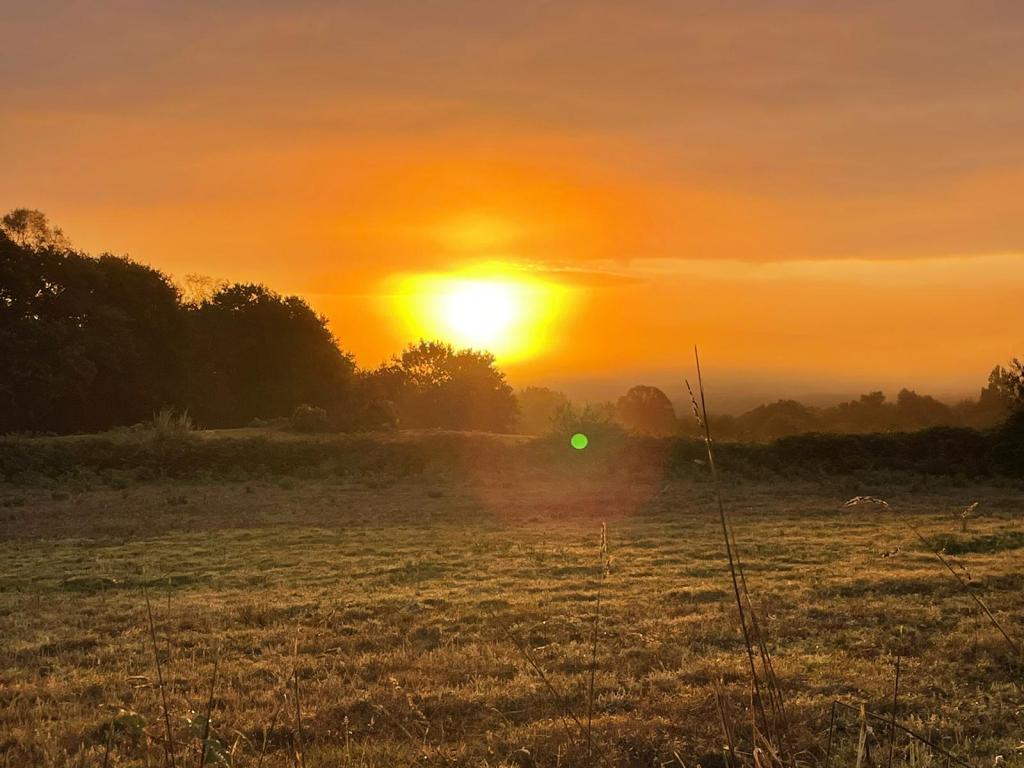
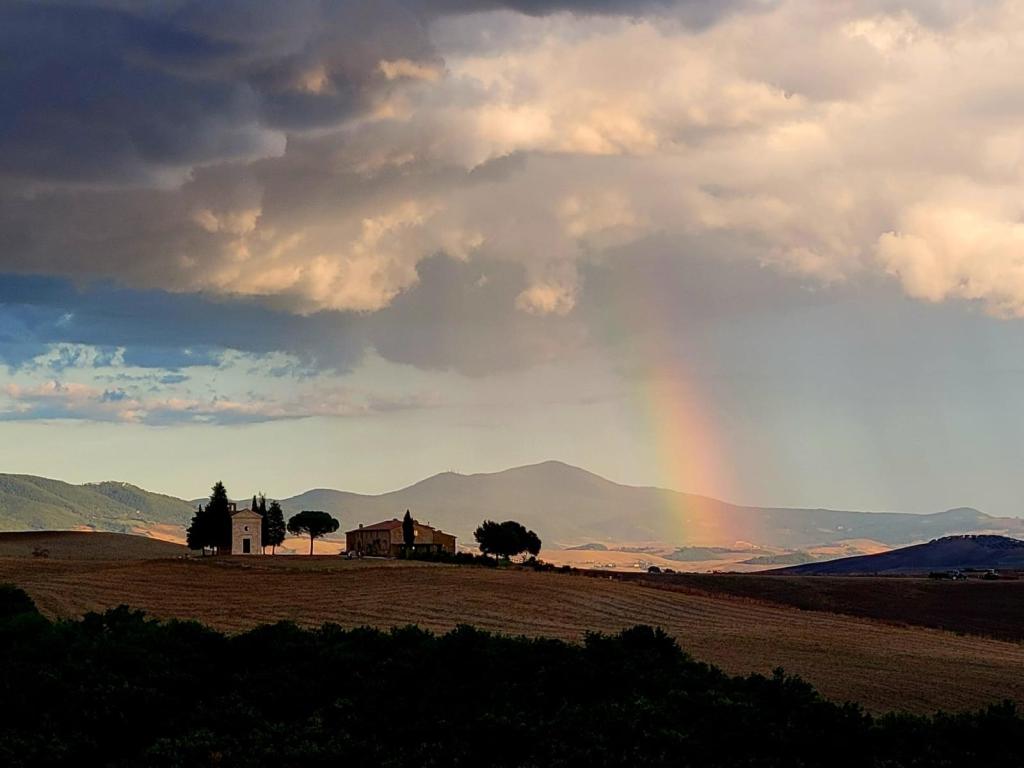
Sunrise on the Camino 
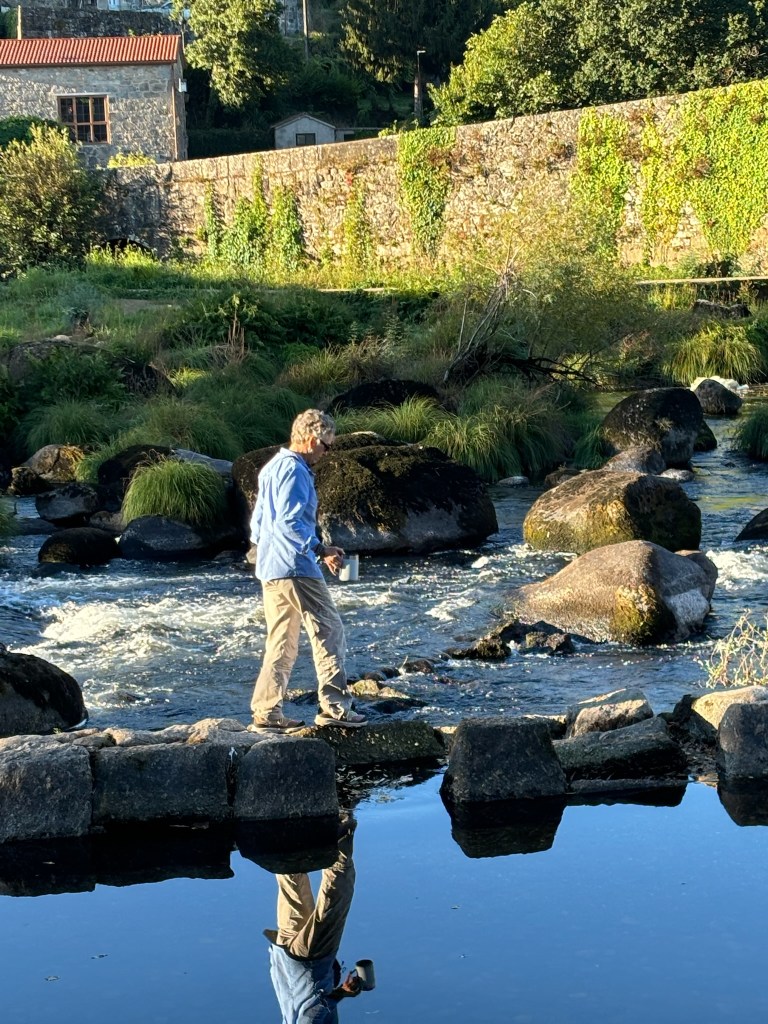
Stopping to sketch 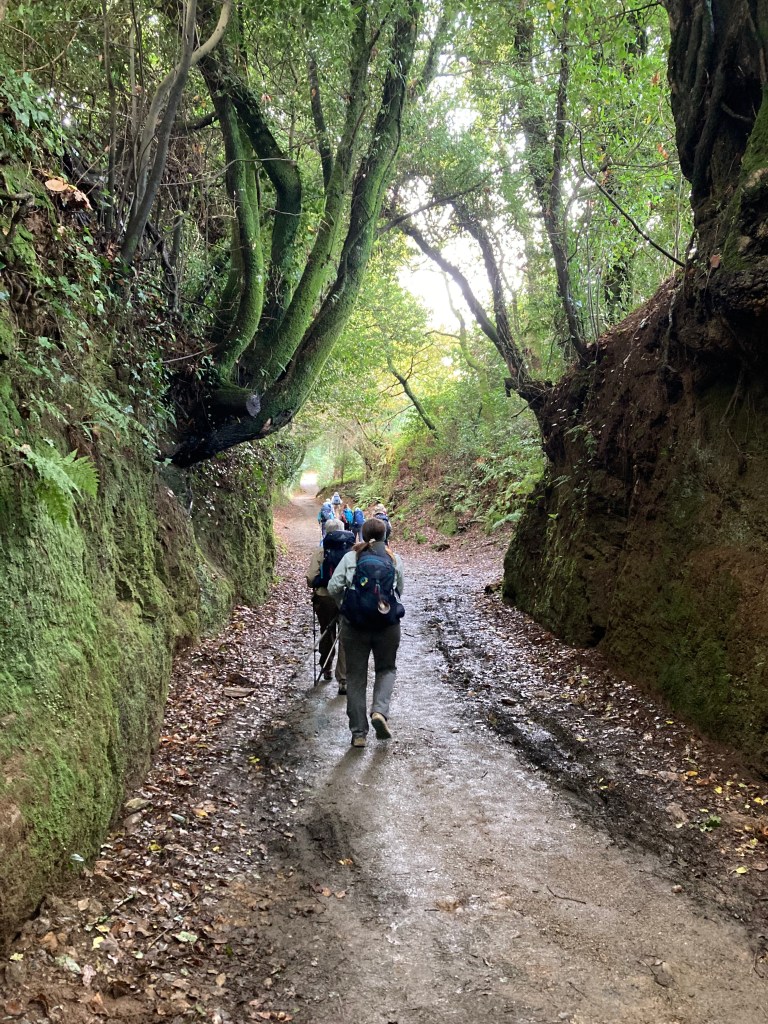
A tunnel of green 
First steps
There are so many precious moments like this on the Camino, countless encounters every day that together contribute to the nuance of that day, the feelings, emotions, inner processing and laughter that arise and pass, ebb and flow, first this person, then that. My attention is drawn to landscapes, accents, clouds, the sun and wind, architecture, colors, textures, sounds, bits of conversation passing my ears. With Brenda’s expert guidance we learn to see more deeply, to open our eyes, to judge contrast in tone, depth, angles.


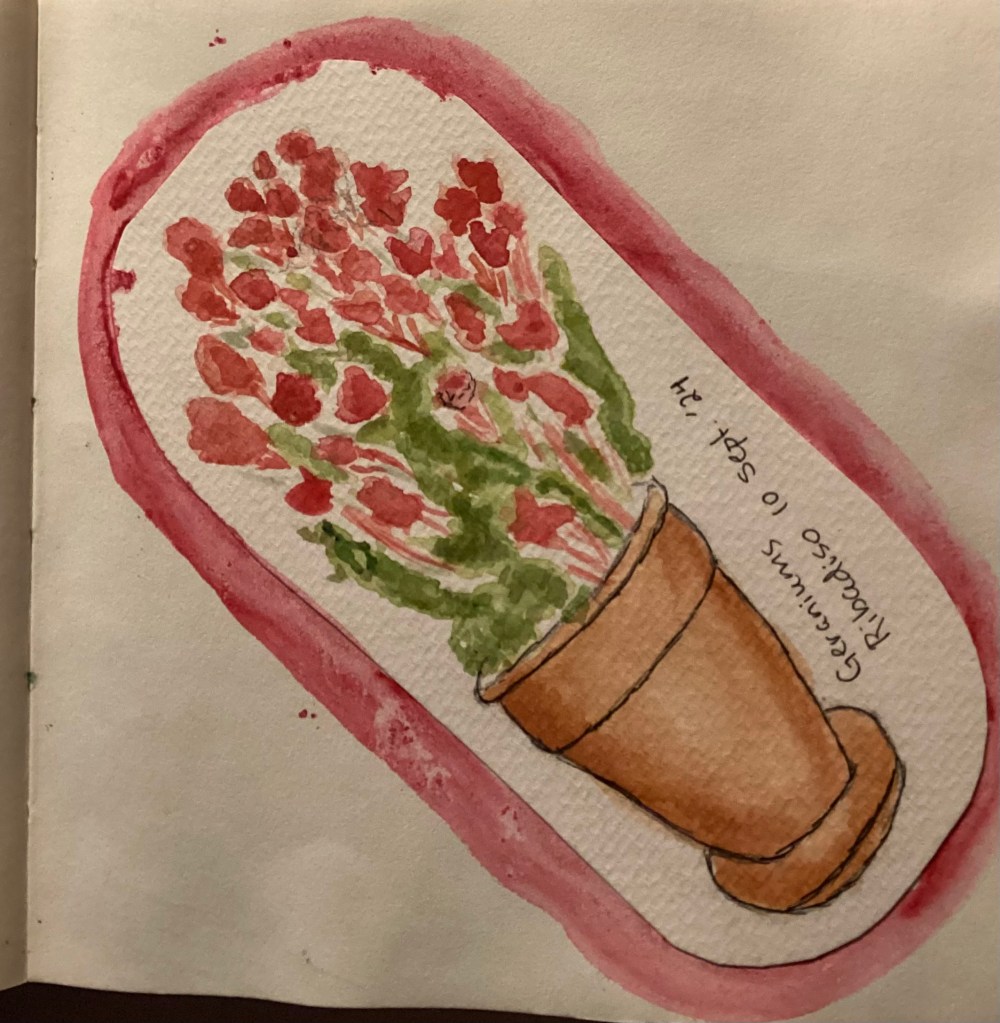
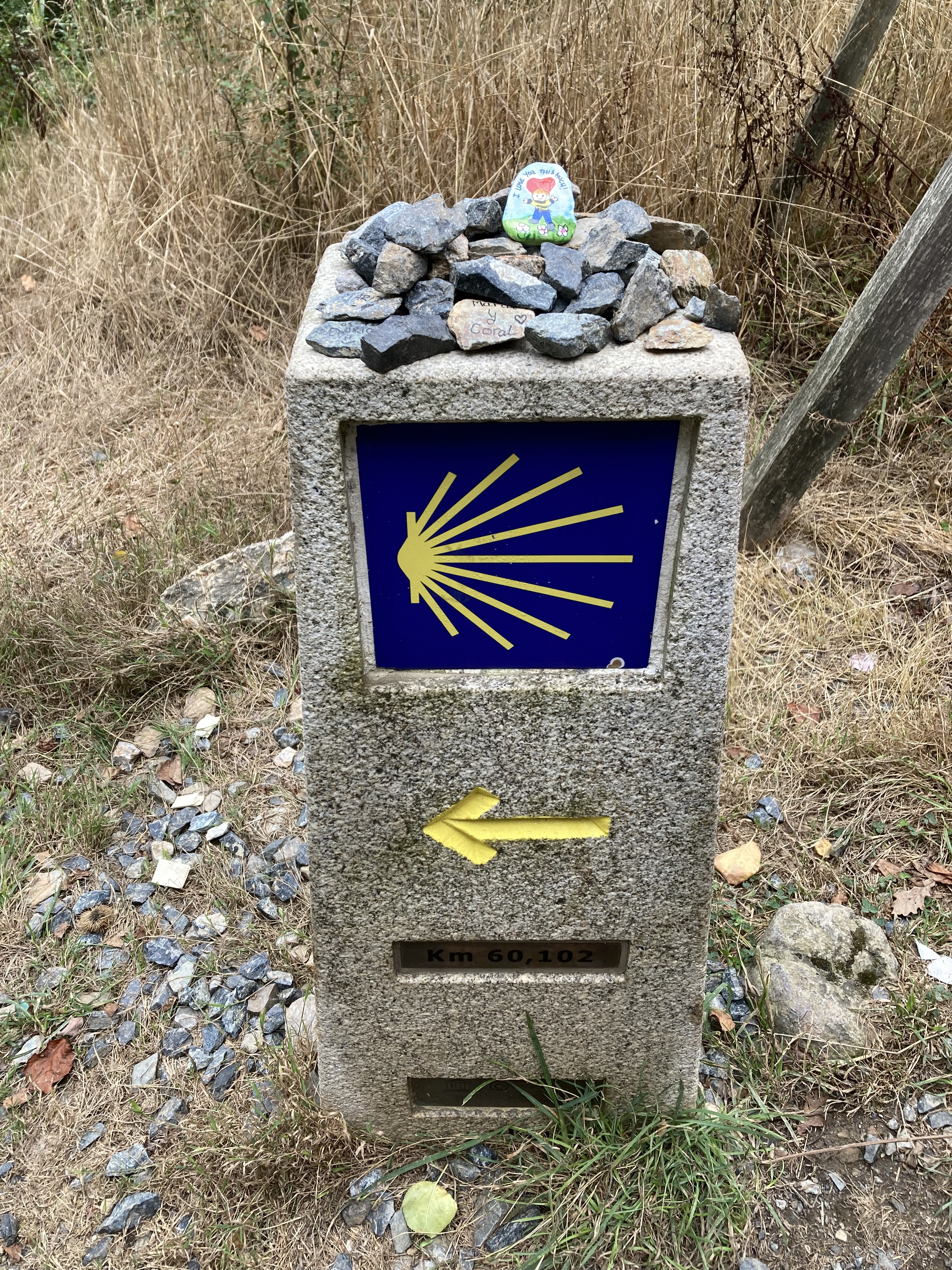
I am, admittedly, not the best watercolor student. I’m impatient and just want to mix colors and use bad technique, but I love sketching, and usually I migrate first to my pencils to try to capture, in way too large of a scale, that which I’m seeing around me. The beauty of the Camino is that that is exactly what we are supposed to be doing. I don’t have to walk the dog, or make dinner, or help my mother decipher her daily schedule, or juggle the use of the car, or deal with household maintenance. My task is to get up early and walk, stop to get a stamp in my pilgrim passport, help our participants to use their poles more effectively or tweak the fitting of their packs, or manage their pace up a steep hill. Assist with ordering food for everyone, check our large group into the hotel or pension, drink some wine, write up some notes, go to bed. Talk about history at places like O Cebreiro and Castromaior, where Celts lived in hilltop settlements long before the Romans, and did their own spiritual practices long before the Christians. Talk about pilgrimage lore and traditions, like carrying a scallop shell to signify your status as a pilgrim; bathing in the stream at Lavacolla, as historic pilgrims did before entering the city of Santiago; leaving a stone that you have carried in your pack from home, to release the burdens that you may also be carrying; getting up early and walking before daylight one morning to experience the schedule of many contemporary pilgrims who do not have reservations in comfy hotels, but are, rather, racing the crowds to secure a dormitory bunk in an albuergue.


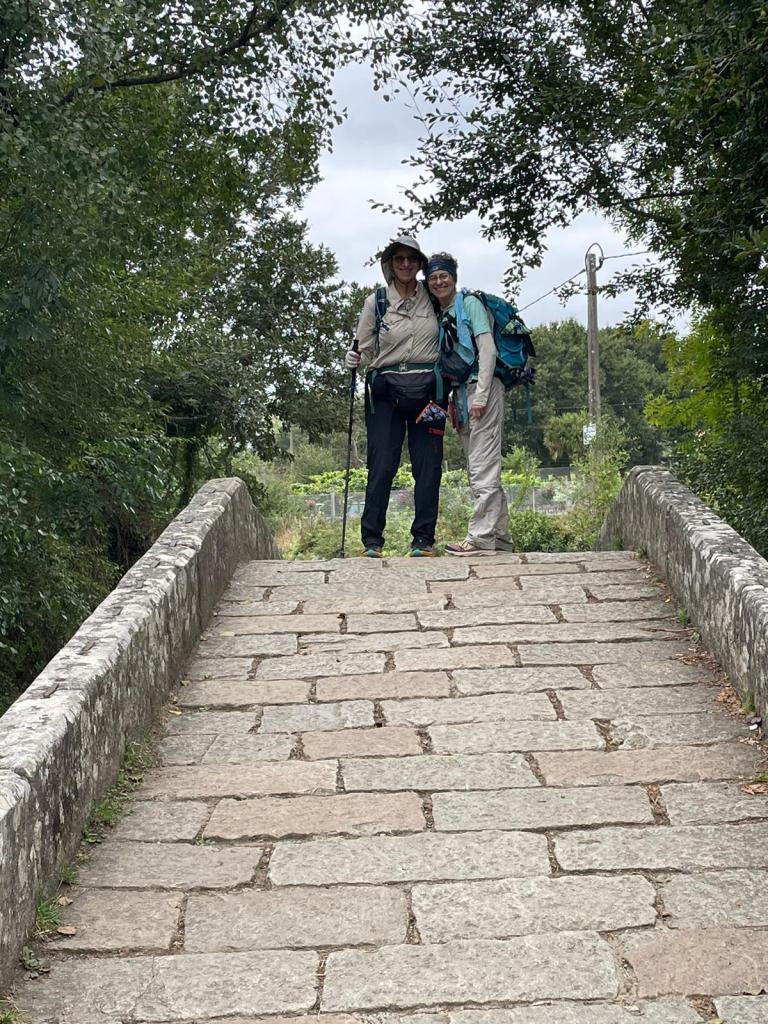
These are a few examples of my honor in walking the Camino in support of the participants on our trips, but there are more. Without doubt, we all go into this walk with very personal intentions or motivations, for the journey is not easy. Some may be grieving the loss of a loved one; some may be celebrating a rite of passage; some may be seeking clarity on the next stage of their lives; some may do it as a fitness goal, to get in shape enough to walk 100km; and some do it for spiritual insight, which may come from any number of orientations. Whatever lies behind each person’s motivation, it is my great honor to hold space for that, to assist along the way however I may, to be a friend and support person on trail.
Although I never imagined it would be so, it has also become my journey, my Way. I process internally in the brilliant writing exercises led so compassionately by Laura Davis and in the joyful, fun and laughter-filled immersion in art through which Brenda guides us. And, always, walking is my practice, my time on the cushion, my meditation. This is a pilgrimage, albeit different than most others, and I am deeply grateful to be a part of it.


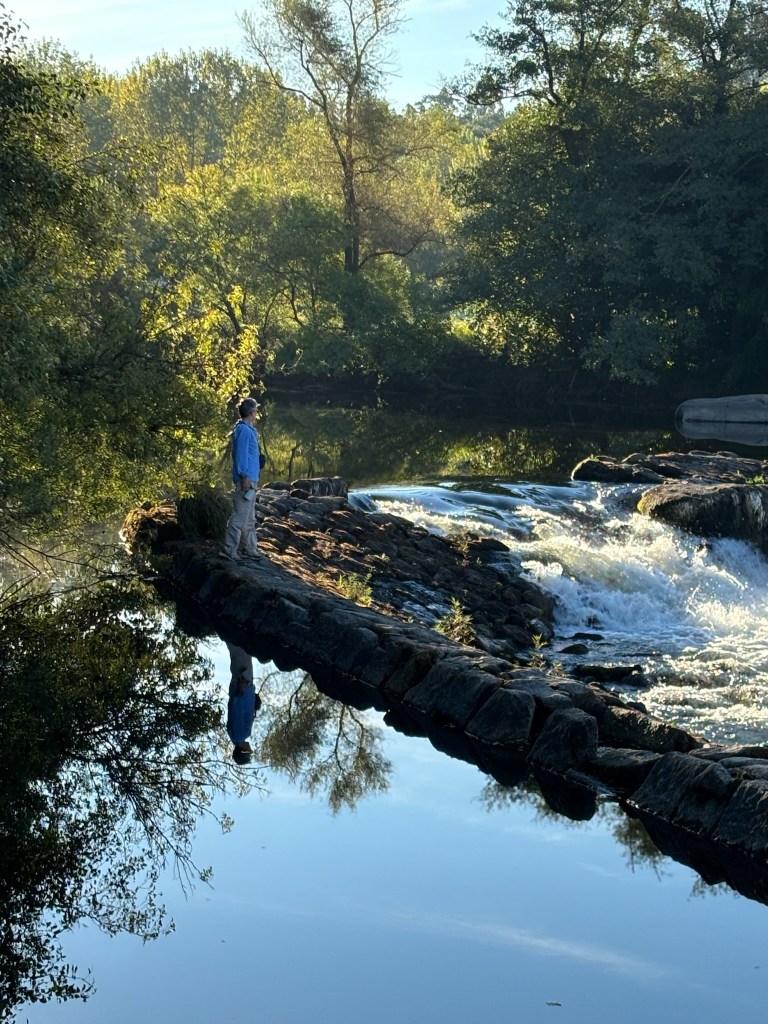

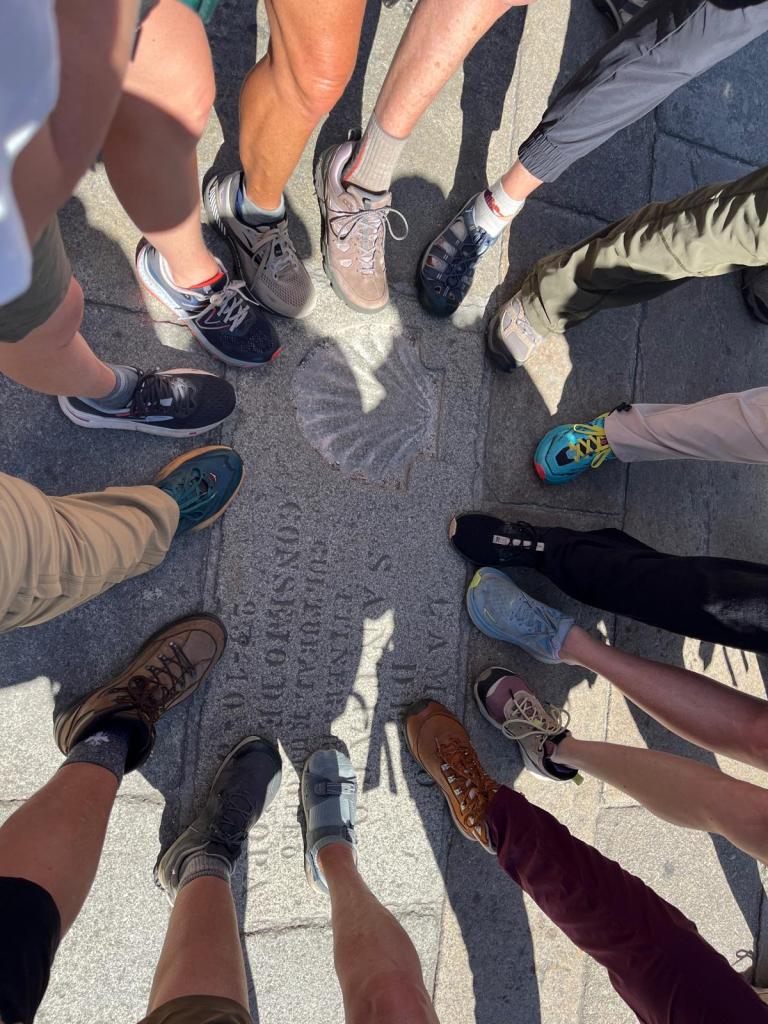

In 2025 Brenda and I will offer The Artsy Way, a unique pilgrimage on the Camino Frances of the Camino de Santiago. We will spend our first two nights at a peaceful, comfortable country villa to recover from jet lag and start getting to know one another and then another couple of nights visiting two historic towns that lie on the Camino: Samos, home to a 6th century monastery, and O Cebreiro, a traditional Celtic town on the top of a high mountain pass where you really feel the antiquity of the Camino. After these introductory days, we begin hiking inn-to-inn on the last 100 km of the Camino, ending in Santiago de Compostela. Our journey is unique because our focus is more than simply walking. We explore and experience the Camino through our senses, through sketching and watercolor painting, journaling, personal reflection, dynamic stretching, and moments of meditation.
We share the history of the Camino, which begins far before the famous legend of Saint James, back to pre-Celtic peoples who lived throughout northern Iberia, the remains of whose houses and towns are visible in Castros dotted throughout this region. The history of the Celts overlaps that of more ancient pagan peoples who also lived throughout northern Iberia, leaving dolmens, or standing stones, as well as evidence of their spiritual practices that still may be seen in contemporary Galego village traditions. The Romans, of course, left their mark in this area, evidenced in roadways, aqueducts, bridges and buildings that stand to this day. We will identify subtle signs of Roman construction on the walls of churches and municipal buildings along our journey, which will help us to see the details of the landscape around us as well as tangible signs of a very complicated history.
The history, architecture, color, landscape, and contemporary culture, language and food of Galicia make this journey appealing to people of all beliefs. Because of our focus on art and travel journaling, we will take our time and really sink into pilgrimage mode, which will undoubtedly have different meanings for each person. The dates of our next Camino, The Artsy Way, are August 31-September 15, 2025. We hope you’ll join us! If you have any questions or are interested and would like to receive information, please contact me.
 The Travails of Diplodocus
Beautiful! I love the pictures, brings back so many memories! Buen Camino 🙌
Thanks, Noémi! It’s a magical, life changing experience and I’m so grateful to be able to do this!
Buén Camino!
Beautiful Andre! I can’t wait to travel that ancient path with you again. Thanks for sharing your sketches- don’t they just take you right back to O Cebreiro or Ribadiso, looking so much closer? And your description of the blind Templar at Capela Magdelena is wonderful! Each Camino has its own highlights and meaning.