El Camino

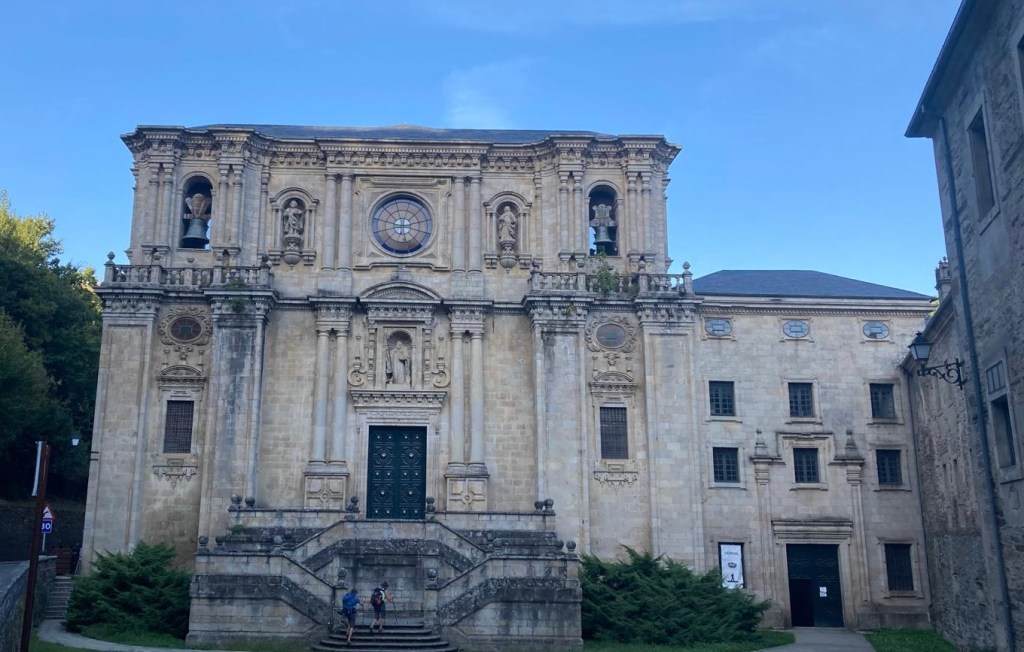
Catedral de Santiago de Compostela, photo by Andre Mallinger

The Camino de Santiago was never on my radar. I knew about it, of course, knew that it was a pilgrimage of Christian origins, ending in Santiago de Compostela in northern Spain. Santiago, in Spanish, translates to Saint James in English (Tiago in Portuguese or Galego; Diego in Spanish). The story goes that James traveled to Iberia to spread the word about Jesus and his teachings after Jesus’ death. He didn’t have much success and eventually he headed back to Jerusalem. Having survived the arduous journey in both directions, as well as what was likely a fair amount of scorn from suspicious naysayers in Celtic Galicia, once safely home in Jerusalem, James was promptly beheaded by the Romans for heresy and then was subsequently sainted.

And so the story ends, until around 800 CE (common era), when a shepherd tending his flocks one night followed the arc of a star to what is now Santiago de Compostela. There this humble herder, whose name was Pelayo (Paio in Galego or Payo in Spanish), found the remains, or relics, of Saint James. The story explains that two of James’ disciples carried his body in a boat made of stone and guided by angels from Jerusalem back to Santiago to be entombed there. Somewhere over the course of many generations, the remains were divided and now James’ head is supposedly entombed in Santiago while the rest of his body is in Jerusalem.

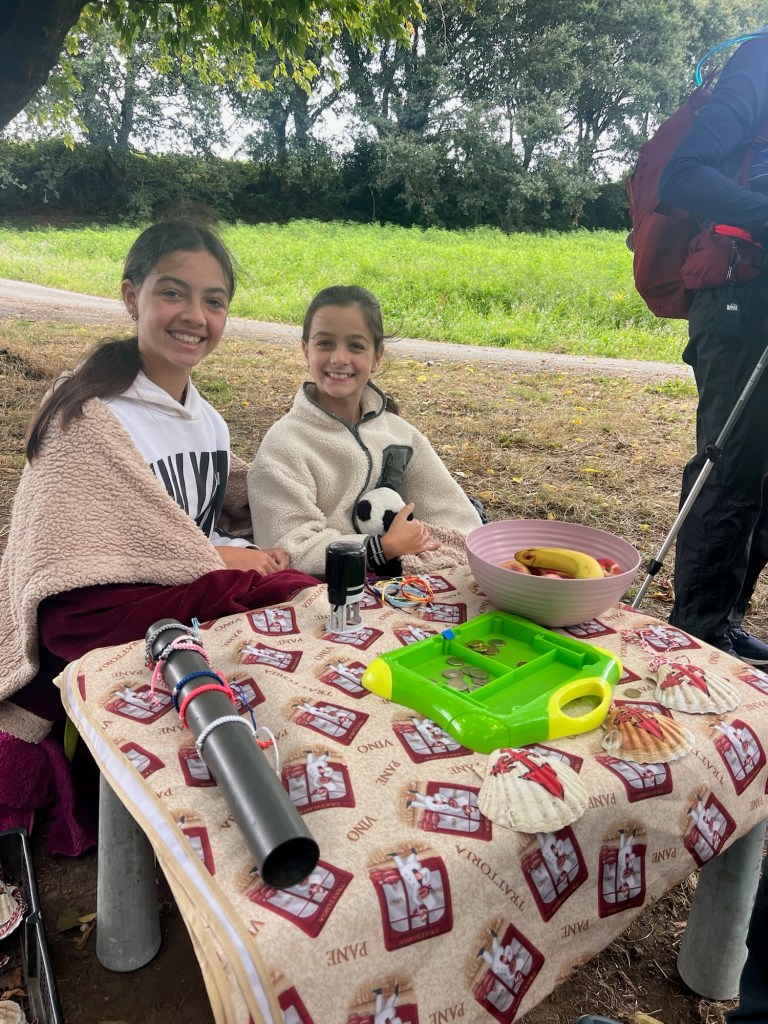
The details of this legend, and the cultural history and significance behind the famous pilgrimage, have solidified for me while walking the Camino de Santiago both last fall and again a couple of weeks ago as I guided it with renowned author Laura Davis and my dear friend, co-guide and extraordinary watercolor artist Brenda Porter. On these two trips, called the Creative Camino, we walked the last 100+ km of the Camino Frances, the most popular of the many Caminos, which is the requisite minimum necessary to receive one’s Compostela, an official certificate of having completed the Camino. In order to prove to the Compostela office that you actually walked the Camino, you have to collect a minimum of two sellos (stamps) per day in your Credencial (the Pilgrim’s passport), which is an accordion-folding booklet in which you stamp colorful, quaint and unique marks from churches, restaurants, bars, hotels and albergues (a type of lodging) along the route. It’s fun to collect the sellos, and each marks a unique place, time and interaction on the Camino.
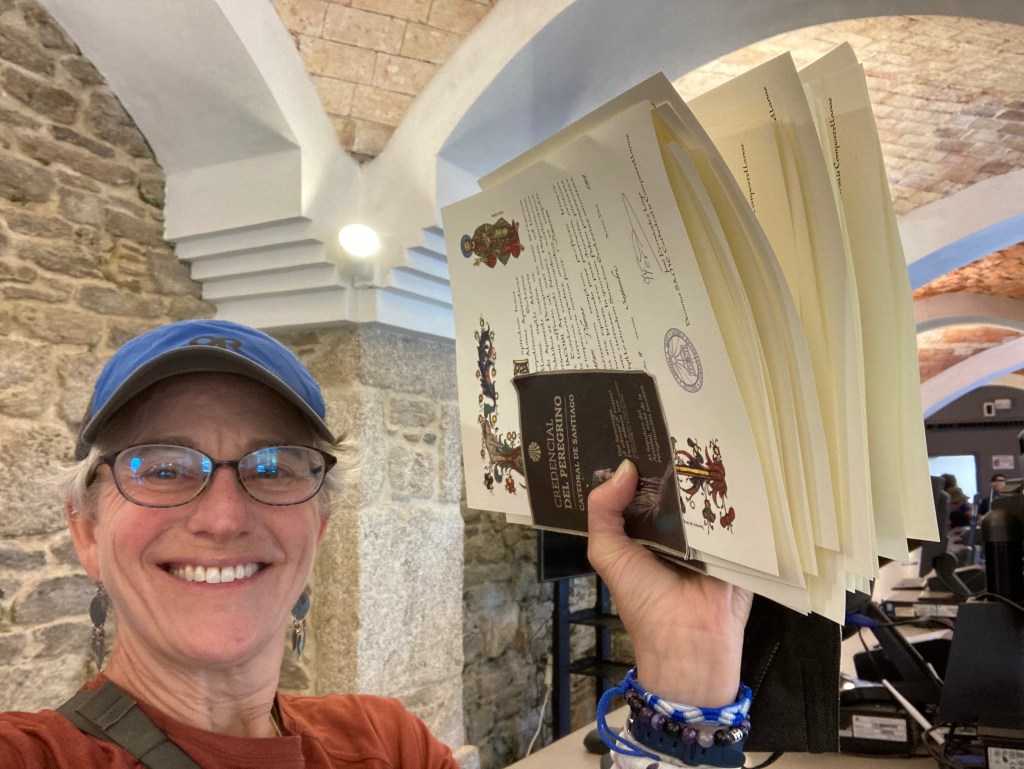

One such moment stands out in my mind from this year’s Camino: we stopped at a modest, historic church late in the afternoon, where an elderly, blind member of an organization following in the footsteps of the historic Knights Templar stood behind a little table, marking pilgrims’ Credenciales with one unique stamp from the church and another with the date. He blessed each Pilgrim with a kiss on both cheeks, and then sort of shouted in heavily accented English “Stamp!,” followed by “Date!” Our job was to direct his hand to the exact position from which he would forcefully stamp whatever happened to be directly below his hand, ideally your pilgrim passport. We then copied the year in Roman numerals into our Credencial below each stamp. It was surprisingly moving to me that this man, a Templar, meaning one who tends a temple, wearing slacks and a sweater rather than an armored metal suit, was following the path of an 800+ year old military-religious order that started in Jerusalem and came to northern Spain specifically to serve and protect pilgrims. There he stood, gracefully and gently barking at each of us in turn, so happy to do his bit, still helping to facilitate people’s Way along a path so much older than the church or the government or the military, still steeped in legend and lore and even mysticism built upon 1000s of years of occupation in this exact place by culture after culture, all seeking clarity and cleansing in a myriad of ways.
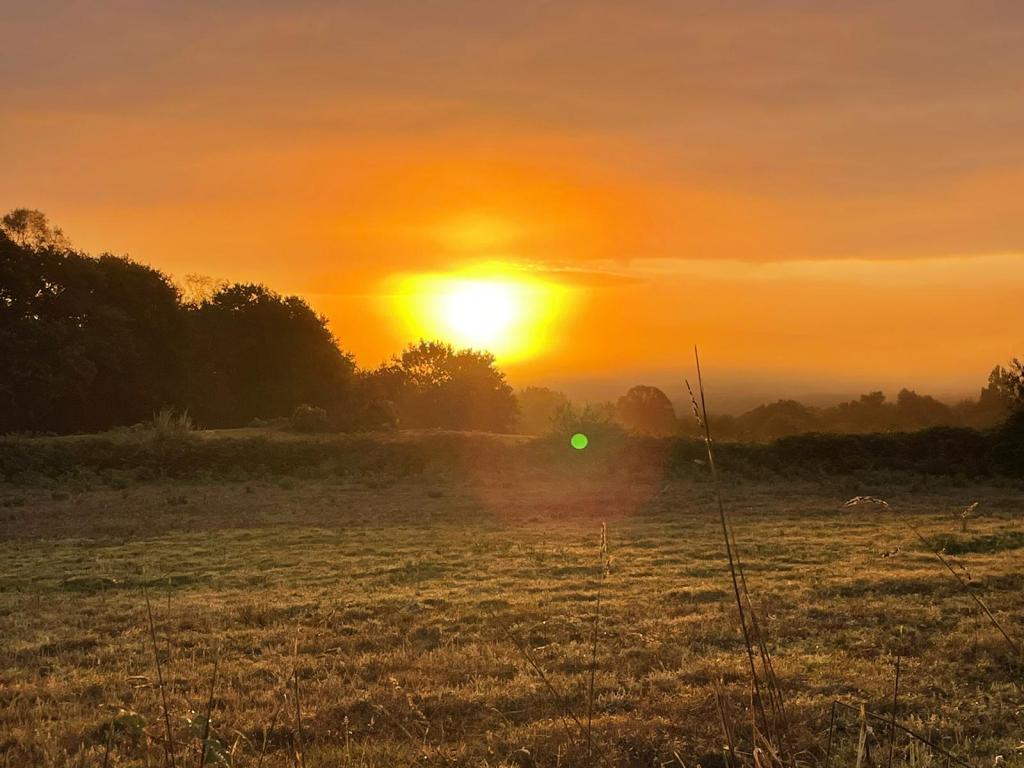
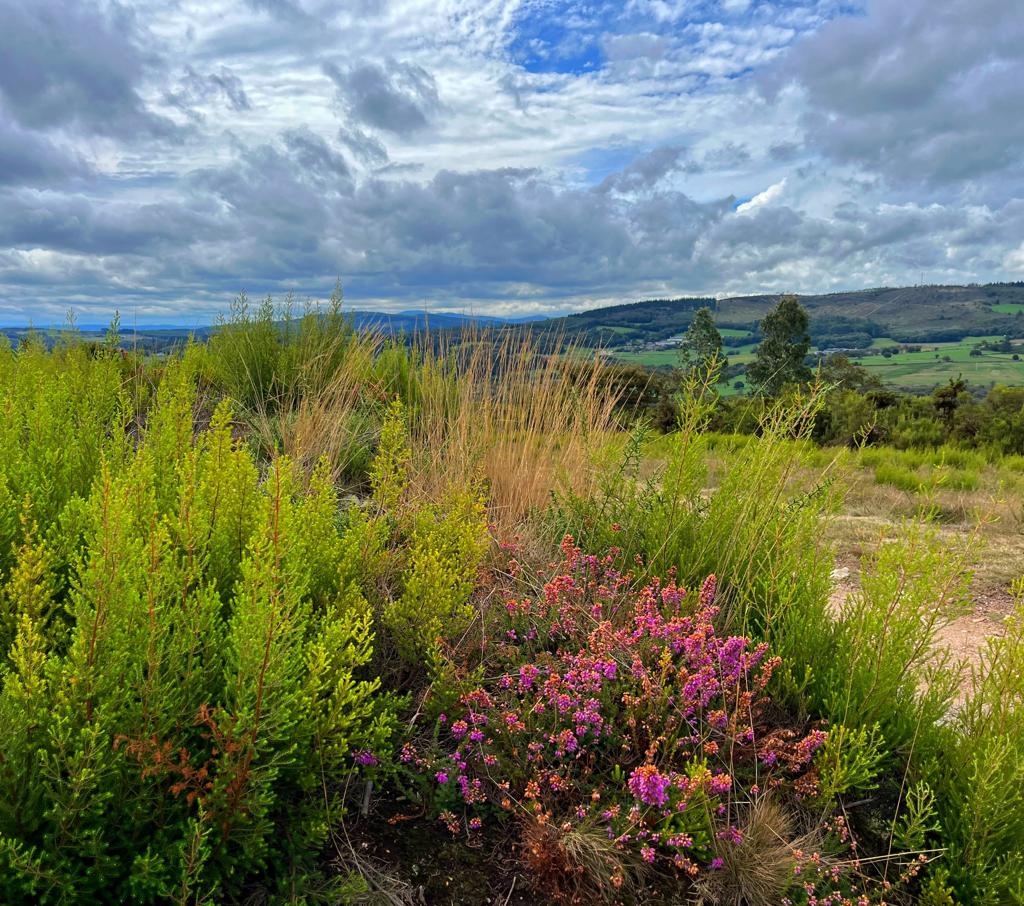
There are so many precious moments like this on the Camino, countless encounters every day that together contribute to the nuance of that day, the feelings, emotions, inner processing and laughter that arise and pass, ebb and flow, first this person, then that. My attention is drawn to landscapes, accents, clouds, the sun and wind, architecture, colors, textures, sounds, bits of conversation passing my ears. With Brenda’s expert guidance we learn to see more deeply, to open our eyes, to judge contrast in tone, depth, angles.

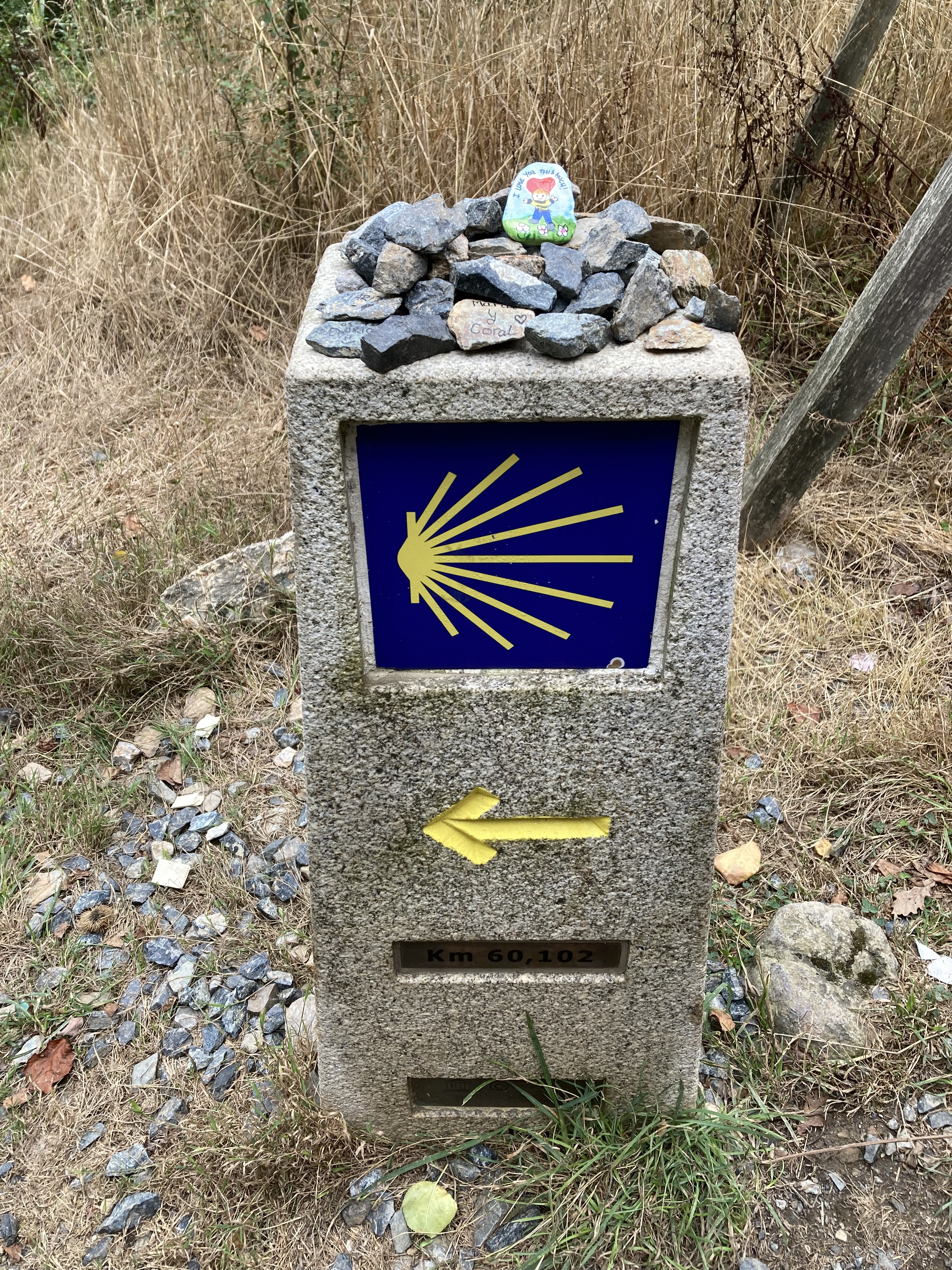
I am, admittedly, not the best watercolor student. I’m impatient and just want to mix colors and use bad technique, but I love sketching, and usually I migrate first to my pencils to try to capture, in way too large of a scale, that which I’m seeing around me. The beauty of the Camino is that that is exactly what we are supposed to be doing. I don’t have to walk the dog, or make dinner, or help my mother decipher her daily schedule, or juggle the use of the car, or deal with household maintenance. My task is to get up early and walk, stop to get a stamp in my pilgrim passport, help our participants to use their poles more effectively or tweak the fitting of their packs, or manage their pace up a steep hill. Assist with ordering food for everyone, check our large group into the hotel or pension, drink some wine, write up some notes, go to bed. Talk about history at places like O Cebreiro and Castromaior, where Celts lived in hilltop settlements long before the Romans, and did their own spiritual practices long before the Christians. Talk about pilgrimage lore and traditions, like carrying a scallop shell to signify your status as a pilgrim; bathing in the stream at Lavacolla, as historic pilgrims did before entering the city of Santiago; leaving a stone that you have carried in your pack from home, to release the burdens that you may also be carrying; getting up early and walking before daylight one morning to experience the schedule of many contemporary pilgrims who do not have reservations in comfy hotels, but are, rather, racing the crowds to secure a dormitory bunk in an albuergue.
These are a few examples of my honor in walking the Camino in support of the participants on our trips, but there are more. Without doubt, we all go into this walk with very personal intentions or motivations, for the journey is not easy. Some may be grieving the loss of a loved one; some may be celebrating a rite of passage; some may be seeking clarity on the next stage of their lives; some may do it as a fitness goal, to get in shape enough to walk 100km; and some do it for spiritual insight, which may come from any number of orientations. Whatever lies behind each person’s motivation, it is my great honor to hold space for that, to assist along the way however I may, to be a friend and support person on trail.

Although I never imagined it would be so, it has also become my journey, my Way. I process internally in the brilliant writing exercises led so compassionately by Laura Davis and in the joyful, fun and laughter-filled immersion in art through which Brenda guides us. And, always, walking is my practice, my time on the cushion, my meditation. This is a pilgrimage, albeit different than most others, and I am deeply grateful to be a part of it.

In 2025 Brenda and I will offer The Artsy Way, a unique pilgrimage on the Camino Frances of the Camino de Santiago. We will spend our first two nights at a peaceful, comfortable country villa to recover from jet lag and start getting to know one another and then another couple of nights visiting two historic towns that lie on the Camino: Samos, home to a 6th century monastery, and O Cebreiro, a traditional Celtic town on the top of a high mountain pass where you really feel the antiquity of the Camino. After these introductory days, we begin hiking inn-to-inn on the last 100 km of the Camino, ending in Santiago de Compostela. Our journey is unique because our focus is more than simply walking. We explore and experience the Camino through our senses, through sketching and watercolor painting, journaling, personal reflection, dynamic stretching, and moments of meditation.

We share the history of the Camino, which begins far before the famous legend of Saint James, back to pre-Celtic peoples who lived throughout northern Iberia, the remains of whose houses and towns are visible in Castros dotted throughout this region. The history of the Celts overlaps that of more ancient pagan peoples who also lived throughout northern Iberia, leaving dolmens, or standing stones, as well as evidence of their spiritual practices that still may be seen in contemporary Galego village traditions. The Romans, of course, left their mark in this area, evidenced in roadways, aqueducts, bridges and buildings that stand to this day. We will identify subtle signs of Roman construction on the walls of churches and municipal buildings along our journey, which will help us to see the details of the landscape around us as well as tangible signs of a very complicated history.

The history, architecture, color, landscape, and contemporary culture, language and food of Galicia make this journey appealing to people of all beliefs. Because of our focus on art and travel journaling, we will take our time and really sink into pilgrimage mode, which will undoubtedly have different meanings for each person. The dates of our next Camino, The Artsy Way, are August 31-September 15, 2025. We hope you’ll join us! If you have any questions or are interested and would like to receive information, please contact me.
Itinerary for The Artsy Way

August 31-September 15, 2025

Click here to find out more: ABOUT OUR TRIP

The walking distances listed below are between our lodgings. We are limited in lodging choices that have enough rooms for our group. However, our private driver meets us throughout the day, so you can choose how long you want to walk; you may want a lift to the next stop, or to our lodging for the night, or walk the entire distance – it is your Way.

DAY 1: Sunday, August 31 – We meet at Santiago Airport at 1:05 pm (Iberia flight IBO572 from Madrid) and have a short transfer to our retreat villa near the rural community of Pineiro. After our trip welcome and orientation, we begin getting to know each other and familiarizing ourselves with our travel-sized watercolor paint sets. We have some fun mixing colors to match what we see around our villa, with a limited palette specially designed for our journey.
Overnight: Vila Sen Vento  Meals included: Dinner.

Day 2: Monday, September 1 – Throughout our journey we will begin each day with dynamic stretching, a mix of yoga, tai chi, chi gong and other flowing movements. Today we have breakfast in our villa and practice fundamental watercolor skills and learn techniques for sketching trees, flowers and landscapes. The gardens are blooming and the hydrangeas are gorgeous! We also learn to sketch on the go as we stretch our legs while exploring our peaceful rural surroundings. Walking: Approximately 3 miles, with stops to sketch. Overnight: Vila Sen Vento.  Meals included: Breakfast, Lunch, Dinner.

Day 3: Tuesday, September 2 – After breakfast today we will take an hour-long bus ride to the village of Samos, home to the historic Monasterio de San Julian, one of Spain’s oldest active monasteries. Founded in the 6th century and later joining the Benedictine order, the monastery’s grounds feature a 9th-century Mozarabic chapel and a 1,000-year-old cypress tree, revered in Camino lore. Although Samos lies on the Camino de Santiago, long stretches between accommodations in this area make walking the Camino impractical for us, but we spend a night here to visit the monastery and soak in the rural atmosphere. Our art focus today is about perspective and simplifying stonework. Walking: 1-4 mile option. Overnight: Samos.  Meals included: Breakfast, Dinner.

Day 4: Wednesday, September 3 – After a short bus transfer, we start walking on the Camino de Santiago from the village of Las Herrerías to O Cebreiro Pass and its historic Celtic village. O Cebreiro’s cobblestone streets, small shops, historic buildings and Celtic-style round stone houses with thatched roofs, called “pallozas,” are certain to delight you!  After learning about the church and its role in the revival of the Camino de Santiago, you will each choose a scallop shell to hang from your daypack. This iconic symbol of the Camino indicates that we are pilgrims. You will also receive your pilgrim passport (the credencial) and first proper Camino stamps. Tonight we stay at a quaint family-run hotel with time to relax and sketch the vistas and picturesque scenes of  O Cebreiro.  Walking: About 5 miles.   Overnight: O Cebreiro. Meals included: Breakfast, Dinner.

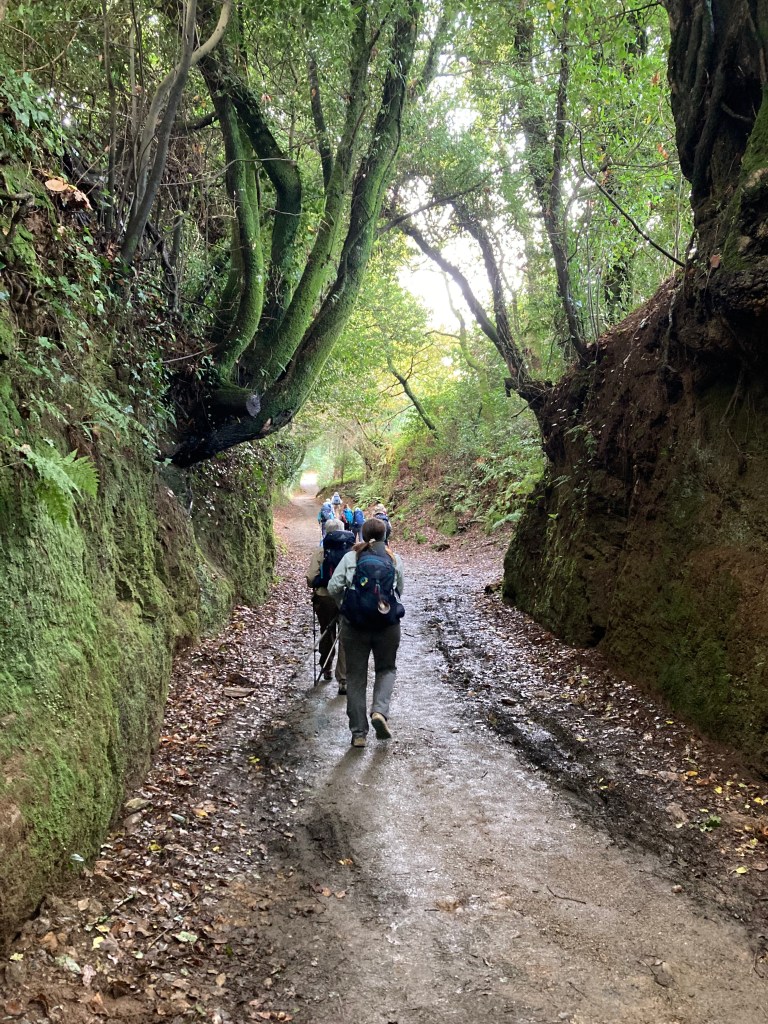
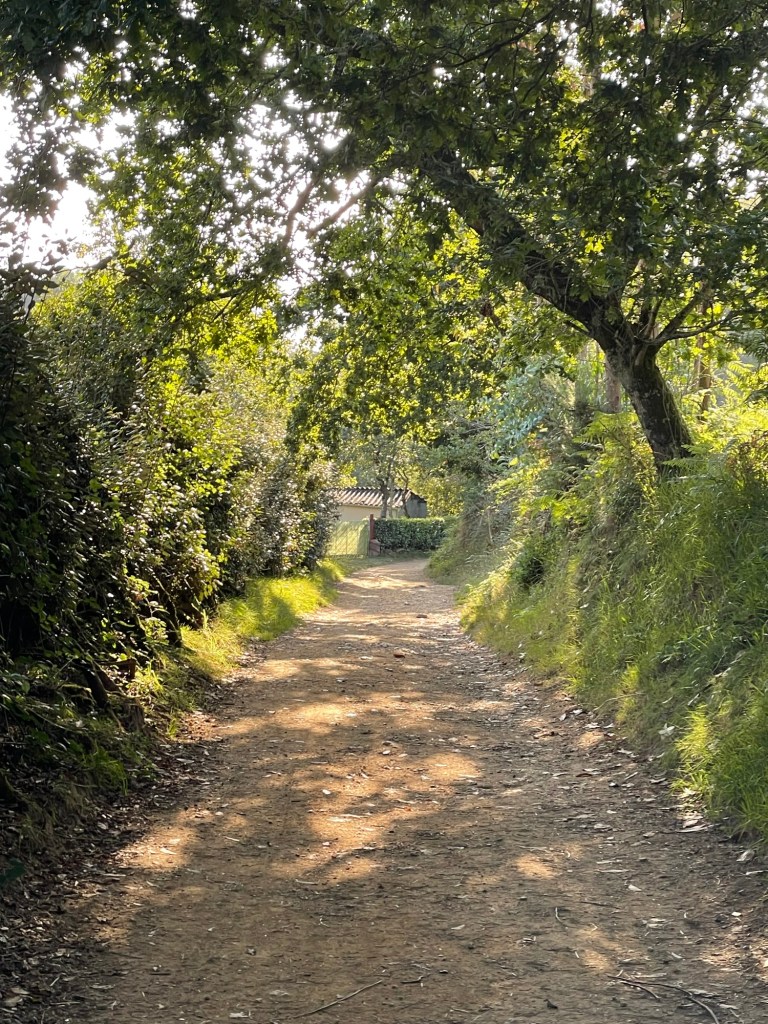
Day 5: Thursday, September 4 – After our final bus transfer, we begin our 103 kilometer pilgrimage. We start here in order to qualify for the official certificate, the “Compostela,” issued to pilgrims who walk at least 100 km to Santiago. The other requirement for the Compostela is to carry a pilgrim passport, the Credencial, and collect two or more stamps every day from churches, stands and cafes along the way. On our walk today, we pass through tiny hamlets built almost entirely of granite, including their narrow roads and slate-roofed houses and barns, which are often connected to form a single building. We also walk on rural lanes winding among moss-covered walls and groves of oak and chestnut, which feels very much like an amble through long green tunnels. In other words, we have many feasts for our artists’ eyes! We are headed for Portomarín, a small working town that was originally built along the banks of the Miño River. In the 1950’s the town was flooded due to the construction of a reservoir, and had to be rebuilt on higher ground. The unique, block-shaped Iglesia de San Nicolas was originally constructed next to the river as a fortress/church during the 12th century. The townspeople of Portomarín moved it stone by stone to the higher town square in order to preserve this magnificent monument. Walking: About 9.5 miles.  Overnight: Portomarín.  Meals included: Breakfast, Dinner.

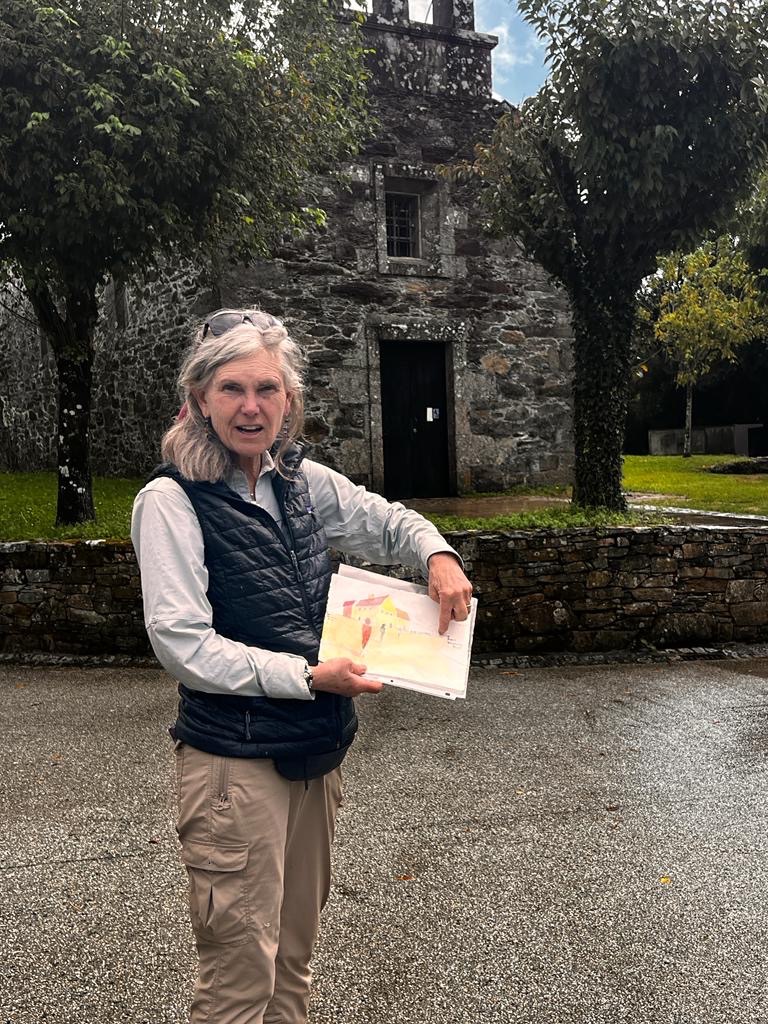
Day 6: Friday, September 5 – Today is a layover day to explore the colors, sights, and sounds of Portomarín while we practice a variety of travel journaling techniques. We continue working on perspective, adding people in front of the iconic Saint Nicolas Church. We have a fun project of painting the things that we carry in our pack. We’ll also cover page lay-outs to combine sketches with written notes and inspirations along the Way. Our lodging, the Pousada de Portomarín, is the oldest hotel in town, beautifully renovated with a pool and spaces to relax. Walking: Around Portomarín. Overnight: Portomarín. Meals included: Breakfast only; Dinner is on your own tonight.

Day 7: Saturday, September 6 – As we continue our journey through forest groves, we also walk past small farms with pigs, cows and chickens, working dogs, fields of corn and huge kale plants. We’ll encounter farmers whose pride in their agrarian way of life  is tangible. Today we stop at a highlight of our pilgrimage, Castro de Castromaior, the remains of a 2,400-year-old hilltop fortress inhabited by pre-Celtic peoples and, later, Romans. Here, we learn about the pre-history  of northern Iberia and practice our art in this most magical and powerful place. The focus will be looking at shapes and values to more accurately portray so many exposed stone walls visible from above. As we continue walking, we stop at the Capela a Magdalena, and may see the caretaker, a modern-day templar in the tradition of the Knights Templar of the 13th century, the famous protectors of pilgrims on the Way. Our last highlight is the Cruceiro de Lameiros, one of the oldest stone crosses on the Camino, another beautiful sketching option. Walking: About 13 miles. Overnight: Hostería Calixtino.  Meals included: Breakfast, Dinner.

Day 8: Sunday, September 7 – Our rural lodge is named after the first pilgrims’ guidebook, the Codex Calixtino, and is the perfect place for a layover day to focus on our travel journals as we continue to hone our watercolor and sketching skills. We’ll notice that the stone houses around us now have red tile roofs rather than slate.  We enjoy time for dynamic stretching and a walk through the rural area. Walking: Around our lodging. Overnight:  Hostería Calixtino.  Meals included: Breakfast, Dinner.

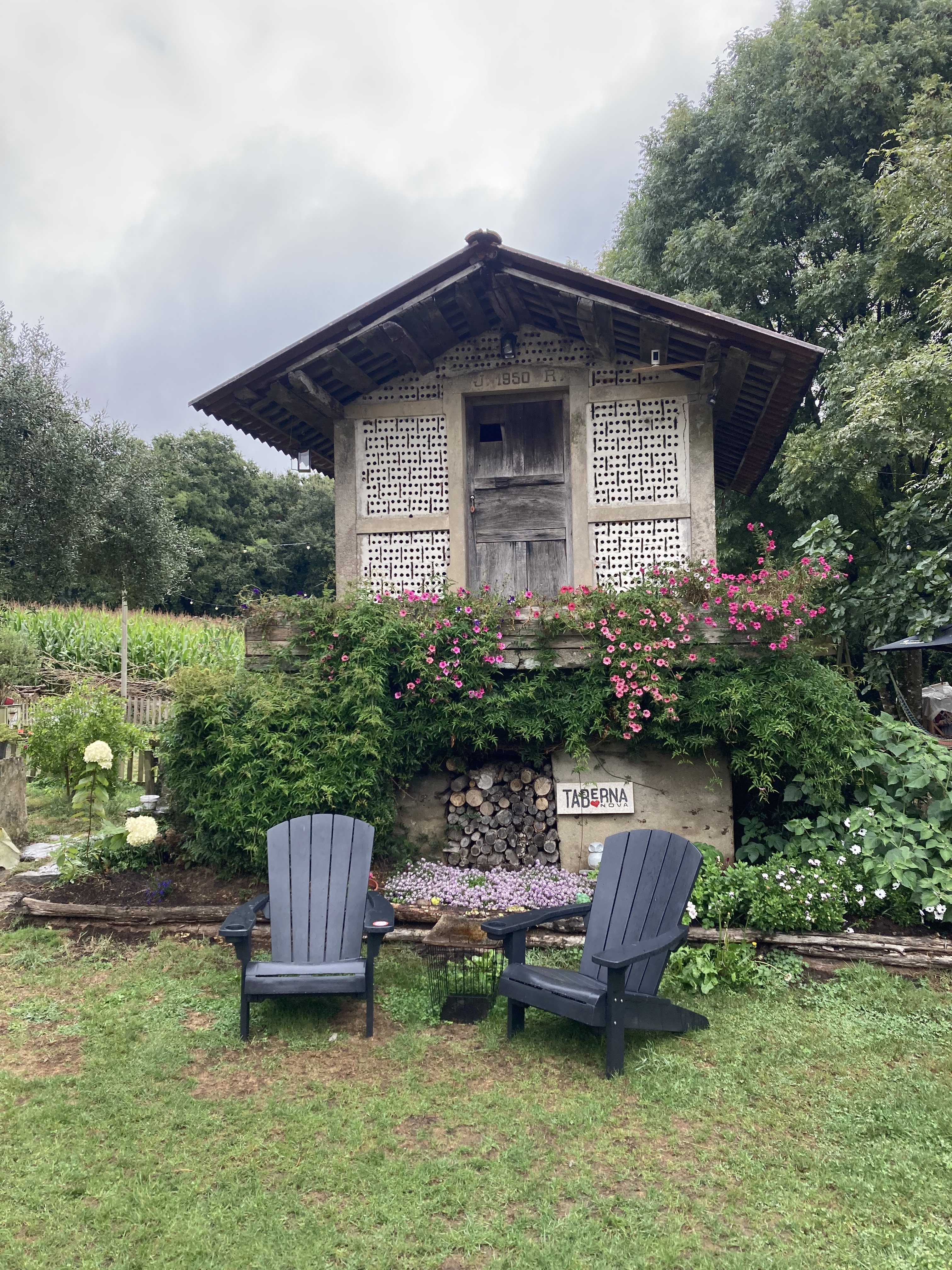
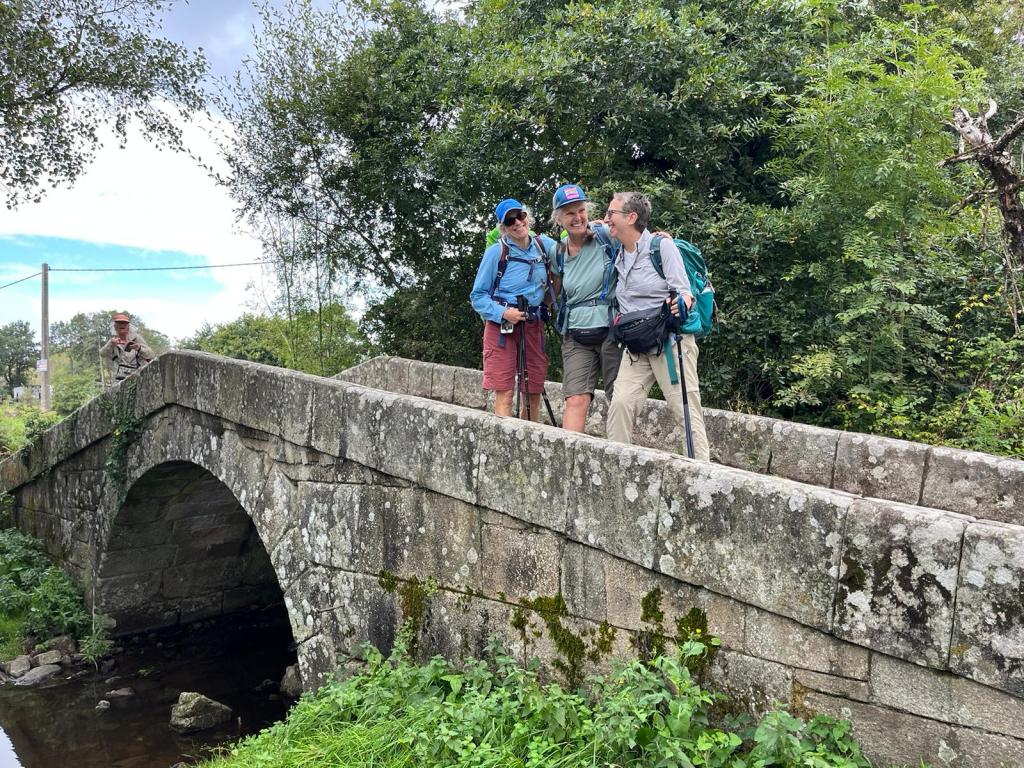
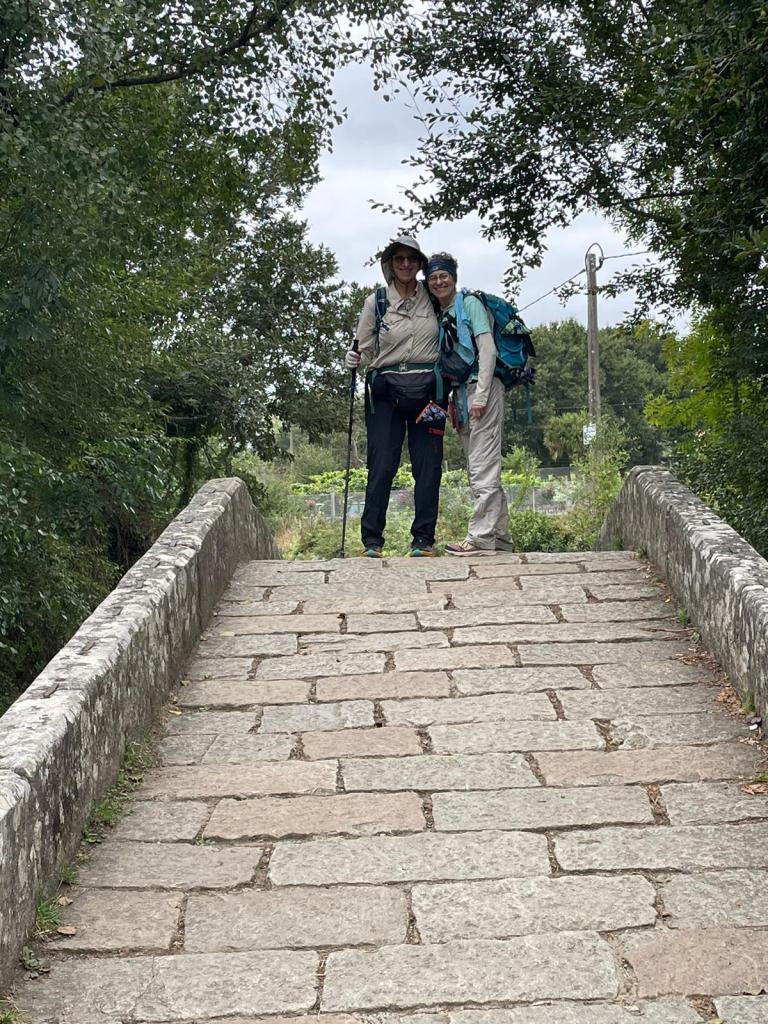
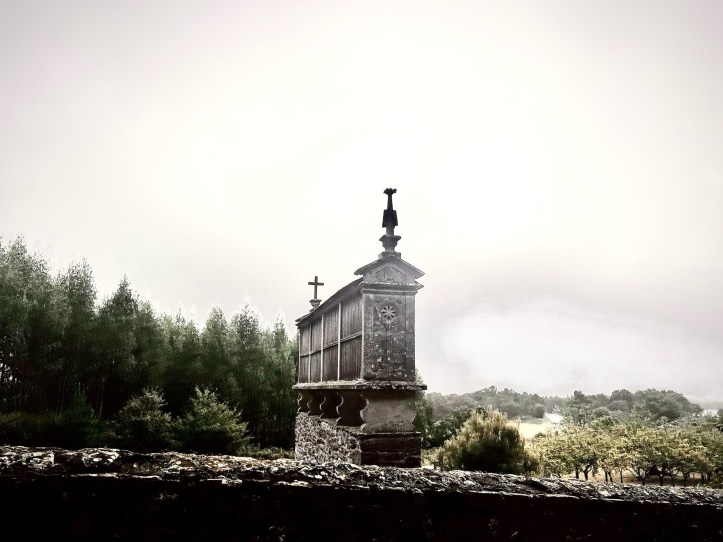
Day 9: Monday, September 8 – Today we pass through the town, Palas de Rei, or “Royal Palace,” named after the residence of a Visigothic monarch from the beginning of the 8th century. Our destination is Melide, the largest town on our Camino. Along the way we continue to see horreos, the traditional raised granaries designed to store grain away from rodents and moisture. We stop at the Iglesia de Santa Maria, famed for a legend about its Mother Mary statue. On our final approach to Melide, we will cross a beautiful four-arched medieval bridge. Dinner tonight includes a traditional Galician octopus dish called pulpo a fería (optional) paired with local white Ribeira wine served in traditional ceramic cups.  Walking: About 11.5 miles Overnight: Melide.  Meals included: Breakfast, Dinner.

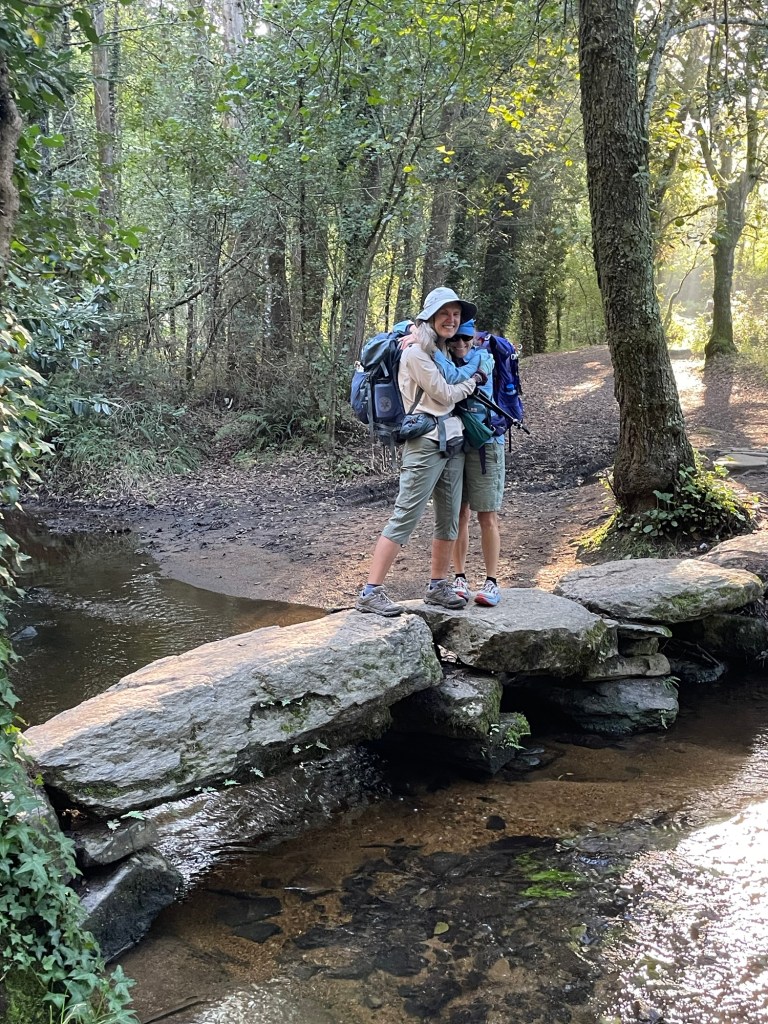
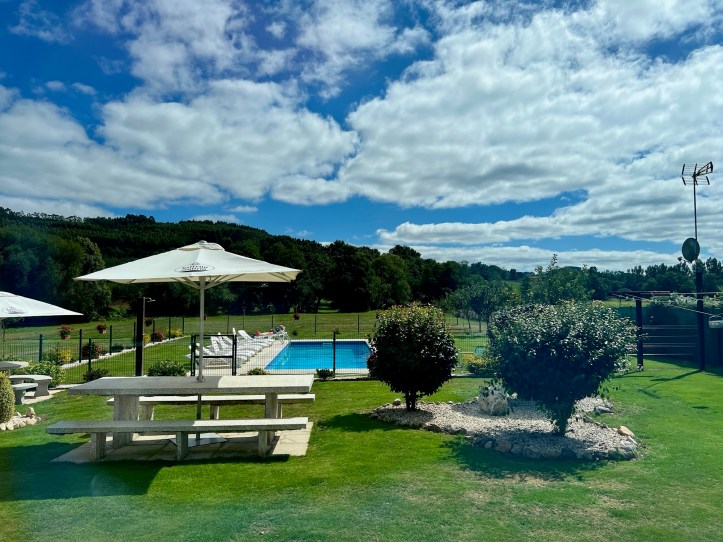
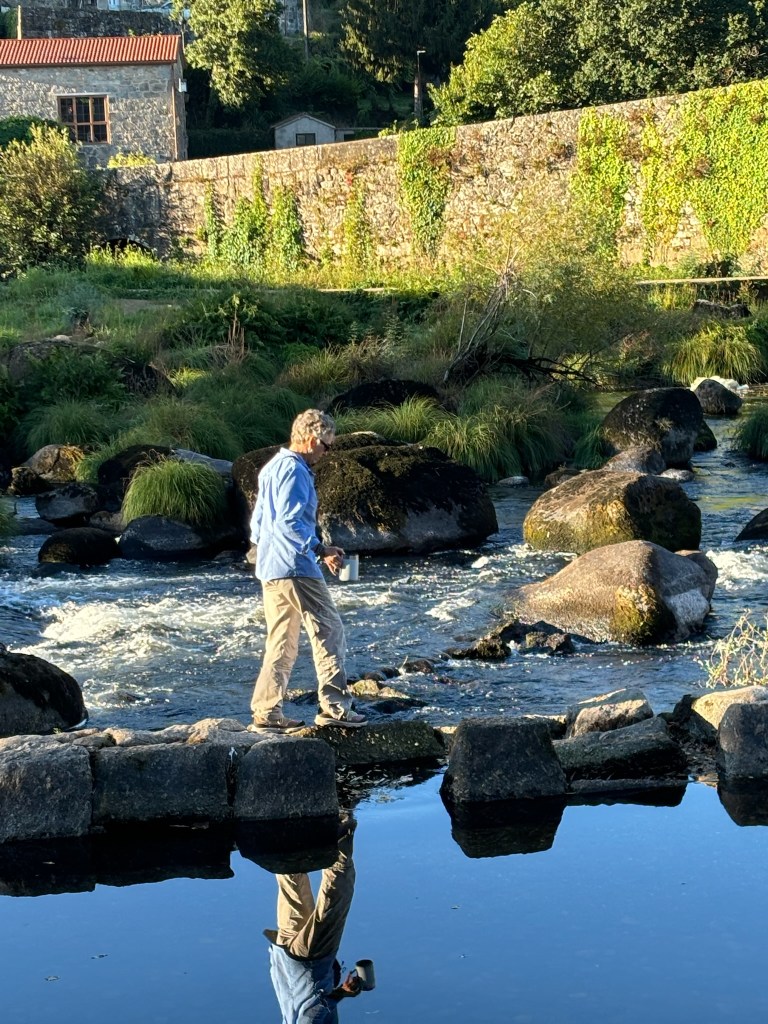
Day 10: Tuesday, September 9 – As we leave Melide, we pass through the town square and Melide’s imposing Romanesque church, St. Peter.  We’ll stop to sketch and enjoy freshly picked raspberries, juice, coffee or pastries at an organic farm stand on the trail, with the cutest pink car. Not far from that, we cross a sweet little stepping-stone bridge. In Castaneda we pass the remains of medieval kilns that burned the pieces of limestone brought from Triacastela by pilgrims in order to contribute to the construction of the Catedral de Santiago and perhaps pay penance in so doing. After Castaneda a steep descent brings us to Ribadiso, our home for two nights. Our  lodging has an unheated salt-water swimming pool, the perfect place to soothe our feet after several days of hiking. Walking: about 10 miles  Overnight: Ribadiso de Baixo.  Meals included: Breakfast, Dinner.

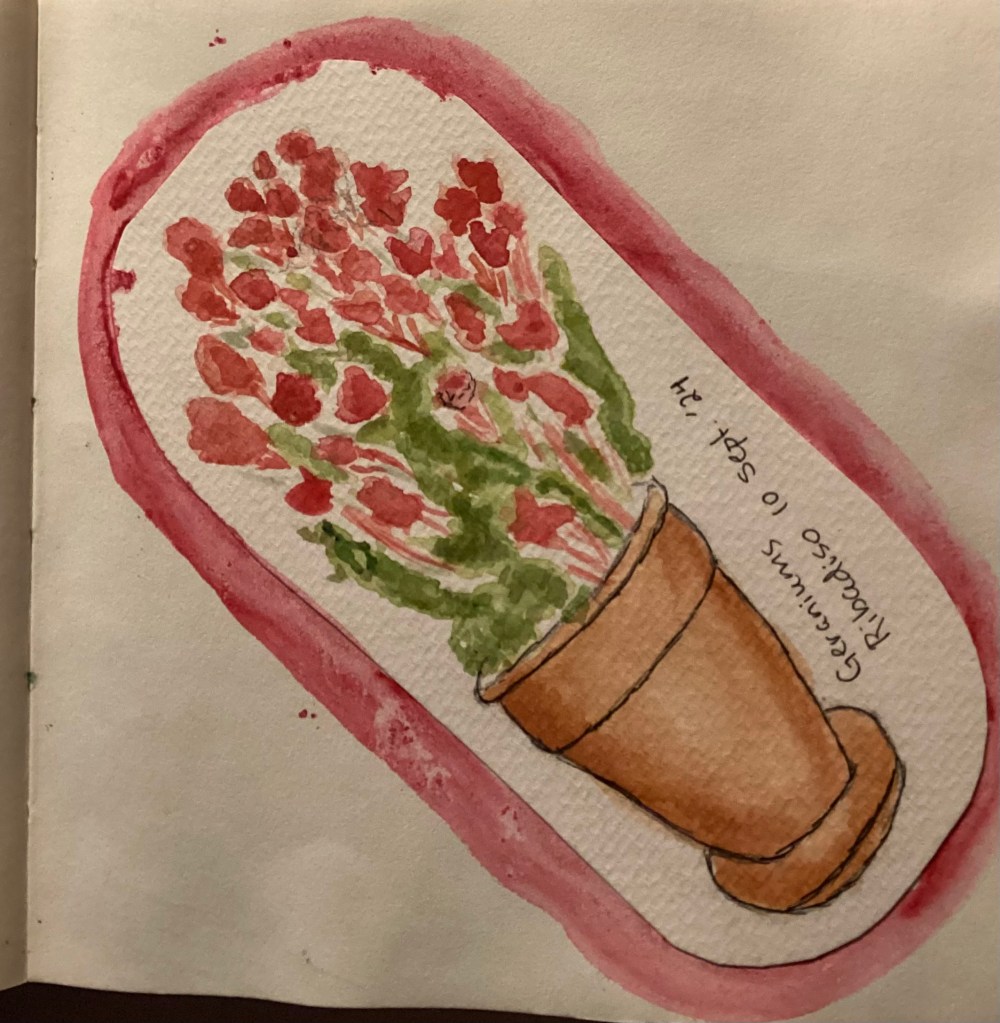
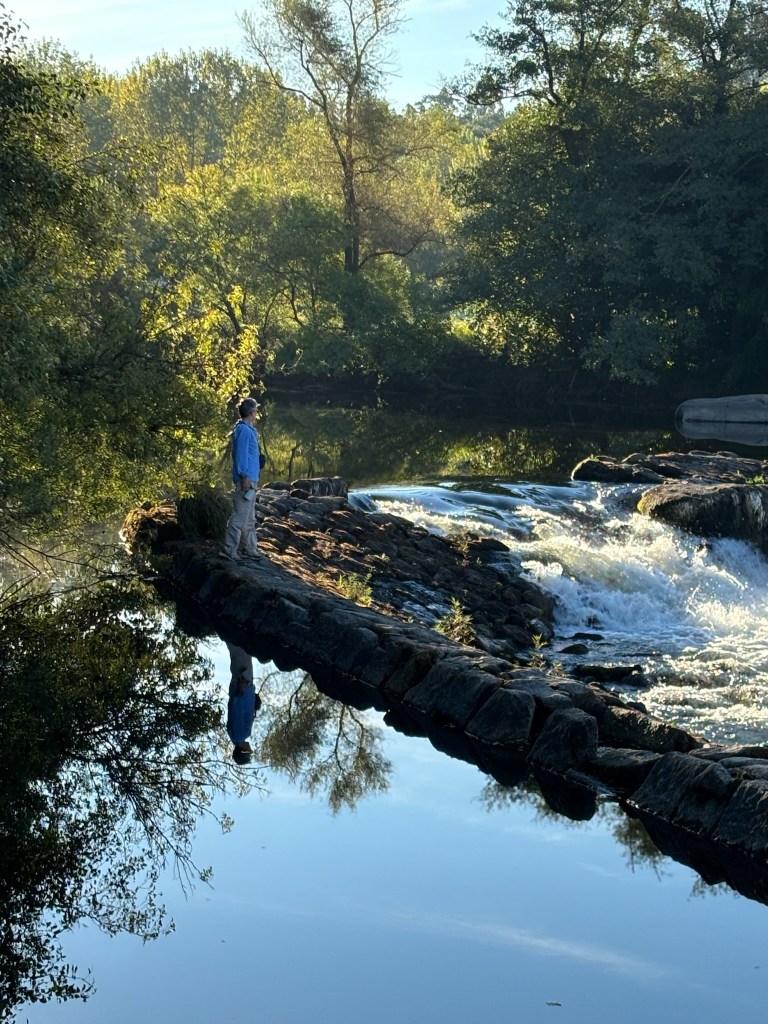
Day 11: Wednesday, September 10 – Today is the last of our layover days on the Camino and we will dedicate it to painting flowing water and passing pilgrims. Our lodge is situated next to a Roman bridge over the River Iso and a historic stone hostel that has housed pilgrims for centuries, both of which are fantastic sketching subjects. Our group has a renovated house-turned-boutique hotel to ourselves, with beautiful grounds for yoga, painting and relaxation.  Nearby there is also  a local swimming hole and recreation area on the River Iso. Walking: local walks  Overnight: Ribadiso de Baixo.  Meals included: Breakfast, Dinner.

Day 12: Thursday, September 11 –  We start out with a gentle uphill walk into Arzúa, the largest town in the area with pharmacies, a grocery store, banks and more, should you be in need of anything. We pass farms with cows renowned throughout Galicia for their rich milk used to make the region’s famous cheese, often enjoyed with dense quince jam, also locally made. Today the trail is mostly forested, passing though several rural communities nestled in the rolling hills. We’ll ascend a small pass and take a rest stop at the top before our last descent and return to Vila Sen Vento.  Walking: About 14 miles. Overnight: Vila Sen Vento, O Pino. Meals included: Breakfast, Dinner.

Day 13: Friday, September 12 – Many pilgrims walk directly from A Rua to Santiago, but we have creative work to do, taking time to enjoy the scenery and sketching the Way. We walk up and down short hills, through rural areas and groves of Eucalyptus trees and even walk around a runway of the Santiago airport, a reminder that we are in the final days of our pilgrimage. Lunch today is next to a small church, San Paio, named for the shepherd of the St. James legend, providing an opportunity to review skills we have developed about  rendering stone, perspective, people and skies. We walk through Lavacolla, where in medieval times, pilgrims washed in the stream, preparing to arrive at the Cathedral in Santiago.  Walking: About 7.5 miles Overnight: Vilamaior. Meals included: Breakfast, Dinner.

Day 14: Saturday, September 13 – Today we reach Monte de Gozo, named the “Hill of Joy” because it is the first sighting of the Cathedral. While pilgrims leave offerings of stones and other materials all along the Way, this is where we will leave a small stone from home that we have brought on our journey, symbolically releasing a personal burden we have been carrying.  We then walk into the city and the medieval quarter, following the traditional route to the Cathedral square and the end of the Camino. After celebrating our arrival with photos and hugs, we will receive our Compostelas, have lunch near the Cathedral and then check into our lodging at the historic Monastério de San Martín de Pineiro. If you are feeling up to a little exploring, the old part of Santiago has many sidewalk cafes and gift shops with traditional azabache(jet), silver and enamel jewelry, often with Celtic or traditional Camino symbols. It’s traditional, though certainly not obligatory, to attend evening mass in the Cathedral. If lucky, we might see the huge botafumeiro incense burner swing in front of the main altar, almost touching the roof on both sides.  Choose from one of the many restaurants in town for dinner on your own. Walking: about 7 miles. Overnight: Santiago de Compostela.  Meals included: Breakfast.

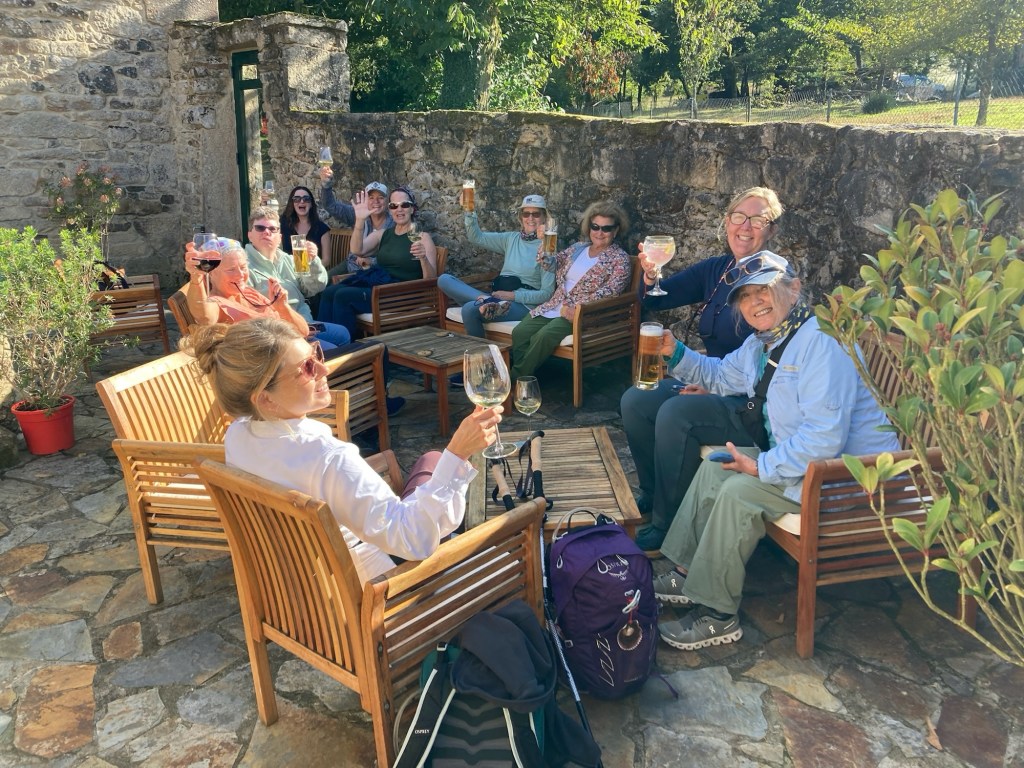
Day 15: Sunday, September 14 – This morning, we’ll join a local guide for a walking tour of the old city to learn more about the history of Santiago and put our sketching skills to practice along the way. Finally, we’ll celebrate our pilgrimage with a delicious final meal together in the beautiful stone courtyard overhanging with grape vines. Walking: Around town. Overnight: Santiago de Compostela.  Meals included: Breakfast, Late Lunch.

Day 16: Monday, September 15 – You are free to leave anytime today. We wish you “Bon Voyage” and “Buen Camino,” wherever your journey may take you.  Meals included: Breakfast.

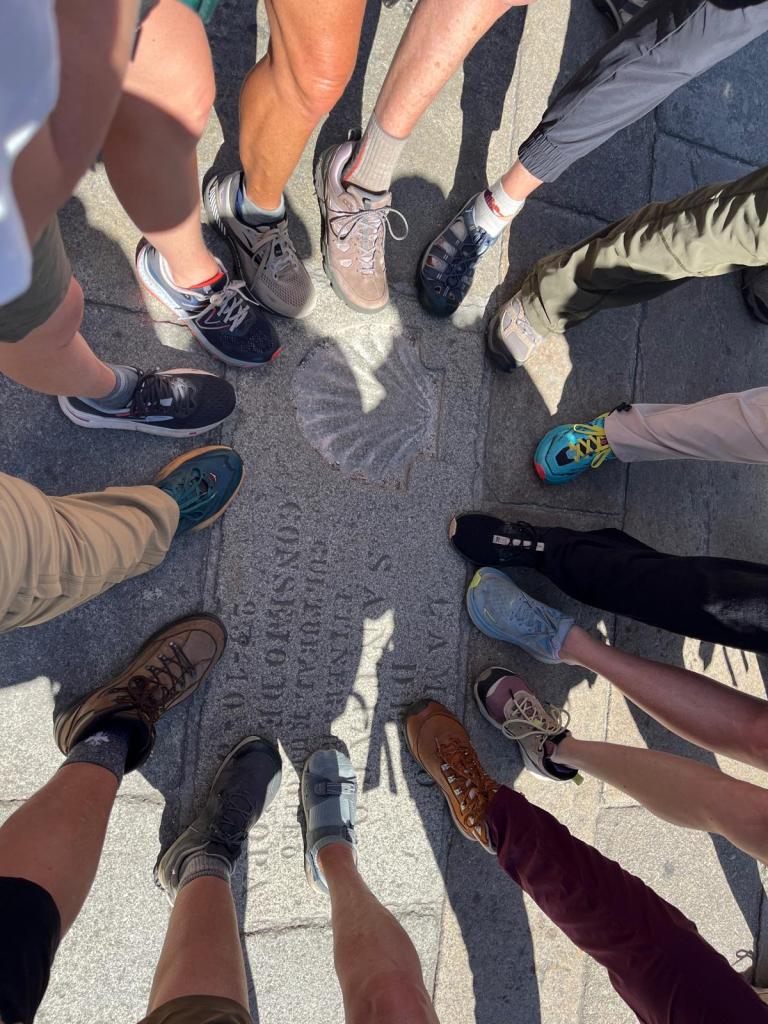
Or Extend for Another Day and Night for $200 – Monday, September 15-Tuesday September 16  Today we hop on our private bus for the northern coast and two other points considered by some pilgrims to be the true end of the Camino. But first, we will stop at Ponte Maceiro, a spectacular Roman bridge spanning the Río Tambre, with riverside water mills and gorgeous waterfalls. Next we go to Cape Finisterre, named because medieval pilgrims thought this westernmost point of Galicia was the very end of the earth.  Finisterre has its own official “Km 0” marker just before the lighthouse. Our last stop is in Muxia at the Santuario da Virxe da Barca, or Church of Our Lady of the Boat, which also has a Km 0 marker, illustrating that Camino has different ends for different pilgrims. The church is named for its historic legend of a mythical visit by Mother Mary, and it provides a peaceful and dramatic ending to our day, perched high above the rough breaking waves of the northern Atlantic. We will be back in Santiago in time for dinner on your own. Walking: about 4 miles Overnight: Santiago de Compostela . Meals included: Breakfast.

Note: Our itinerary is designed to maximize creative time while hiking the last 100 km of the Camino, inn to inn style. Like all adventure travel trips, the itinerary may need to be altered due to weather, unforeseen circumstances, new opportunities, and group interests. If interested, please contact me.

Photos by: Brenda Porter, Andre Mallinger, Cary Seston, Julie McGue, Kathy Krohn, Kendra Webster, MB MacLean, Nancy Kramer, Laura Davis, Amy Plummer, Georgie Johnson.

Share this: