As a freshman at Ithaca College I wrote a poem that I don’t precisely remember now, but one line in particular comes to mind when I reflect on my week in Israel. “These are my people but I do not know them.“
Truthfully, I don’t know much about the Mallinger side of the family. They arrived in the US from Russia/Poland/Ukraine in the early 20th century and, in my experience, nobody really spoke much about the family history, perhaps hoping to forget the oppression they undoubtedly endured in the Old Country. Family records were lost in WWII and, with the passing of the older generations, most of the oral history vanished. It’s complicated, but being in Israel gave me a glimmer into some of this.
Ancient History
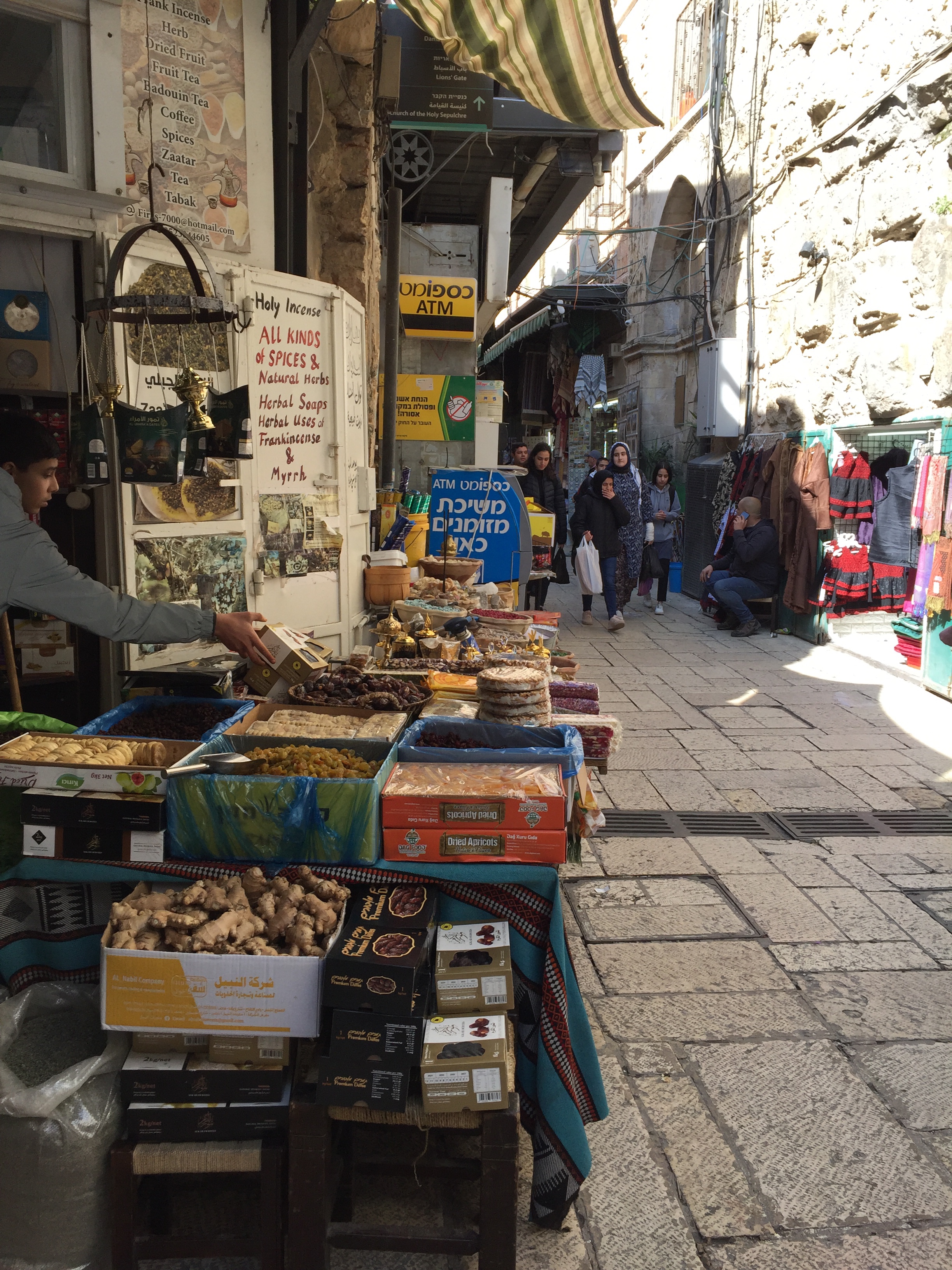
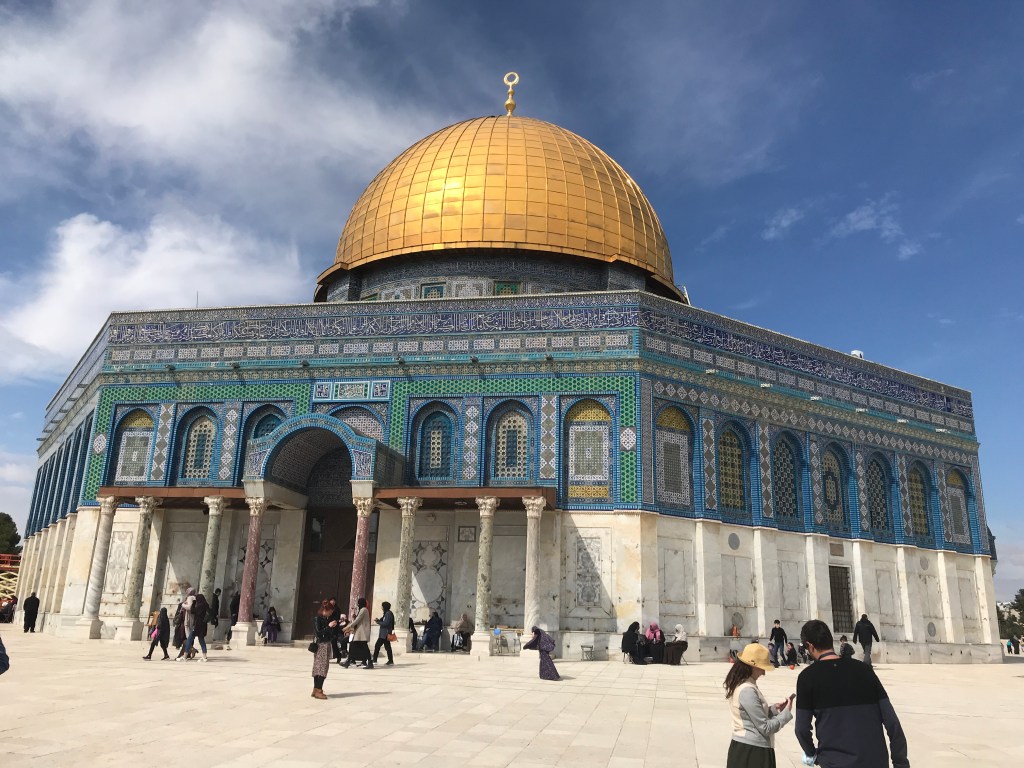
The cultural history of Israel is old, like Methuselah old, and the stories that define Israel are older yet. It was absolutely impossible for me to follow all of the details of our guide, Jared’s, impeccable narrative about the countless individual and cultural narratives of Israel, partly because of my resistance to anything “Biblical” in nature but equally due to the fact that I kept spacing out and getting lost in my own thoughts and reactions to all that surrounded me. Take Old Jerusalem, an ancient walled city with four quarters representing the Jewish, Christian, Muslim and Armenian cultures that have had, at one time or another, a significant influence on the politics, governance, language and dynamics of the city. War after war, battle after battle, oppressed and oppressor, this religion to that, power changed hands, blood spilled, traditions, languages and philosophies evolved.

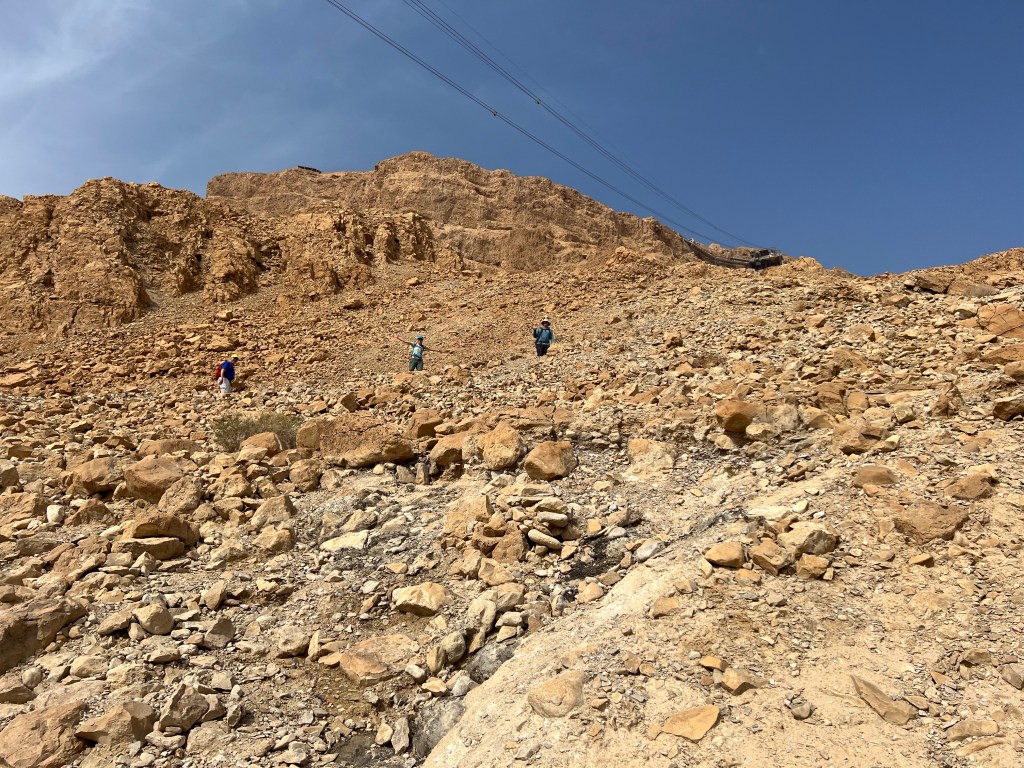
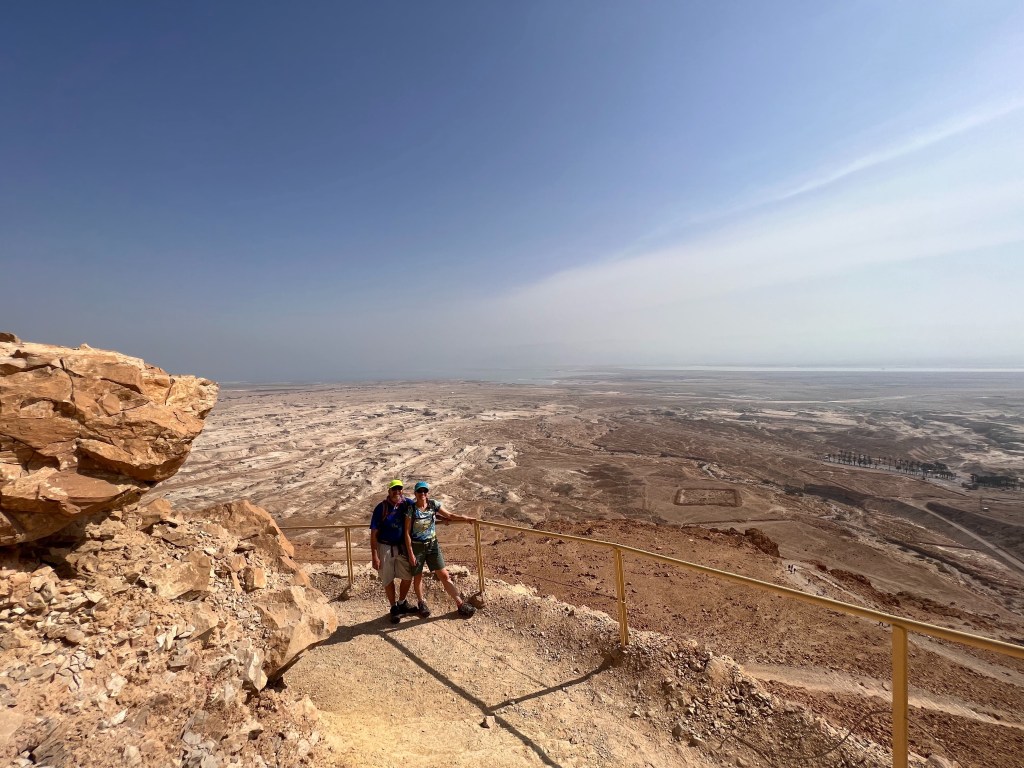
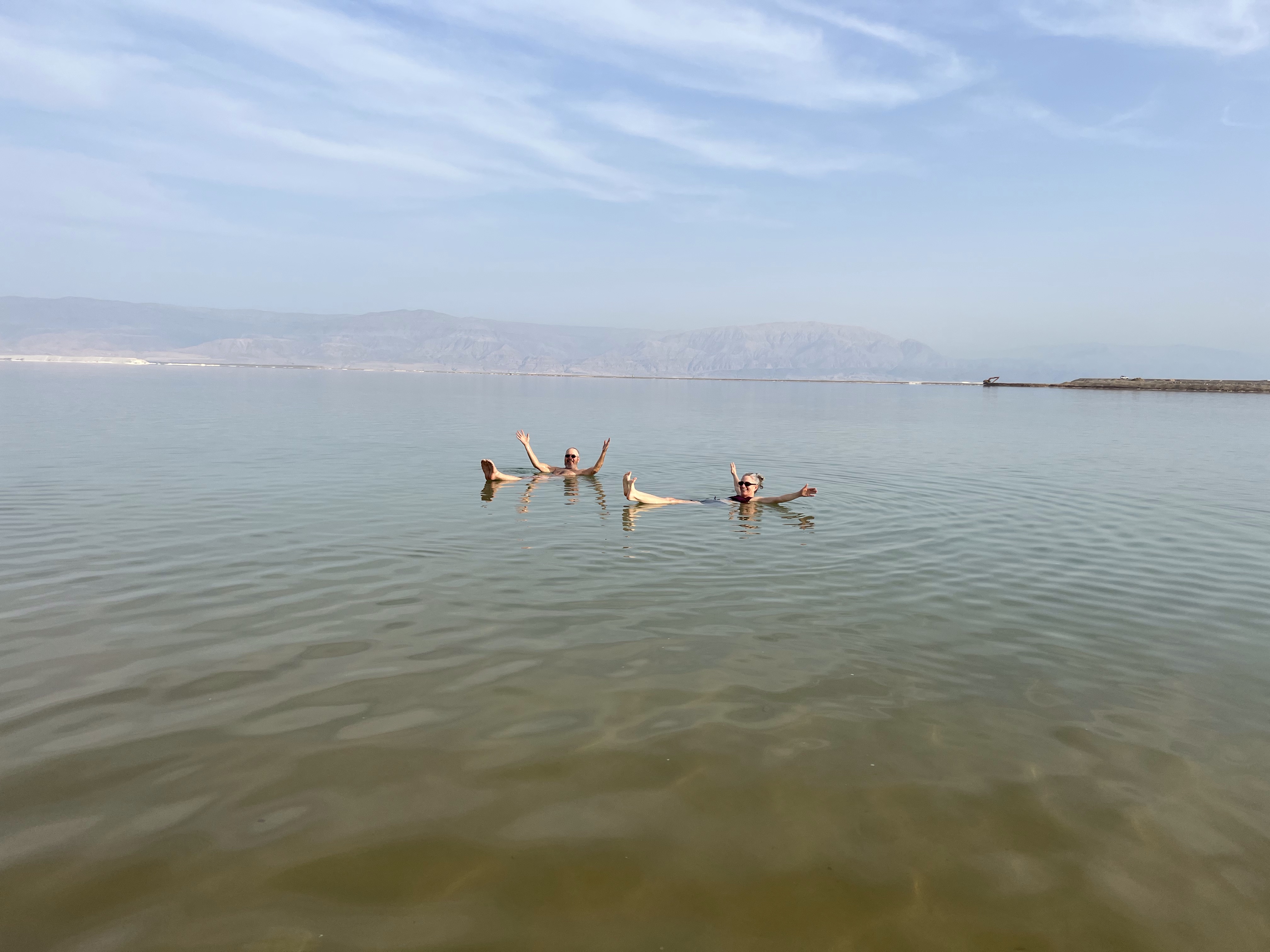
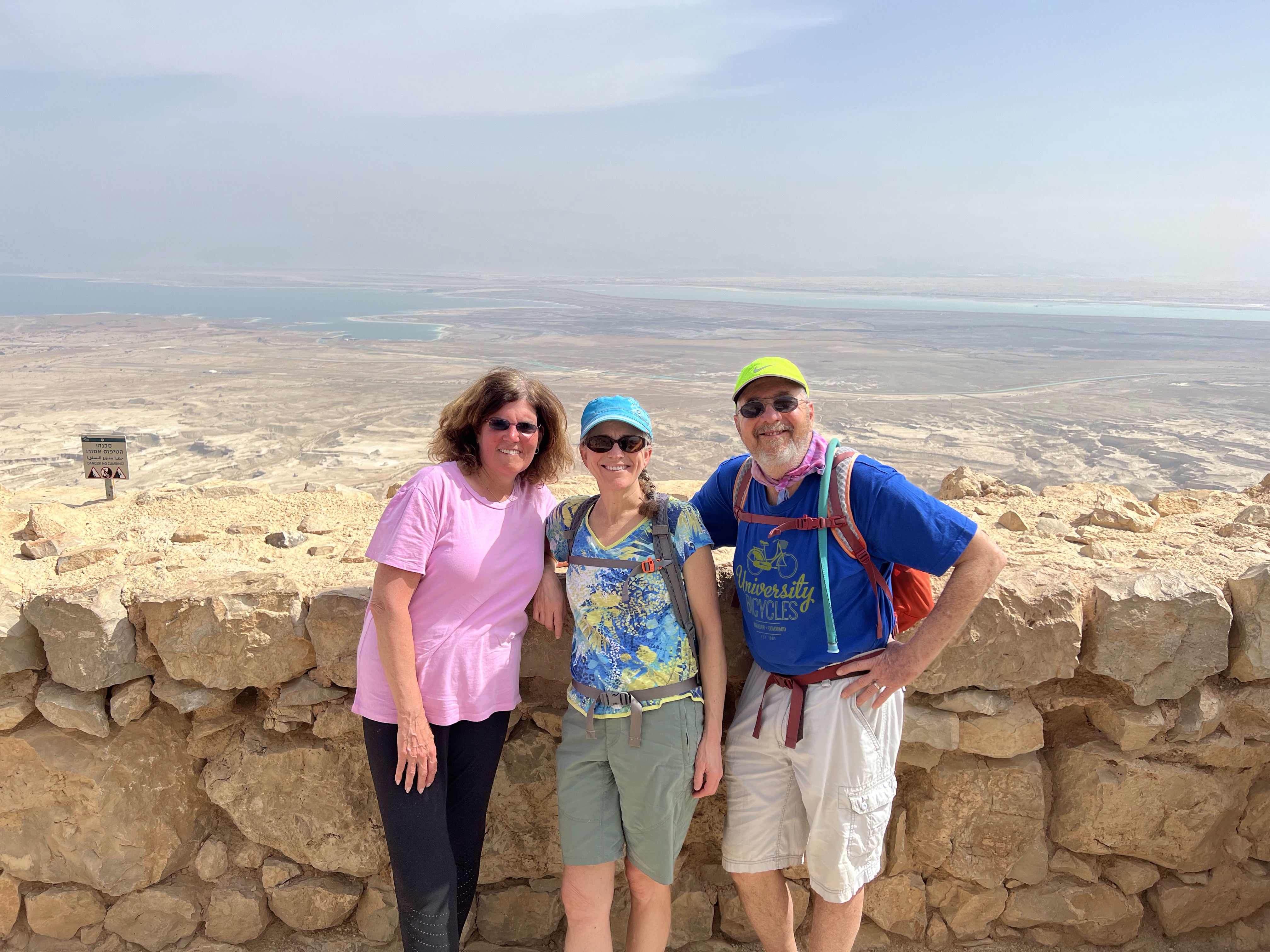
The same was true at Masada, a rugged, imposing, crumbling mountain rising 1,300 feet above the Judean Desert floor in a bleak, dusty, barren landscape overlooking the quickly receding Dead Sea. (You can thank climate change and unsustainable mining practices for that particular tragedy.) Masada was built by King Herod as an impressive palace complex in the last century BCE. After Herod’s death, the Romans overran Judea and Masada became a Jewish stronghold for the Sicarii or “Dagger Holders” fighting against the Romans. In the final months of the battle, the Romans built a massive ridge-like ramp to roll their equally massive siege engines up the mountain so they could decimate the Dagger Holders, but the Sicarii all used their deadly blades to kill themselves so as to deny the Romans the pleasure of doing so. Only two women and a handful of children hiding in the fortress were captured and lived to tell the story. Who knows if it exactly went down that way, but it makes for a good story and, besides, it’s complicated.

All of this is to say that the history of the Jews is one of conflict, battle, defeat and resurgence. Some of this conflict comes from within, evidenced by the numerous sects of Judaism in Israel. There is no pretense of separation of “church and state,” no accommodation for secular marriage or gay marriage and no rights of surrogacy for same sex parents. The effect of religion on daily life, civil rights and state laws is vast and strongly influenced by powerful factions, all Jewish. There are also, incidentally, few means by which a non-Jewish person can immigrate to Israel. It makes you stop and think about the policies certain (non-Jewish) religious factions continually try to impose in the US.
Food
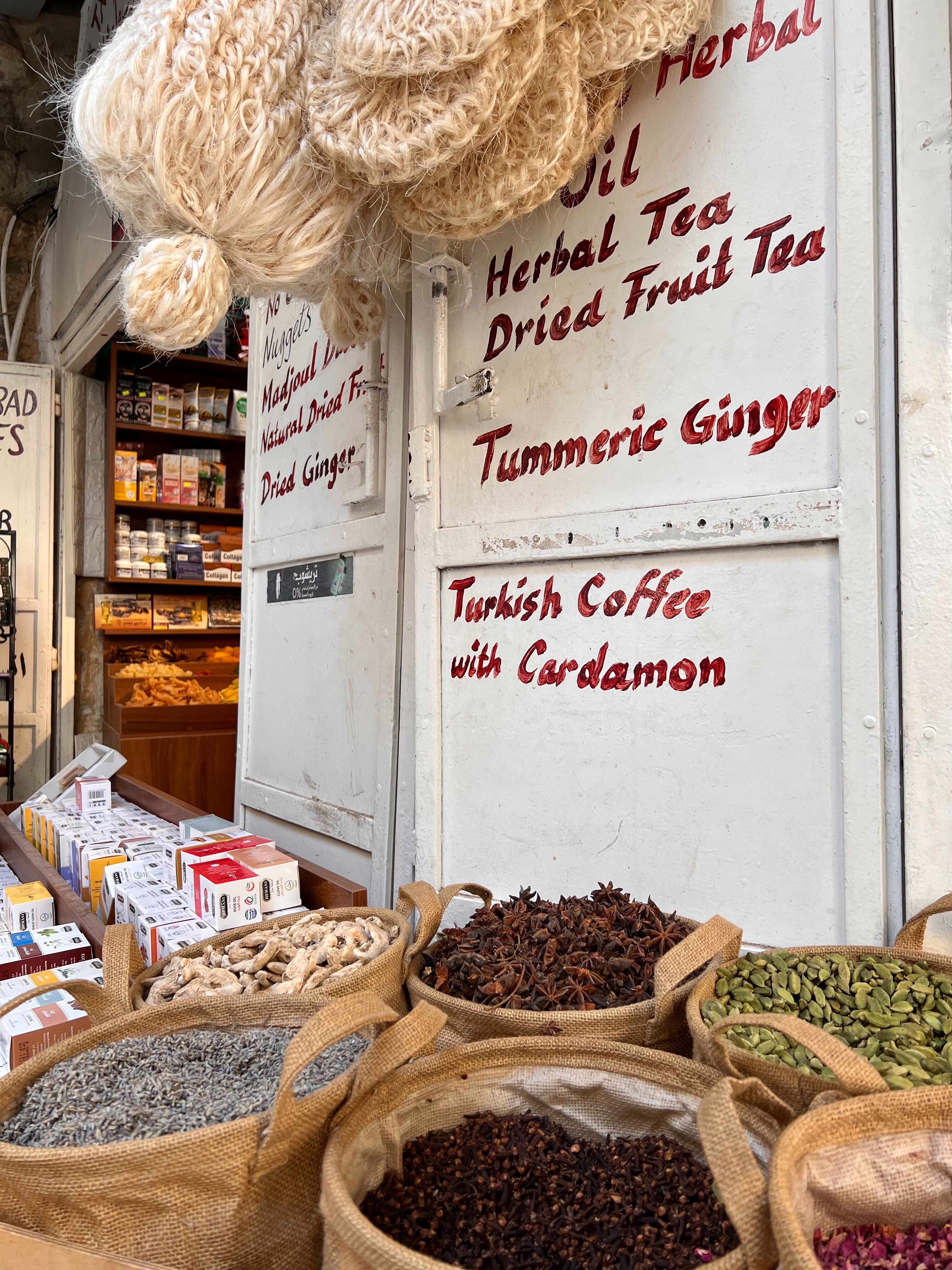
The one thing it appears Israelis and Jews in general can agree on is their love of and obsession with food. The entire week was fundamentally a running commentary on food: what to eat, when to eat, what we could or could not eat, how we felt after we ate, what was good, what disappointed. I fully indulged my personal addiction to tahini at every possible meal: tahini on Mediterranean salads for breakfast, lunch and dinner; slivers of halva for dessert; baba ganoush with large dollops of tahini; rice cakes with tahini and fresh carrot chutney; carob tahini straight off the spoon. My favorite meals were a tapas spread with John and Amy our first night in Tel Aviv, consisting of gazpacho (the soup, not the Nazi secret service), baba ganoush and sashimi; a simple lunch of roasted sweet potatoes and (you guessed it!) tahini; and breakfast every single morning. Israeli hotel breakfasts are a far cry from the corn flakes, packaged pastries and instant oatmeal of American motor inns. Shakshouka, rustic breads, salads, lox, herring, roasted vegetables, hummus, eggplant, avocado, fresh beet and carrot juice, espresso drinks and pastries filled multiple buffet tables. Our last hotel even offered moscato, but it was way too early in the morning for any indulgence on my part. Israelis eat all of their meals late, lingering around the table, laughing loudly and bickering fervently.

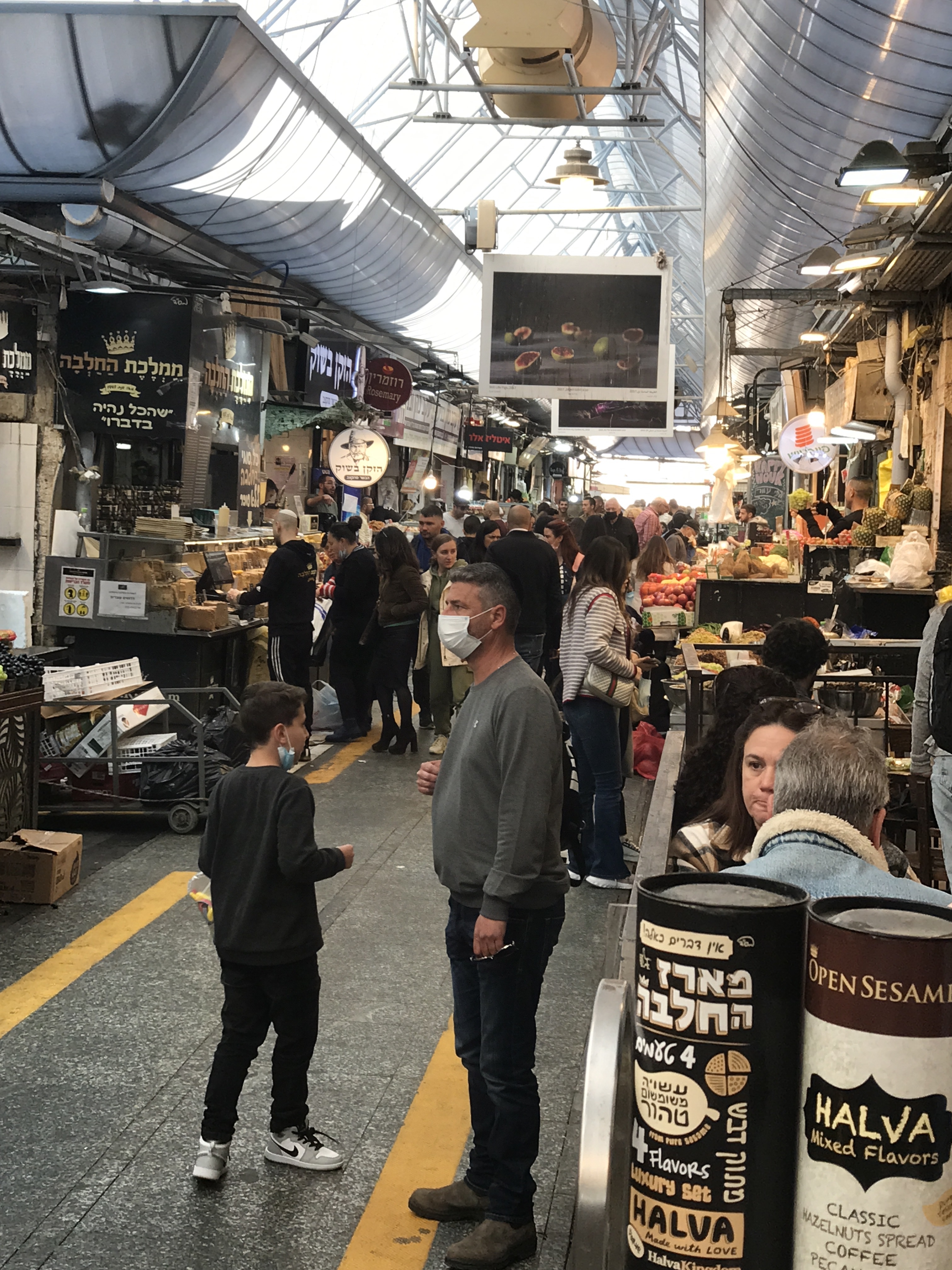
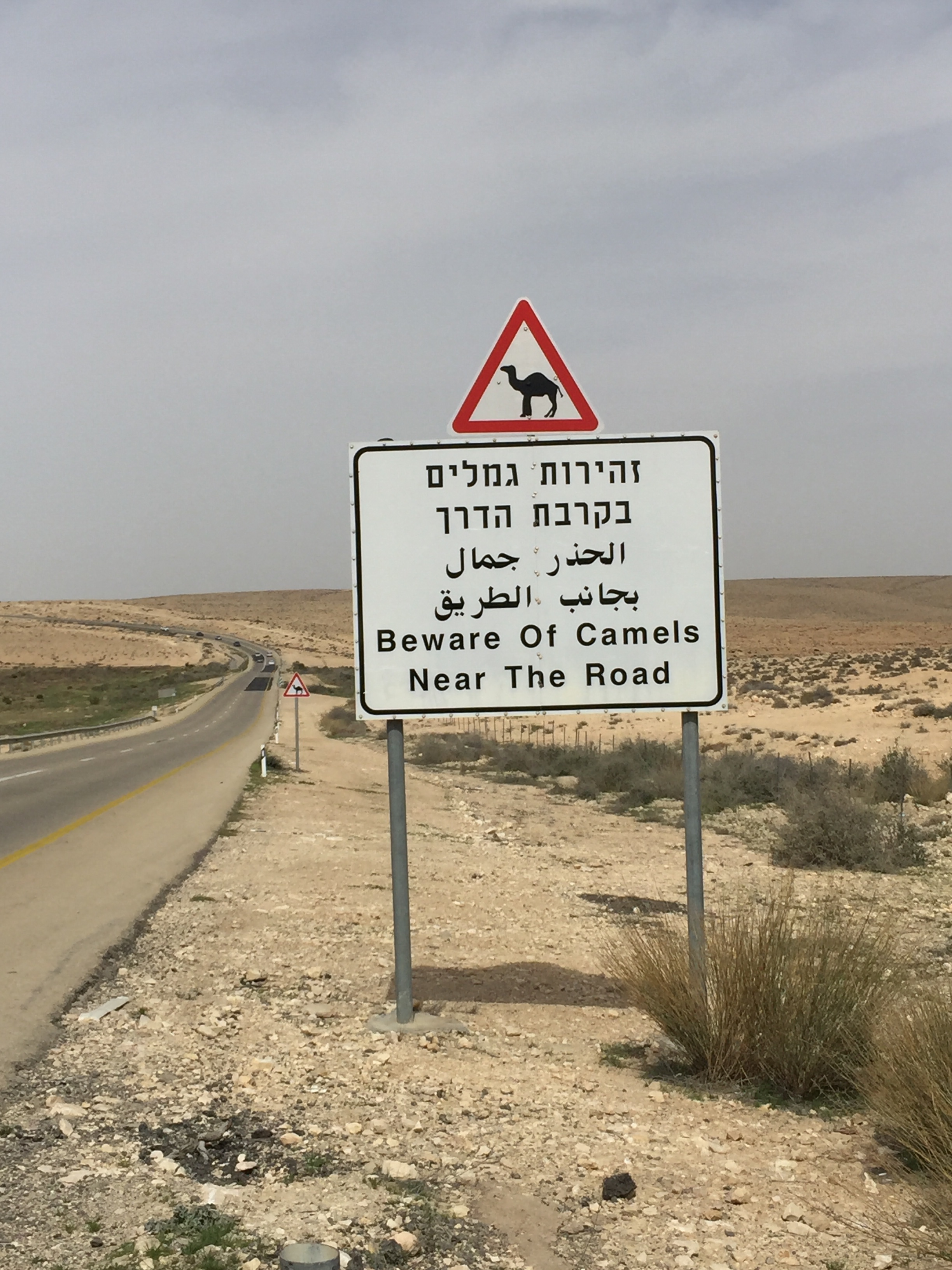
Through our time in Israel, John and I were both struck by the deeply buried memories of our Jewish education, his more extensive than mine, that bubbled to the surface. John recalled prayers, chants and songs, and we both found that we could make out a bit of written Hebrew. Of course, neither of us has any idea of what we’re reading, as we weren’t taught comprehension in Hebrew school, just pronunciation.
At the end of an exhausting day full of conflicting emotions in the Old City of Jerusalem, I had a powerful memory at the Western Wall. John and I were chatting with Jared well above and away from the men’s side. As I observed all these Orthodox men dressed in black pants, white shirts and long, black coats with tallis hanging out below their shirts, yarmulkes or big hats on their heads, some with tefillin and long beards, most davening and swaying back and forth as they faced the wall, I was struck with a vivid memory of my paternal grandfather, Sam Mallinger, who I called Abba. Usually, when I think of my father’s family, it is my grandmother I most clearly remember, but this was distinctly a sense of Abba, quiet as he went about his routine, praying multiple times a day, eating grapefruit and cottage cheese for breakfast, walking to shul, writing in his “den.” Abba was a rabbi and officiated at my Bat Mitzvah. A few months before then I flew to Tampa and studied with Abba for two weeks in final preparation for the difficult task ahead. I remember him as being gentle, devout, perhaps a little old fashioned, uninterested in the modern world, preferring to keep things as they always had been. Staring at the Western Wall, tears flooded my eyes and Jared asked if I were having a “Jerusalem moment.” That really irked me as it didn’t feel like any sort of “Jerusalem moment” as I interpreted his words, unless, of course, the fact that I happened to be in Jerusalem while having a moment of some sort indicated some deep, spiritual “Jerusalem experience.” To me it seemed like a simple case of association: my tears representing all that was lost in my family after my grandmother died, how the family broke apart, relationships faded, and most of my connection with that lineage severed. Perhaps that was a Jerusalem moment, but let’s not forget that it’s complicated.

Oppressor/Oppressed
This last issue is the one that has troubled me the most and the one I find the most difficult to write about. That is the issue of the Palestinian-Israeli relationship. The problems and conflicts, of course, go back thousands of years and are far from resolved. I asked Jared whether Palestinians are Israeli citizens and my understanding is that they are only citizens if they happened to be living in Israel at the time of Israel’s declaration of statehood in 1948. Well, that undoubtedly eliminates the vast majority of Palestinians. So are they citizens of Jordan? No. And do they have all the rights of Israeli citizens. Yes, but only to an extent. And are the services they receive the same that Israeli citizens receive? In theory, I think so, but in reality, probably not. I hesitate to say too much about any of this because I am, by no means, an expert in the matter, but I am deeply troubled to think that Israel has become the oppressor after having repeatedly been the oppressed for millennia. We must learn from our past or we fail to evolve, to become better human beings. Isn’t that the ultimate goal of what it means to be human? To become better, to grow, to be more kind and open hearted, to be guided by compassion rather than hatred?
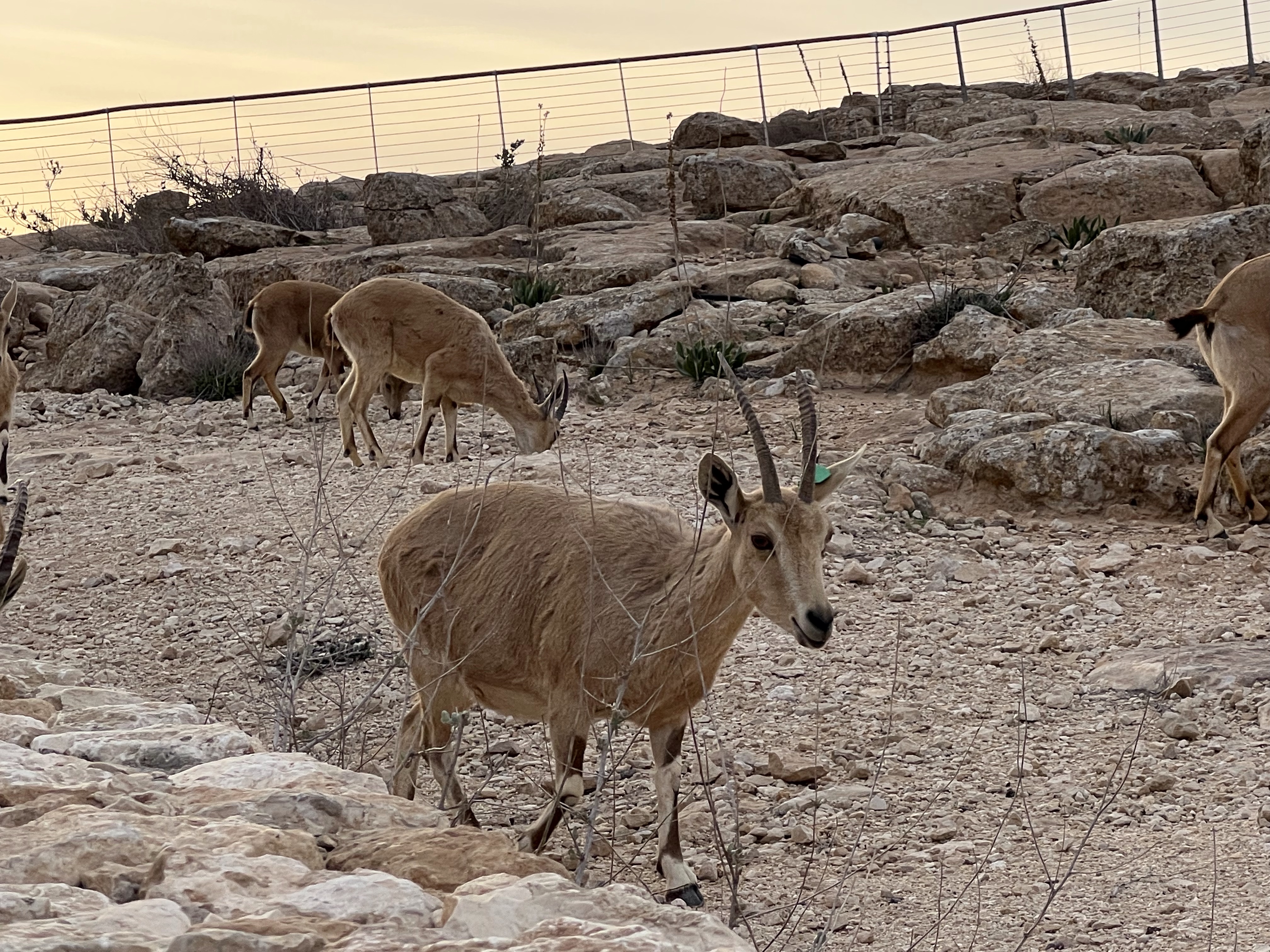
At a nature preserve near Masada, we met a group of young Palestinian teenage boys. John immediately befriended them and they clamored around him, teasing, asking questions, making jokes. One asked why we were in Israel and, when John said we were there to learn about their country, the boy replied, “Bah! Israel is ugly! There is nothing here!” That saddened me, for the current situation in Israel is complicated, and for that inquisitive young Palestinian, there are, undoubtedly, fewer options in life than the veritable palette of options that are likely to present themselves to the young Israeli teen on the adjacent bus.
So, my takeaway from one week in Israel is that I am deeply grateful to cousin Amy for having presented John and me with such a unique opportunity to experience a bit of her passion. Being with Amy’s daughter Dori, who is a beautiful young woman in every sense of the word, made the experience even richer. Meeting Amy’s tutee, Adi, and her family was a delight, and having our own personal Israeli academic as our friend, companion and guide gave us more insight into the complexity of modern and historic Israel than we ever would have gleaned on our own. Thank you Jared, thank you Amy!





 The Travails of Diplodocus